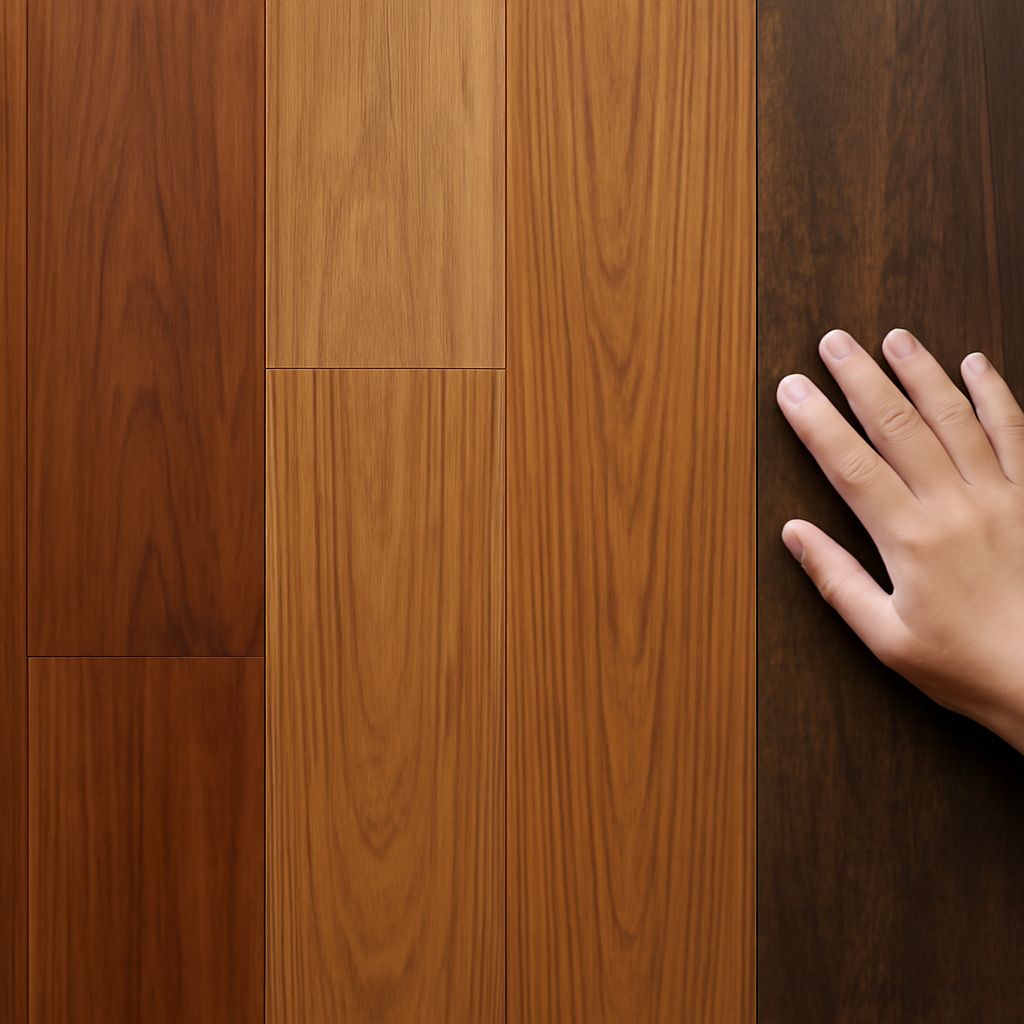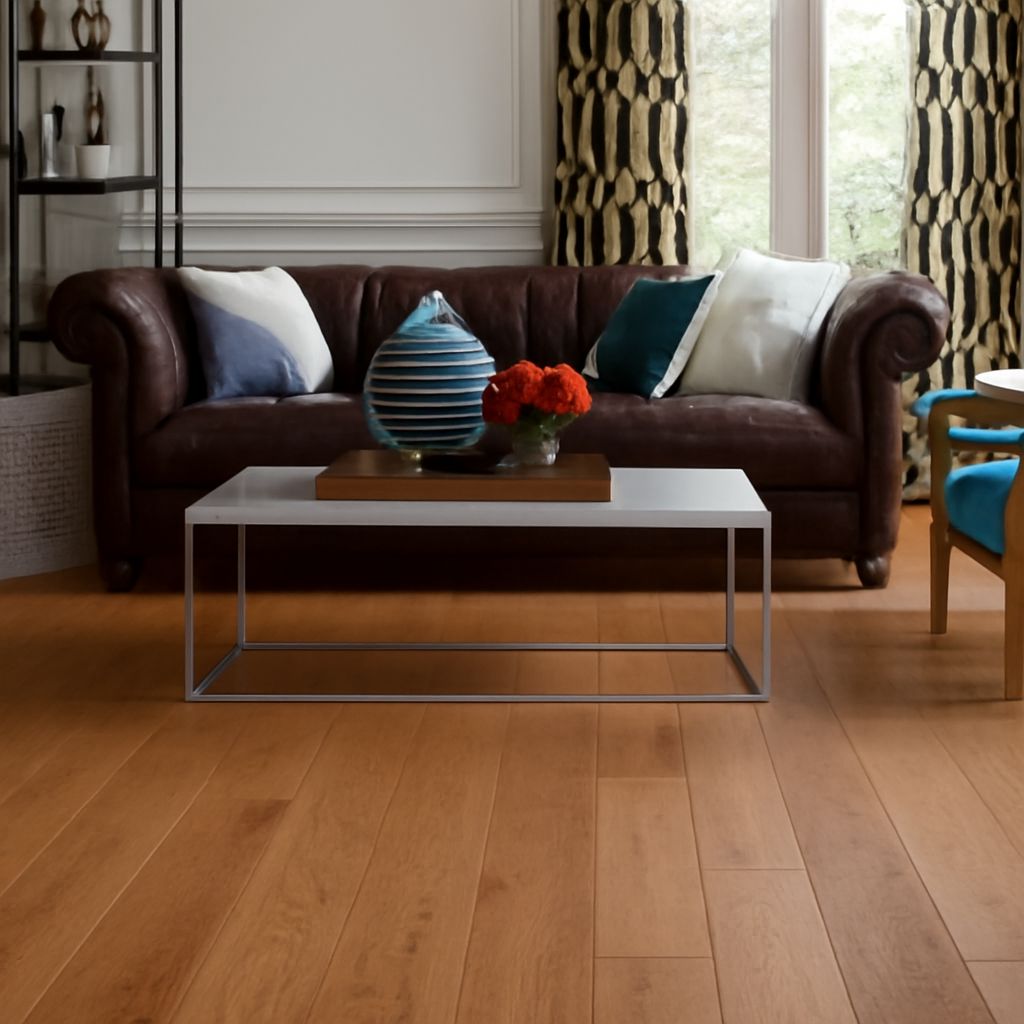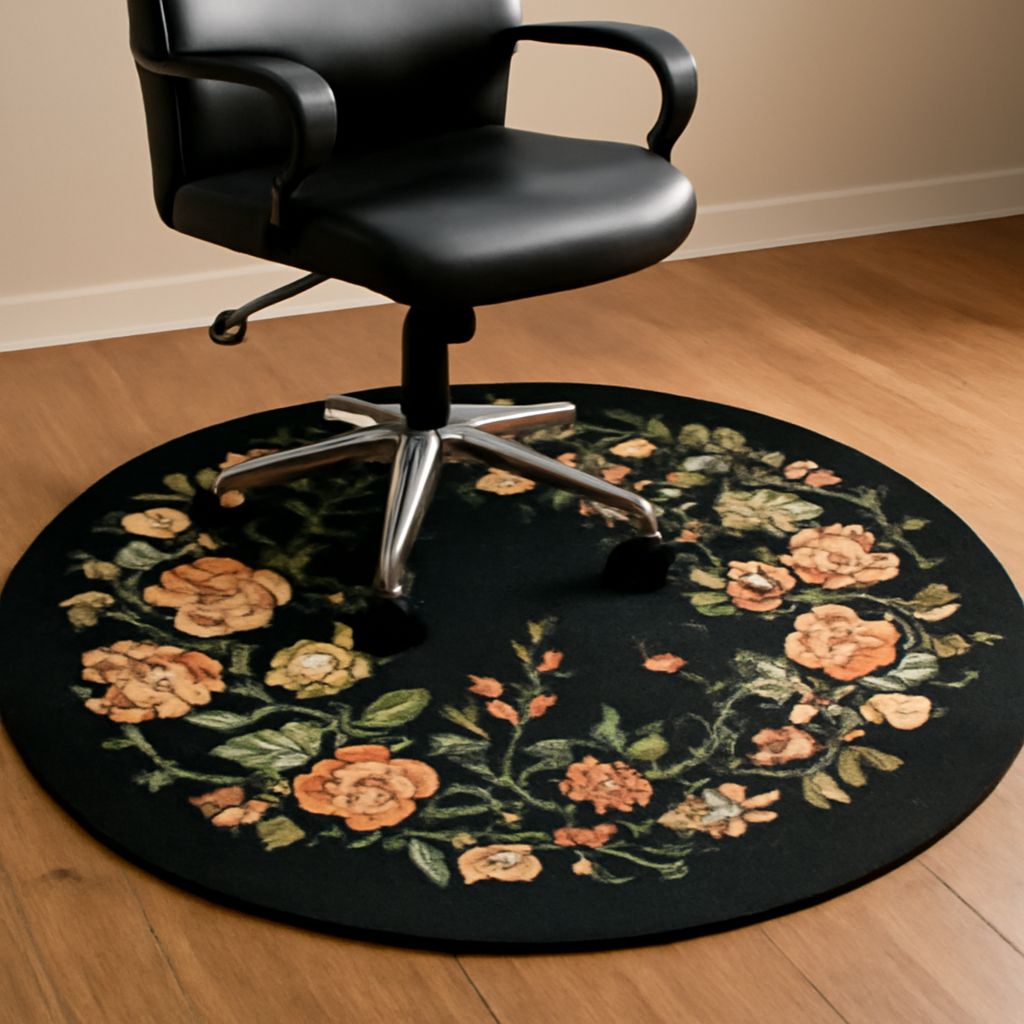
A chair that rolls only at a desk needs a smaller protected area than one that travels to a printer and back. Before buying a mat for your office chair on hardwood flooring, trace the wheels’ actual path, including the space you use to stand up. That measurement is the beginning of a useful purchase.
A desk-chair floor protector for wood also needs a backing compatible with the finish. The wrong underside or grit trapped beneath it can create a problem while the top looks perfectly clean.
Desk Chair Mat for Hardwood Floors: Measure Your Rolling Area
Sit at your usual working position and mark the outermost points reached by the casters as you turn, push back, and move between work surfaces. A helper can place removable markers beside the wheels; check that the markers themselves are safe for the finish. Measure the resulting width and depth, then allow some room inside the mat’s edges so wheels stay on it during normal use.
Compare that area with the actual dimensions of the usable rolling surface. A lip can extend beneath a desk, but its narrow section is not a substitute for a broad area behind the chair. A rectangular chair mat on a hardwood floor often suits movement between two workstations; a compact mat may be enough for a stationary desk. Check door clearance and nearby furniture before ordering.
If a route to a printer crosses several feet of floor, decide whether to cover that route or walk to the printer instead. Wheels repeatedly rolling over an edge can shift the mat and expose the floor. The manufacturer’s care instructions for one mat also warn about movement when casters repeatedly leave and reenter its surface.
Check the Underside Against Your Floor
Choose a chair mat for hardwood floor use with a smooth, non-studded underside. Cleats intended to grip carpet can press into wood. Read both the mat and flooring instructions: a product labeled for hard floors should also be compatible with your specific finish, including any recently applied coating. Follow the finish maker’s curing time before covering a newly finished floor.
The underside of a chair mat on wood flooring matters. Some wood-floor manufacturers warn that rubber can stain a surface or trap moisture; Karastan’s wood warranty guidance gives that warning for its products. Do not add a separate rubber liner to stop sliding unless both manufacturers approve it. If compatibility is unclear, ask the flooring maker about the mat’s exact material and backing.
A hardwood floor chair mat should lie flat without curling or shifting under normal movement. Unroll or flatten it according to its instructions and place it on a clean, dry surface. If it still slides, check that the floor and underside are clean and that the wheels remain within the edges. A different approved product or size may be needed.
Match Rigidity to Wheels and Use
A rigid surface generally makes rolling easier and resists the small depressions that make a chair harder to move. Flexible mats can conform more readily to minor floor variation, but a thin one may indent or curl under repeated loads. Compare the manufacturer’s stated use and load limits for the chair plus occupant; thickness alone cannot tell you how well a material will perform.
The best clear mat for a desk chair on hardwood lets the wood show and makes dirt easier to notice. Opaque surfaces conceal marks but need the same inspections underneath. Check edge height and whether the chair can roll on and off without a jolt. A desk chair mat for hardwood floors should also fit the space without creating a raised edge in a frequent walking route.
Inspect the casters before placing an office chair on a hardwood floor mat. Wheels should turn freely, with no sharp edges or embedded grit. Replace damaged or unsuitable casters with a type approved by the chair, mat, and flooring manufacturers. Softer wheels may reduce direct wear, but they still collect grit and do not make regular cleaning optional.
Keep Sand and Moisture Out
Vacuum or dry-mop the floor before placing a desk chair mat on the hardwood. Wipe the underside as directed and let both surfaces dry completely. Use an entry mat nearby to catch grit from shoes, and clean around the edges regularly. A small grain of sand can be pressed against the finish each time the chair moves.
Lift the office chair mat on the wood floor periodically, inspect both surfaces, and clean away dust and debris. Start with a weekly check in a busy area; adjust the interval to the amount of dirt you find. Clean with products approved for the floor and for the mat, and return the protector only when everything is dry. Wipe spills promptly, including any liquid that reaches an edge.
Look for dull patches, scratches, discoloration, or moisture under the mat. If you find any, remove it and identify the cause before putting it back. A clean protector works as part of a maintenance routine, not as a sealed barrier against every mark.
Make the Final Choice
The best chair mat for hardwood floor use covers the full caster path, stays flat, and has a backing approved for the finish. For a compact desk, choose a hard-floor mat large enough for the pushback area; for a chair moving between surfaces, measure the longer route and choose a broader shape. Compare the effort of cleaning underneath with the cost of repairing a worn finish: a few minutes of attention can save a much larger job.