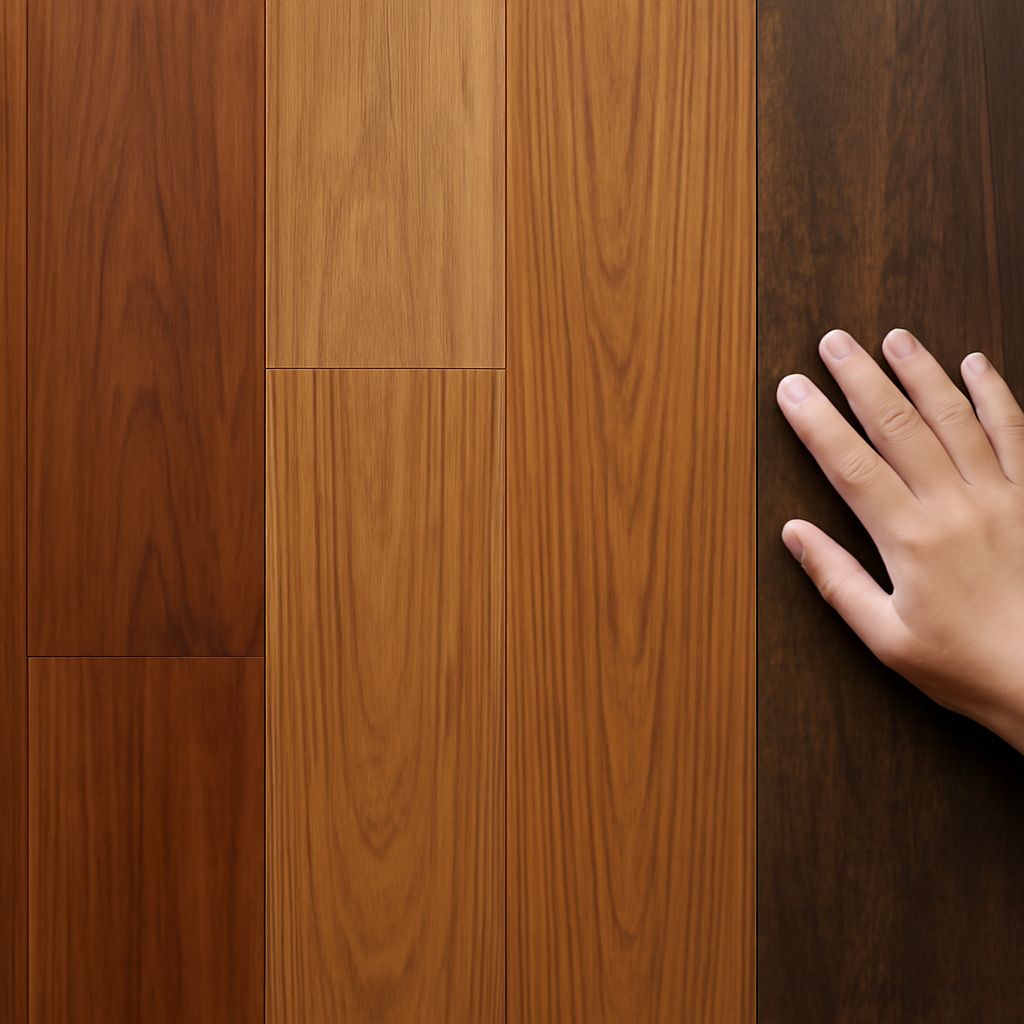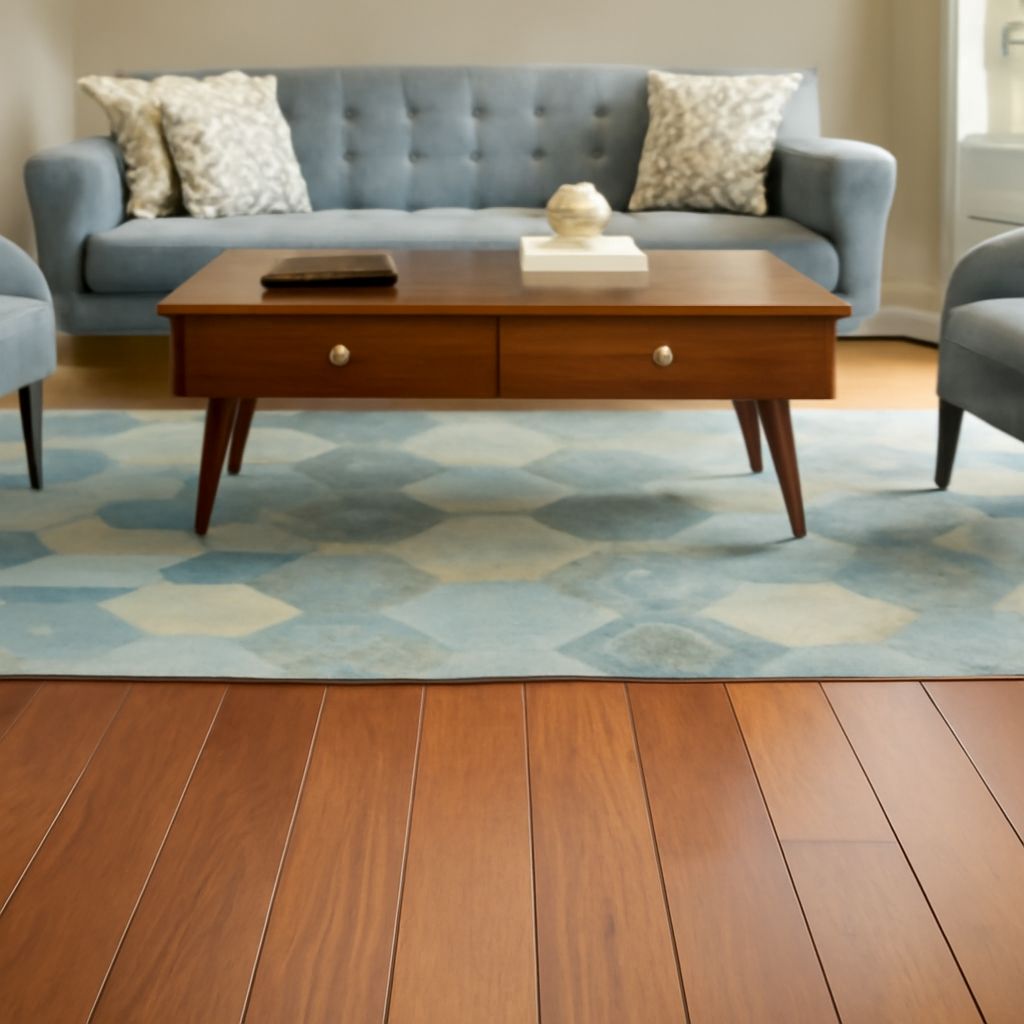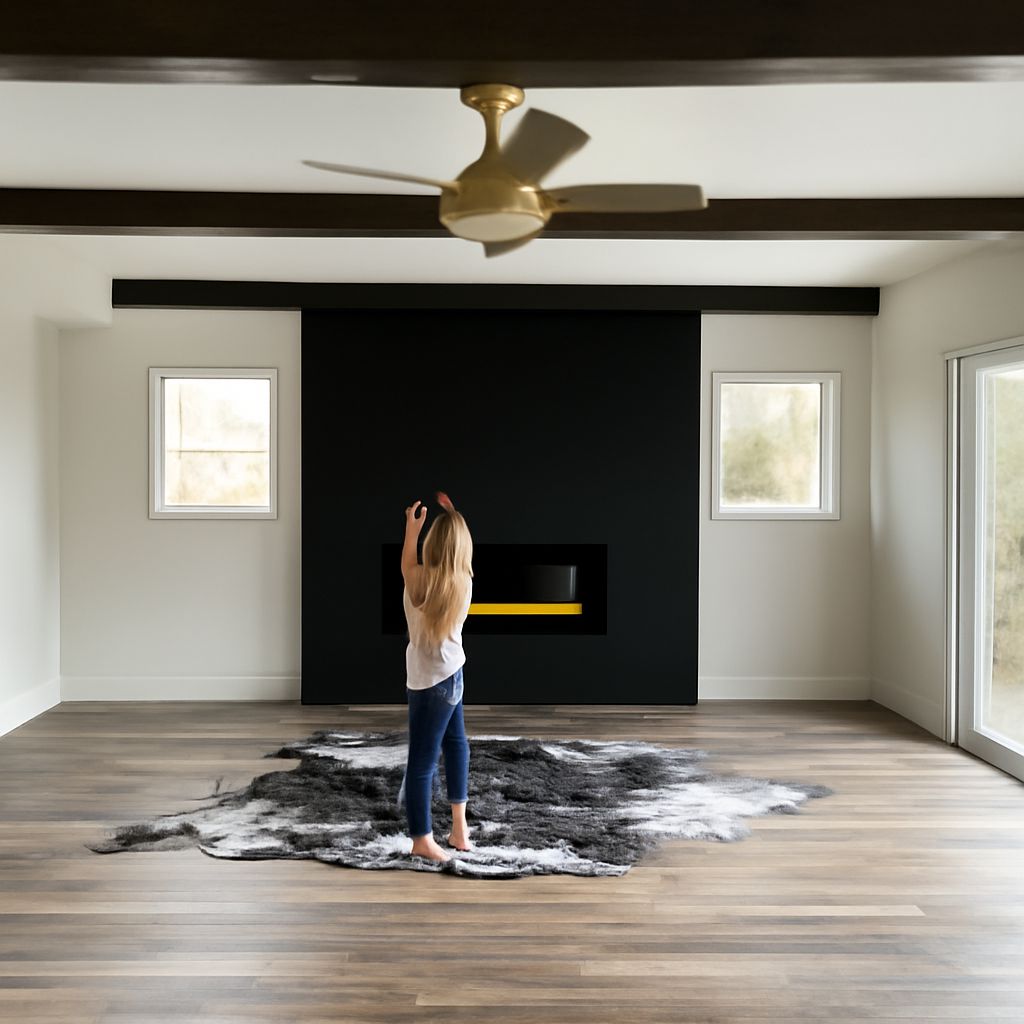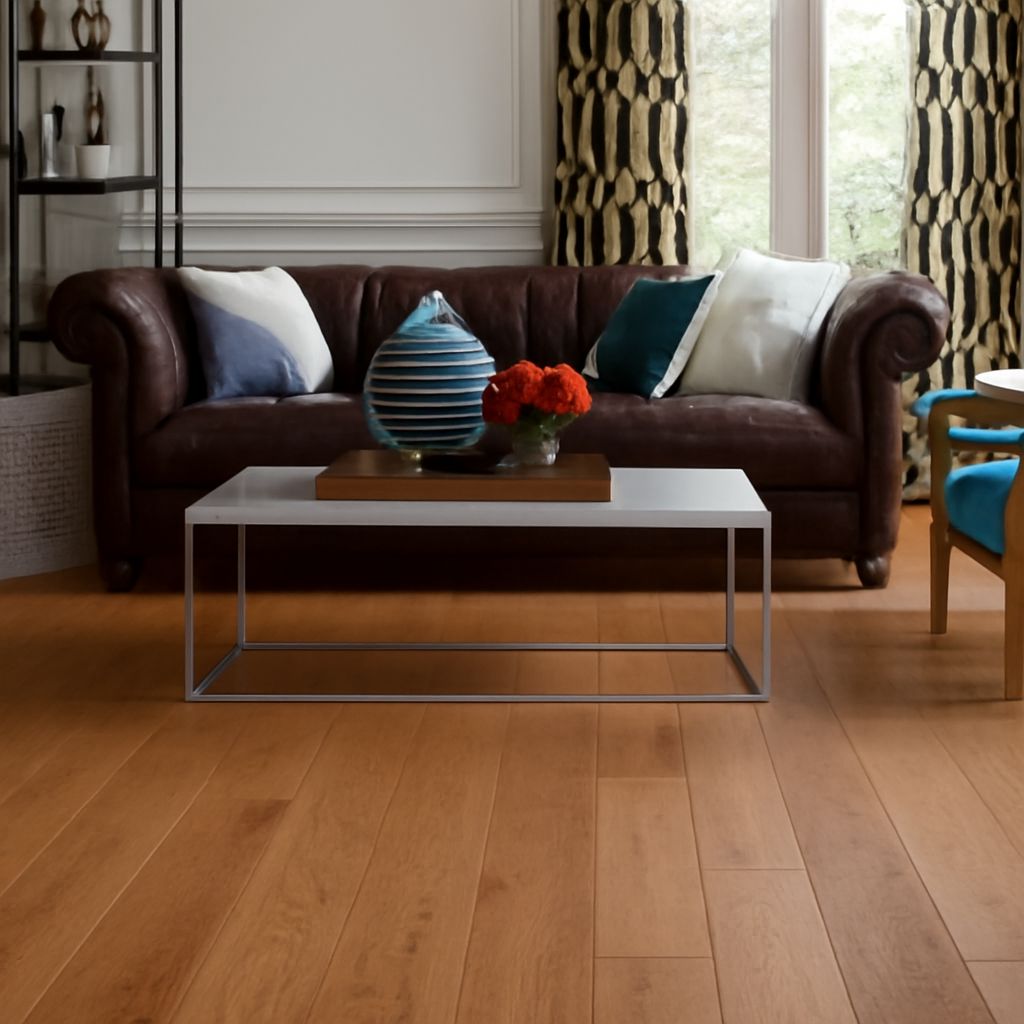
A small sample of hickory can look calm in a showroom, then become a lively patchwork across an entire room. Natural hickory hardwood flooring can vary considerably from one product to another. Compare several boards in the light where they will be installed; hickory hardwood floors also differ in construction and finish.
Hickory hardwood floors: read the boards first
Hickory often combines pale sapwood with darker heartwood, producing noticeable changes in color from board to board. Grain, knots and other character marks can also vary. A floor with more contrast draws attention to its individual pieces; a more selective grade may give a quieter effect. Grade names and sorting rules vary by manufacturer, so ask what the chosen product actually permits.
A relatively clear-looking finish shows those differences. “Natural” is a color description, however, and does not mean the surface is unfinished. Request several samples or inspect an installed display, then place the pieces beside cabinets and trim. Turn them in different directions and view them in daylight and at night. One small rectangle cannot represent every board in a shipment.
Before installation, ask the installer to open several cartons and blend boards across the room. This spreads light and dark pieces instead of concentrating them in one area. Agree on the amount of variation you want before the first row goes down; moving a board later costs more than moving it on the floor during layout.
Solid or engineered construction?
Solid hickory flooring is milled from one piece of wood through its thickness. Engineered boards have a real-wood surface bonded to a layered core. Both can display the same species on top, but their construction and installation instructions differ. The National Wood Flooring Association describes the two constructions and notes that engineered flooring generally expands and contracts less than solid flooring.
If future refinishing matters, ask about the usable wood above the tongue on a solid board or the thickness of the engineered wear layer. The number of possible sandings depends on that material, the floor’s condition and the refinisher’s assessment. A thick overall engineered board does not by itself establish a thick wear layer. Request the product specification, not just a sample label.
For a basement, concrete slab or radiant-heated floor, check the exact product’s approved locations and installation method. Some engineered products may be suitable where a particular solid product is not, but construction alone does not settle the choice. Ask the installer to check the subfloor, moisture conditions and manufacturer’s requirements before ordering. A solid floor made from hickory still needs the expansion space and installation method specified for that product.
What width changes
Wide plank hickory flooring puts more of each board’s grain and color variation on display and creates fewer seams across the room. Narrower strips introduce more frequent joints and can create a busier rhythm. Neither width makes the wood’s natural markings disappear. Lay out samples at their actual widths to see how the pattern relates to the room and its furnishings.
Wider boards can also make seasonal movement more noticeable. Wood takes on moisture and swells in humid conditions; it loses moisture and shrinks as the air dries. The NWFA’s moisture guidance explains how those changes can lead to cupping or gaps. A wide hickory plank floor should be selected and installed using the specific manufacturer’s moisture, acclimation and subfloor instructions. Maintain the indoor conditions the product calls for after installation, too.
Separate the wood from the finish
Hickory wood flooring gets its grain and inherent color variation from the wood. Stain changes the color; a protective finish changes the surface’s sheen and maintenance needs. A dark stain can make the room feel different from a clear or light finish, while a matte surface reflects less light than a glossy one. Compare finished samples rather than judging the stain from a picture online.
Natural hickory flooring can emphasize the contrast already in the boards. A naturally finished hickory wood floor may still have a sheen or protective coating. A tinted finish can alter that contrast, but ask to see several pieces because stain may not look identical across all areas of the wood. Surface texture matters as well: smooth boards reflect light differently from brushed or hand-scraped ones. Check how a texture feels underfoot and how easily it can be cleaned.
Hickory is a hard wood, which helps it resist indentation, but the coating can still scratch and any wood can be dented by sufficient force. Felt pads under furniture and a mat at an entry reduce abrasion on the surface. Follow the finish manufacturer’s cleaning directions; standing water and unsuitable cleaners can damage a floor. Spills deserve a cloth promptly, not a promise to return later.
Compare the whole purchase
Price the floor as a complete job: material, delivery, subfloor preparation, installation, trim and any removal of the old covering. Ask how much extra material is needed for cuts and for the chosen layout. Save the product name and care instructions with a few spare boards, if practical, for future repairs.
Check the finish warranty and the installation warranty separately. Ask who handles a concern and what maintenance records are required. A lower material price can lose its appeal if preparation or finishing is missing from the estimate. Review representative samples alongside the actual written specifications before committing.
Choose a product only when you like a representative group of boards and it suits your room’s conditions.