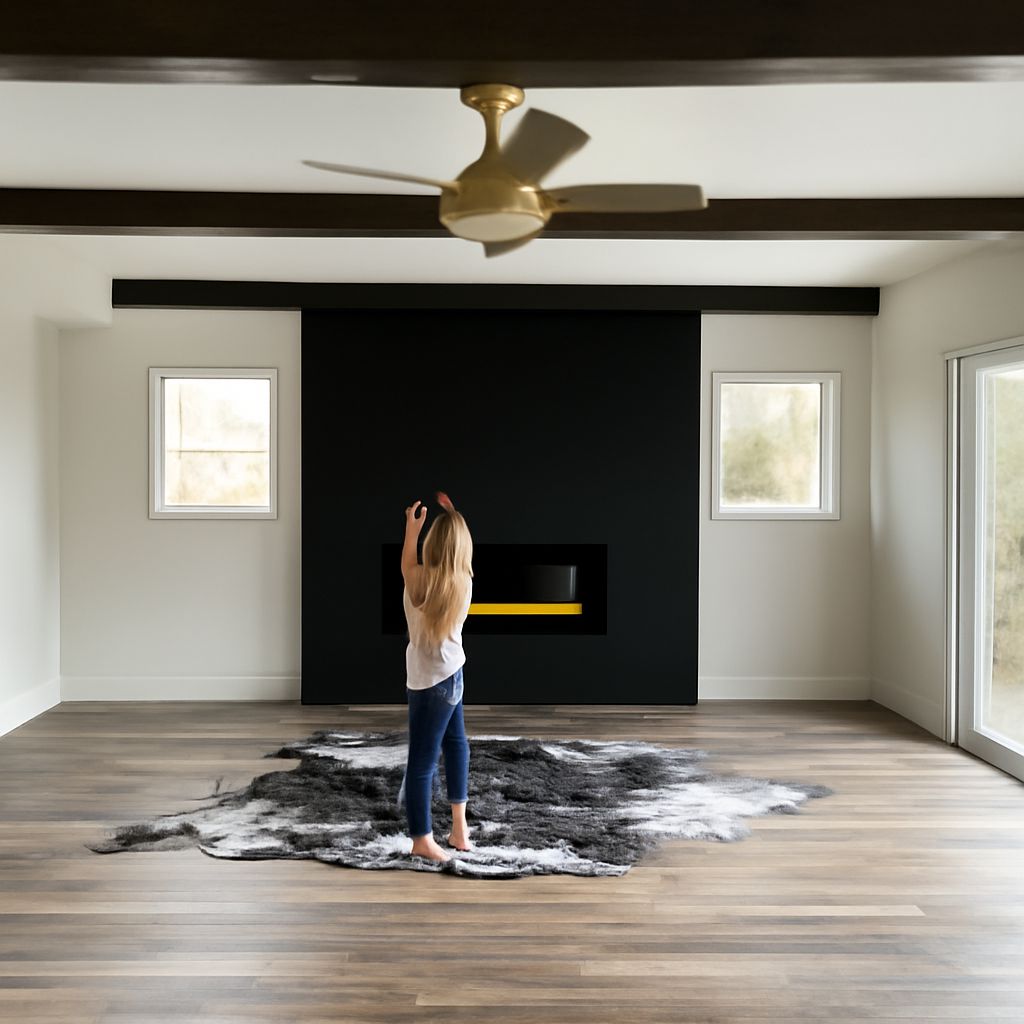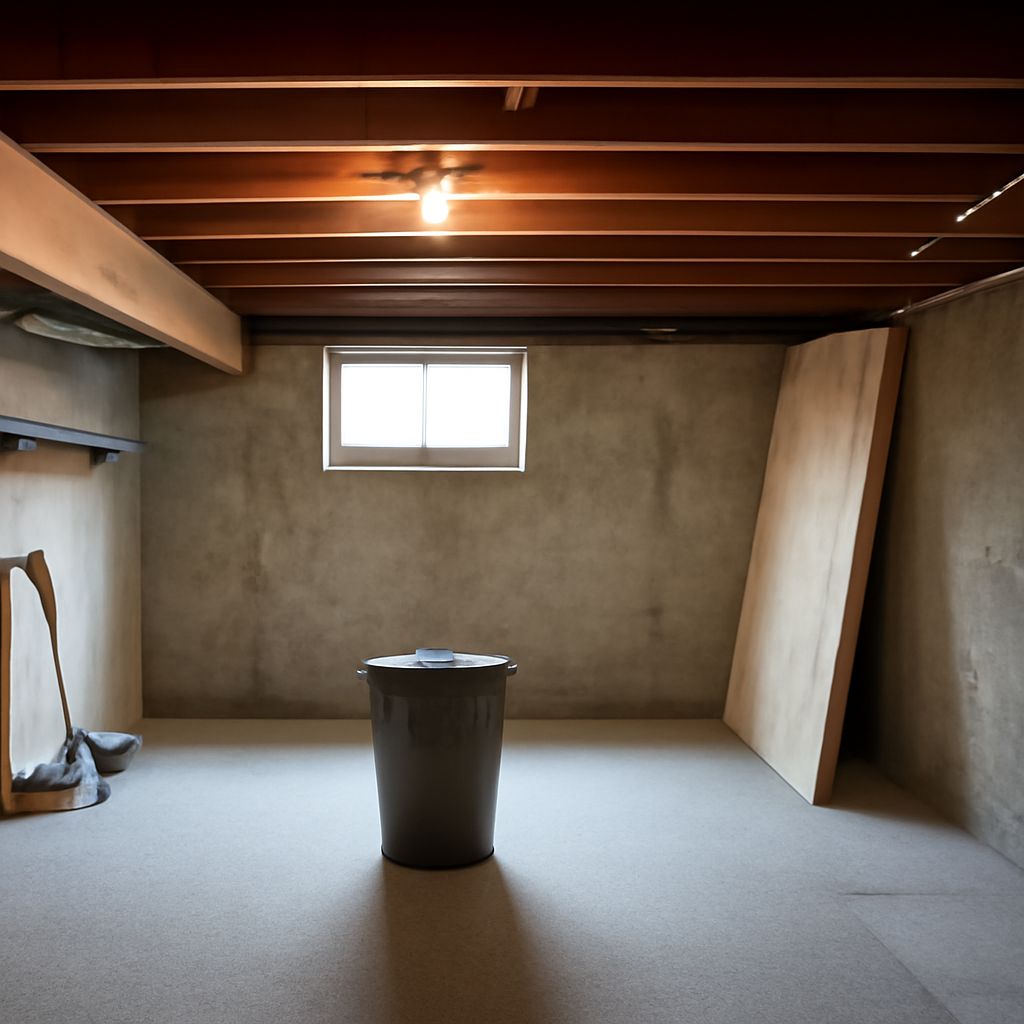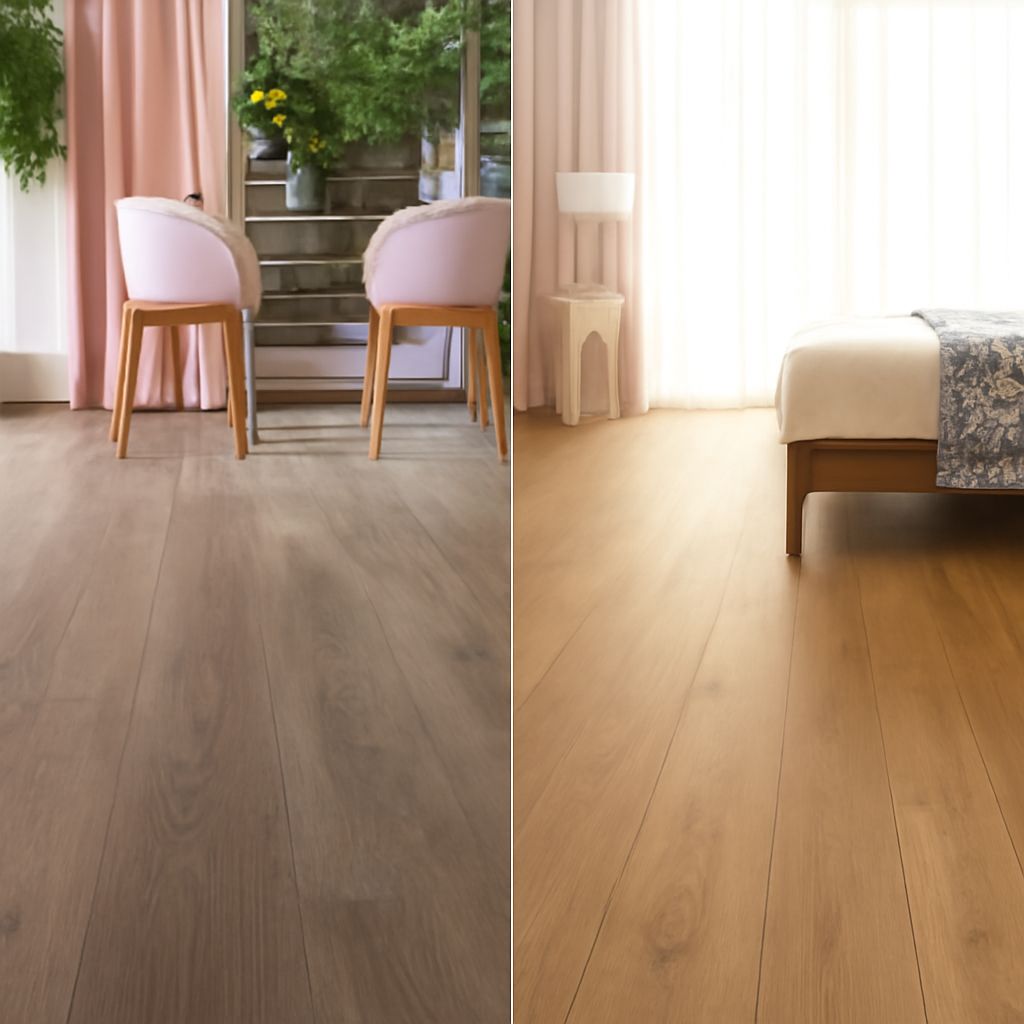
The right floor depends first on the room’s exposure to water. In a dry bedroom, either material can work; near a kitchen sink or laundry machine, compare the specific product’s water limits and edge details. Weighing laminate against vinyl flooring also means considering installation, wear, and repair: the benefits and drawbacks of vinyl and laminate change with the room and the household.
Vinyl vs Laminate Flooring Pros and Cons: The Basics
Laminate typically has a printed decorative layer and protective wear layer over a fiberboard core. Vinyl planks are made principally from synthetic materials and usually include a printed design and wear layer. Both can resemble wood, but texture, plank dimensions, and the way they sound underfoot vary between products.
The vinyl vs laminate flooring pros and cons become clearer with samples in hand. Laminate can offer a convincing wood appearance and a durable surface for a busy dry room. Vinyl may be suited to rooms with frequent surface spills when the particular product and installation are approved for that use. The advantages and disadvantages of laminate and vinyl flooring depend on the product; neither category has one fixed price or level of durability.
Place samples on the floor and view them in daylight and artificial light. Walk on a display if possible, and compare the actual finish rather than relying on a small online image. Consider how the color will meet trim and floors in adjoining rooms.
Water on Top and Water Underneath
Many vinyl products are sold as waterproof, while many laminate products advertise water resistance or protection against spills for a stated period. Read the exact product’s directions: permitted exposure, cleaning practices, edge sealing, and approved rooms differ. Wipe up spills promptly, whichever material you choose.
A waterproof plank does not make the entire floor assembly watertight. Water can reach the subfloor through joints, around a toilet, beneath an appliance, or at the room’s perimeter. If a leak reaches underneath, stop the source and inspect the affected area; planks and underlayment may need to be lifted so the base can dry. Follow product instructions on removal and reuse. The EPA recommends checking and drying wet underflooring.
When choosing between laminate and vinyl floors for a basement, correct seepage before installation and perform the slab-moisture test required by the floor manufacturer. Use the specified vapor retarder or other approved system if required. A surface designed to survive a spill cannot resolve water entering through concrete.
A comparison of laminate flooring vs vinyl flooring for a bathroom should include the perimeter and plumbing penetrations, not just the plank core. If the product is not approved for that room or its installation requirements cannot be met, choose another covering.
Wear, Care, and Repair
Laminate wear layers can resist everyday scuffs, while vinyl wear layers also vary in thickness and performance. A heavy chair, grit, or a dropped tool can damage either surface. For vinyl and laminate floor options, compare the manufacturer’s residential wear rating or warranty terms and the product’s instructions for your expected traffic. A thick plank alone does not establish scratch resistance.
Sweep or vacuum with a hard-floor attachment, use furniture pads, and follow the recommended cleaner and amount of water. Avoid flooding the floor during cleaning. For laminate versus vinyl, check whether the manufacturer permits a damp mop or a particular cleaning machine before buying it.
Neither material is normally refinished by sanding like solid wood. Some scratches can be concealed with a compatible repair kit, while severely damaged planks may need replacement. Click-lock boards may have to be disconnected from a nearby wall to reach a damaged piece; glued boards involve a different repair. Keep spare planks from the same batch and ask how replacements are installed.
Installation and Subfloor
Both materials are available as floating click-lock floors; vinyl can also be sold in glue-down and other formats. Installation requirements are specific to the product. A floating floor needs the prescribed expansion space and transitions, while a glued floor needs the specified adhesive and a suitable surface.
Before choosing vinyl or laminate, inspect the subfloor for movement, damage, moisture, and uneven areas. Fasten loose wood panels and repair defects. Check flatness with a straightedge against the manufacturer’s tolerance. Underlayment may provide sound control or moisture protection, but it does not replace proper leveling. If a plank has an attached pad, check whether an additional cushion is allowed.
When comparing laminate flooring vs vinyl plank for a do-it-yourself project, read the full instructions for acclimation, cutting, underlayment, and door clearances. An easy locking system saves time only after the base is ready. For vinyl planks vs laminate, the more complicated room or substrate may make professional installation worthwhile for either choice.
Compare the Whole Bill
Calculate the floor area in square feet and add the manufacturer’s recommended allowance for cuts and waste. Price the flooring together with removal and disposal, subfloor repairs, moisture testing, underlayment, adhesive if needed, transitions, trim, and labor. Also ask whether an installer will move furniture or trim doors and whether those tasks cost extra.
For a simple example, 200 square feet at a hypothetical $3 per square foot costs $600 in flooring alone, before waste and installation. At $5 per square foot, the material costs $1,000. A lower shelf price can disappear when preparation or accessories are added.
The practical comparison of vinyl versus laminate comes down to the specified products, not a universal winner. For the trade-offs between vinyl floors and laminate, compare the written installed quotes, care rules, and likely repair method side by side.
Choose laminate vs vinyl flooring by matching the product’s moisture rating to the room, then select the wear and installation package that fits your budget.