A bathroom window can bring in daylight and expose the room to a neighbor’s view. A film for bathroom window privacy can soften that view without covering the opening with a curtain. Start by deciding whether you need to block detail at all hours or mainly reduce visibility during the day.
The privacy a window film provides depends on its finish, coverage, and lighting on both sides of the glass. Test a sample in the actual opening before buying a full roll, especially if the room is lit at night.
Bathroom window privacy film: frosted or patterned?
A bathroom window privacy film with a frosted finish scatters light and obscures a clear view through the treated area. It can keep a bathroom bright while making people and objects difficult to identify. The degree of blur varies: a person close to the glass may still cast a recognizable outline. If privacy is essential, select a denser product and test it at the distance people will stand from the window.
A translucent window film with a pattern can add texture or repeat a shape from tile or trim. Look closely at the clear portions: an attractive stripe or leaf design may leave a direct sightline from outside. Check a patterned privacy window film at eye level from the neighbor’s approach as well as from inside. Cover enough of the pane to protect the view when someone is standing and when someone is seated.
Compare privacy film for bathroom windows by its stated light transmission and privacy rating, using the same manufacturer’s scale where available. LLumar’s decorative-film specifications, for example, give both light transmission and a relative privacy rating under stated viewing conditions. A higher light-transmission number tells you how much visible light passes, not exactly what a person outside can recognize.
Reflective film changes with the light
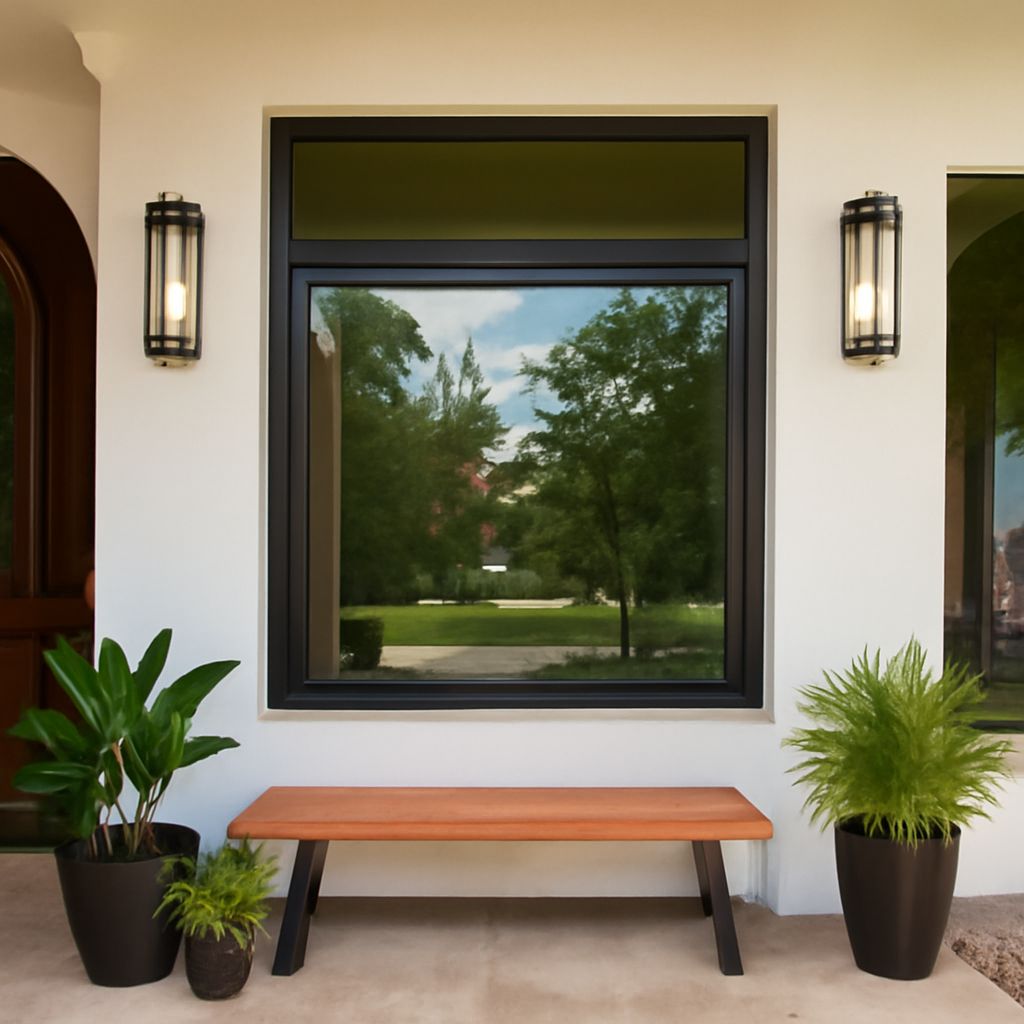
Reflective privacy film for windows can make it harder to see from a brighter exterior into a darker room during the day while preserving a view out. At night, when the room is brighter than the outdoors, the effect can reverse: someone outside may be able to see in. Streetlights, porch lights, and interior lamps all affect the result. The manufacturer’s claims for a specific product and your own test are more useful than a generic “one-way” label.
Window film privacy therefore changes with the light on each side for reflective products. Put a sample on the glass, turn on the bathroom or entry light after dark, and have someone check the view from outside. If the view remains too clear, use a shade or choose a more obscuring finish. A dark glass tint film can reduce brightness without necessarily hiding details; do not assume a deeper color alone supplies the privacy you want.
Cover a glazed entry with a purpose
For a front door window film, decide whether you need to see visitors clearly or block their view into the hall. A full frosted panel hides detail in both directions; a partial band can obscure the main sightline while leaving a clear strip for a view outside. Check the sightline from the sidewalk and porch, including through sidelights next to the door.
A glass door privacy film can also help a narrow entry feel less exposed without adding fabric to a moving door. Before cutting it, check whether the glass has separate panes or raised trim and measure each visible pane. The chosen covering should leave locks, handles, and any peephole usable. If a patterned film runs across several panes, plan how its lines will align before trimming.
Window film privacy depends on coverage as well as opacity. A clear border may look neat, but it can leave a view into the room from an angle. Use a sample to find the smallest uncovered edge that meets the product’s application directions and your privacy needs.
Check the glass before applying
Identify whether the pane is single or insulated, clear or tinted, and whether it has a low-emissivity coating. Tell the film supplier its size, orientation, and any shading or existing film. Some film and glass combinations can increase thermal stress; the manufacturer’s compatibility guidance determines whether the intended product is suitable. 3M’s film-to-glass table illustrates why recommendations differ by film and glazing.
Check the window manufacturer’s warranty as well as the film warranty. If you cannot identify the glass or a pane is damaged, ask a professional installer to assess it. For textured, coated, or plastic surfaces, confirm the film is intended for that surface and ask which side of the pane it should go on.
Measure and apply carefully
Before cutting window films for privacy, measure the visible glass in width and height, including every separate pane. Allow for the manufacturer’s recommended trim gap and cutting allowance, then check the roll size and pattern direction. If the glass is wider than a roll, decide where a seam would fall before buying. For a first project, a small bathroom window is easier to handle than a tall entry panel.
Follow the product’s cleaning and application instructions. Many films need a clean, smooth surface, a suitable application solution, and a squeegee; adhesive and static-cling products can have different procedures. Keep grit off the glass and film as you work. Do not scrape a coated surface unless its manufacturer permits it. Ask an installer about large panes or difficult-to-reach areas. Privacy films applied to windows need clean edges to stay in place as directed by the manufacturer.
Window film privacy is easiest to judge on the glass it will cover. Tonight, tape a sample in the intended position, turn on the room lights, and check the view from the places outside where privacy matters.