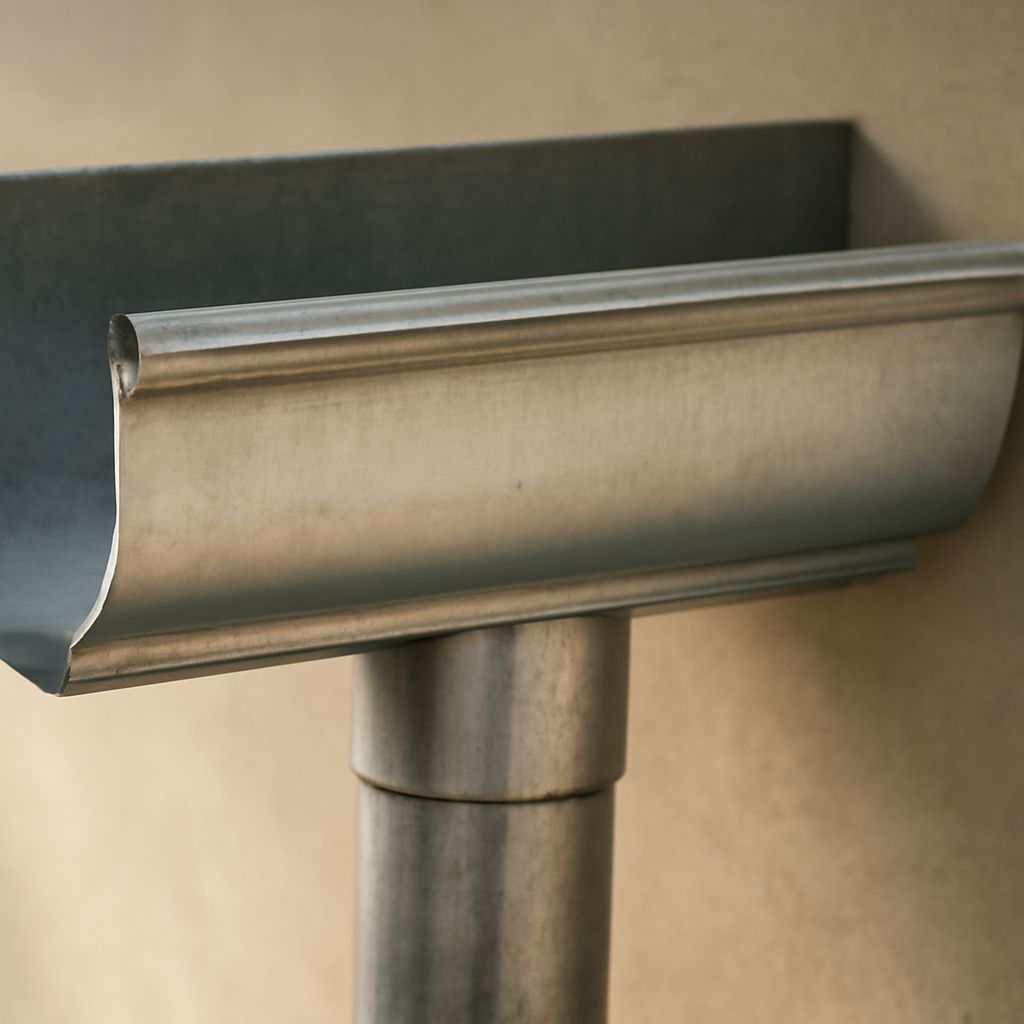
A gutter can look solid from the street while rust and standing water work inside it. When comparing zinc-coated gutters, look beyond the bright finish: ask about the steel, coating, joints, supports, and a plan for keeping water moving. Those details determine how the system will fit your house and what it will take to maintain.
Steel gutters with a galvanized coating offer a sturdy option for roof drainage, but their weight and connections affect installation. Compare a complete installed proposal, including downspouts and disposal of old material, before choosing on material price alone.
Galvanized steel gutters and the zinc barrier
Galvanizing adds a zinc coating to steel. The coating separates much of the steel from moisture and also provides sacrificial protection: zinc corrodes preferentially, helping protect nearby exposed steel. The American Galvanizers Association explains both mechanisms. Coating thickness and the surrounding environment affect how long that protection lasts; a bright surface alone does not tell you the remaining service life.
Galvanized gutters are steel products, so rust becomes a concern as protection is depleted or damaged. Leaves and sediment can hold moisture against the bottom, while salt exposure or other corrosive conditions can accelerate deterioration. Ask the supplier for the steel gauge and zinc coating specification, and ask the installer how cut edges and damaged areas will be treated under the product instructions.
Weight, support, and drainage
Steel resists dents well, although performance depends on the thickness and shape of the actual product. It is heavier than aluminum of comparable dimensions, so handling long sections and supporting the system deserve attention. Ask the installer to check the fascia for sound wood and specify the hangers, attachment points, and spacing for the proposed gutter. A heavy trough full of water and debris places more demand on its supports than an empty one.
A galvanized gutter still has to move the water it collects. The installer should size the channel and downspouts for the roof area, rainfall, and layout, then provide a consistent slope toward the outlets. The Department of Energy recommends appropriately sized gutters and downspouts that carry water away from the foundation. Ask where each downspout will discharge, particularly near walks, beds, and neighboring property.
Choose the profile and visible hardware
K-style channels have a shaped face and a relatively flat back. Half-round channels have a curved trough and a more traditional profile; their rounded form and exposed brackets can become part of the house’s trim. Compare steel rain gutters with zinc coating at the actual roof edge, not just in a catalog. A wide fascia may suit a more prominent profile, while an exposed bracket can add detail to a plain eave.
Galvanized half round gutters need appropriately sized outlets and hangers just as other profiles do. Compare the capacity of the specific products offered rather than assuming that a given width carries the same flow in both shapes. Ask whether the hangers, end caps, elbows, and downspouts are available in matching finishes and whether the bracket style will be visible from the street.
A half-round gutter made from galvanized steel can be attractive on a traditional home, but the profile needs room at corners and under the roof edge. Have the installer show how the brackets and outlets will fit around trim. For a zinc-coated steel gutter on a complex roof, count corners and changes in direction before comparing quotes.
Joints, fasteners, and compatible materials
Each joint, end cap, and outlet is a place where a leak can develop if the assembly is poorly fitted or sealed. Ask whether the quote uses sectional or longer fabricated runs, where the seams will fall, and what method will join them. Longer runs can reduce the number of joints, but transport and access may limit their length. Repairs should follow the manufacturer’s guidance for the coating and joint material.
Hardware should be compatible with the gutter material and local exposure. Different metals in electrical contact can contribute to corrosion under wet conditions, so ask the installer how the specified fasteners, brackets, flashing, and nearby metal surfaces will work together. Galvanized steel gutters should be supported without relying on sealant to hold the system in place.
Inspect and maintain the system
Clear leaves and grit before they form a wet layer in the trough or block an outlet. The cleaning schedule depends on nearby trees and weather; check after leaf fall and after heavy storms. If roof height or footing makes access unsafe, hire a gutter service. Watch during rain from the ground for overflow, drips at seams, or water spilling behind the fascia.
Inspect galvanized gutters for scratches, persistent wet spots, loose hangers, and red rust. A small damaged area may be repairable with a compatible coating after suitable preparation; ask the manufacturer or a qualified installer for the right method. Rust spreading through a seam, perforation, or weakened metal may call for a section replacement. Fix a drainage or support problem at the same time, or the new section will face the same conditions.
Compare the installed price
Request itemized bids for the same profile, gauge, coating, length, downspouts, hangers, and disposal. Labor can rise with steep roofs, difficult access, custom corners, or fascia repairs. Ask whether the price includes removing old gutters, fixing hidden damage, and protecting landscaping. For galvanized gutters, compare warranty terms for materials and installation as well as the final total.
Choose the system whose specified steel, supports, drainage route, and maintenance plan suit the roof and exposure—not simply the lowest price per foot.