A louvered window suits a room where you want adjustable airflow, but its value depends on how well the particular unit closes and protects the room in your climate. An unconditioned porch and an air-conditioned bedroom make different demands. Check the model’s air and water performance, security, and operation before choosing it for either space.
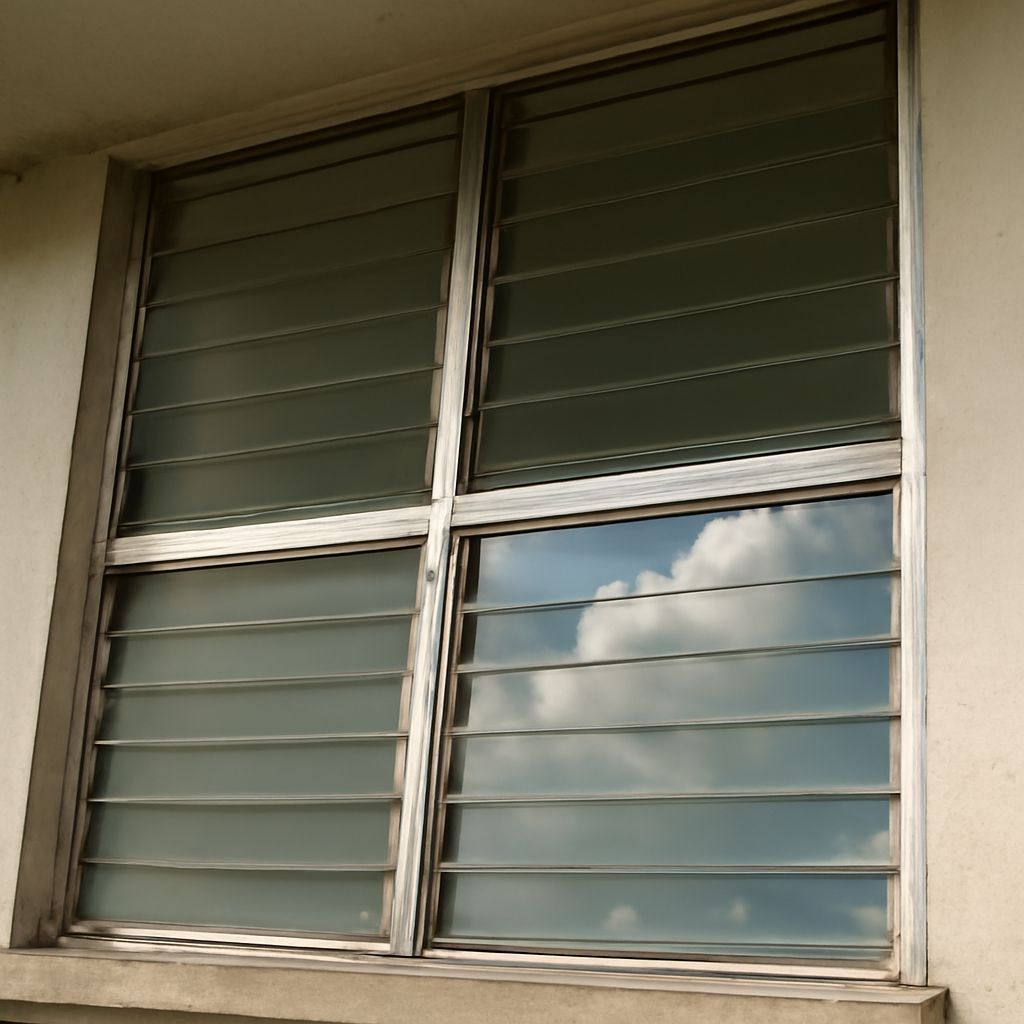
A window with jalousie louvers opens through a series of moving slats. The design gives you a way to admit a breeze across much of the opening, while its many edges and moving parts deserve a close look when the window is shut.
Jalousie window: how the slats move
A crank or lever usually moves linked glass, metal, or other slats together. As the operator turns, arms at the sides pivot the slats from an overlapping closed position to an angled open position. In a window, jalousie slats should move evenly and settle against their seals without binding. A screen may sit on one side of the assembly; check how it is removed for cleaning.
On older jalousy windows, worn operators, bent arms, loose clips, or damaged slats can keep one section from closing with the others. Do not force a stiff crank. Inspect the visible parts and ask a window specialist to identify the mechanism and available replacements. A single broken part may be repairable, but the condition of the frame and the availability of matching parts matter too.
Ventilation and rain
Open slats can admit air through much of the frame while allowing you to adjust the angle. On a shaded porch or in a mild climate, windows with jalousie slats offer control that can make a breeze useful without a large sash projecting far into the room. The airflow from jalousie-style windows also depends on wind direction, surrounding walls, screens, and another opening that lets air move through the house.
A louvered jalousie window may shed some rain at a partly open angle, but wind can drive water through an opening. Close it when exposed to storms or unattended weather changes, and follow the manufacturer’s directions. Overhangs and sheltered placement can reduce direct exposure; neither changes the tested water resistance of a closed unit. Consider where water would land inside if it entered.
Air leakage and comfort
When closed, jalousie windows depend on the fit of their slats, frame, and seals. An older unit with worn edges may admit drafts, dust, or noise. Jalousie-style window units vary, so compare published air-leakage and water-resistance ratings for the exact model and size rather than judging from the type alone. The Department of Energy describes air leakage as a measured rate and notes its importance in conditioned buildings.
In a heated or air-conditioned room, also compare the whole-window U-factor and solar heat gain coefficient where available. A lower U-factor generally means less heat transfer; solar heat gain needs depend on climate and shading. Ask whether the quoted model has independently rated performance data and whether the installation includes sealing and flashing around the frame. A good unit cannot compensate for a poorly sealed opening around it.
Security, safety, and local requirements
For windows with jalousie louvers, examine how the slats are retained and locked when closed. Some older louver windows may be easier to tamper with than a unit designed with more secure blade retention, while modern products differ in construction. Ask the manufacturer for details of locks and any tested security claims. Decide whether the window’s location is exposed to a person standing outside and whether another protection measure is needed.
For a bedroom or other room that needs an emergency escape opening, ask the local building department whether the proposed assembly satisfies the applicable clear-opening and operating requirements. The open space between fixed slats may not provide a usable exit even when the window admits plenty of air. Check any required safety glazing and, in a high-wind area, the applicable wind-pressure and debris-protection requirements for the complete installed unit.
Maintenance and repair
Keep the tracks, pivots, and screens of jalousie-style louvered windows free of dust and debris. Clean accessible slats with the products recommended by the manufacturer, supporting the glass carefully and avoiding excessive force. Inspect seals for splits or gaps and look for corrosion on the operator and clips. If the unit is high or the glass is loose, have a professional handle the work.
Jalousie windows with a loose blade or a mechanism that will not close evenly need attention before the next hard rain. A specialist can identify whether a replacement operator, clip, seal, or matching slat is available. Ask for a quote that includes parts, labor, and any adjustment needed to make the assembly operate together. Do not substitute an arbitrary pane for safety or impact-rated glass.
Repair or replace?
If the frame is sound and parts are available, repairing a jalousie-style window can preserve its appearance and restore smooth operation. If several parts are worn, the frame is damaged, or a conditioned room remains drafty, compare the full repair price with a new unit. Include installation, interior trim, exterior flashing, and disposal in the replacement quote.
Compare jalousie windows with other operating styles at the same opening. Ask how much ventilation you need, what performance the room requires when closed, and whether the proposed unit meets the local rules. A sample in a showroom helps you feel the crank and lock, but the written specifications tell you what was tested.
Choose the unit whose documented performance and maintenance needs fit the room, climate, and location where you will use it.