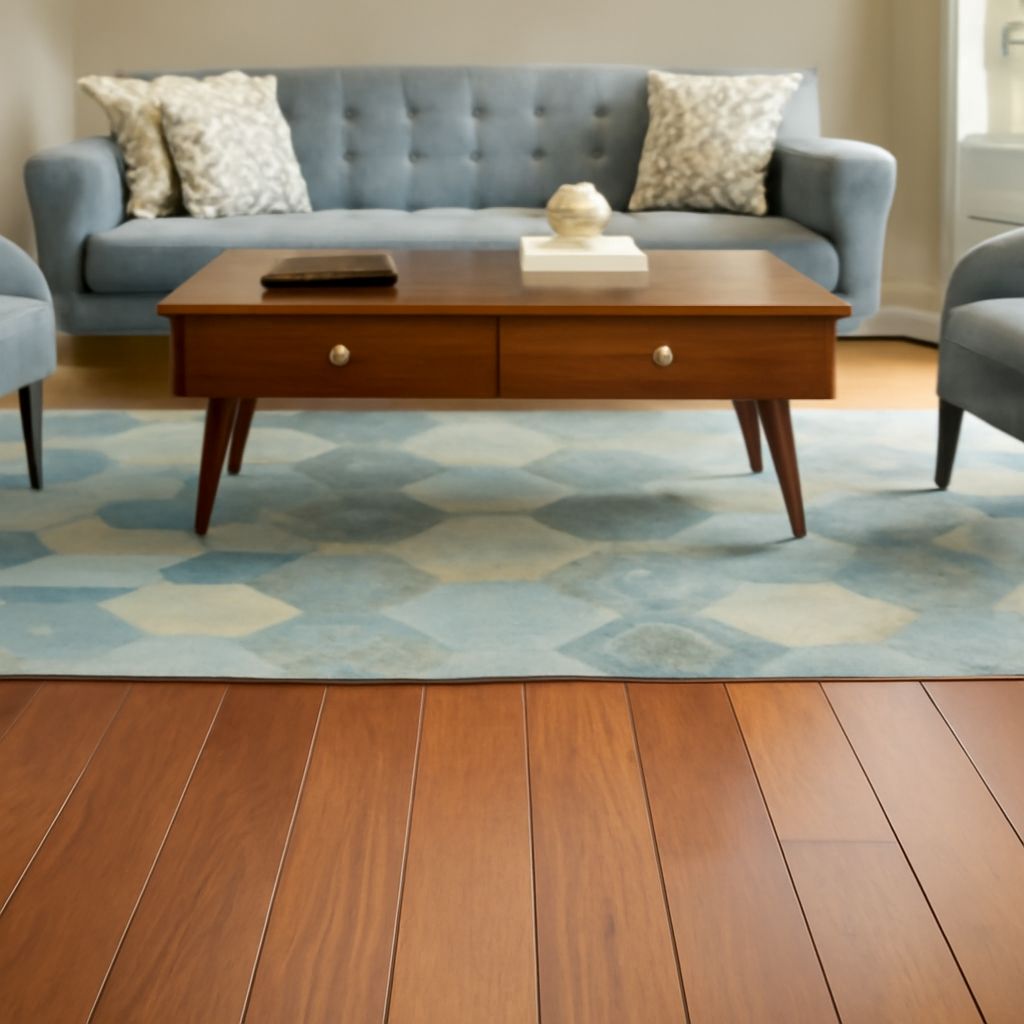
Start by choosing a pattern you like, then check what the floor is made of and how it must be installed. A parquet floor can use real wood pieces arranged in a geometric design, while some products reproduce that design with a printed surface. Wood flooring in a parquet pattern brings its own requirements for the subfloor, moisture and maintenance; the picture on the box tells only part of the story.
Parquet Wood Flooring and Look-Alike Products
What is parquet flooring? Traditionally, it is a floor made from small wood pieces arranged in a repeated pattern. To understand what a parquet floor is, look at how the pieces meet. The arrangement creates the design: a herringbone uses rectangular pieces meeting at right angles, while a basketweave groups pieces to suggest an over-and-under weave. A chevron uses angled ends that meet to form a continuous V.
Parquet wood flooring may be solid wood or engineered wood. A solid piece is wood through its thickness. Engineered wood has a real-wood top layer bonded to layers beneath it. Ask for the thickness of that top layer and the maker’s refinishing guidance; not every engineered product can be sanded, and even a solid floor has a limit to how much material can be removed.
Laminate and vinyl can imitate parquet patterns without a real-wood surface. Check the product’s construction and installation instructions rather than relying on the word “parquet” in a listing. A sample viewed from the edge helps reveal the layers, while the specification sheet identifies the surface material. Compare the finish in the room’s own light, too: a showroom lamp is a poor substitute for a living-room window.
Pick a Pattern and a Format
Individual blocks give an installer flexibility to build a pattern on site. They also call for careful layout: small errors can travel across a room as rows are added. Prefinished pieces arrive with a factory-applied surface; unfinished pieces require finishing after installation, with time and disruption allowed for that work.
Parquet flooring tiles group several pieces into a larger unit, which can simplify repeated layouts. Some parquet floor tiles are engineered panels; others are solid wood assemblies. Check their dimensions and the intended installation method, because the word “tile” describes the format rather than the material beneath the surface. Ask whether replacement units will be available and whether they can be matched to the original batch.
For a small room, use a sample or a scaled sketch to see how the pattern meets doorways and walls. A large motif may be cut off repeatedly at the edges; smaller pieces can create a busier surface. Herringbone and chevron also need a deliberate starting line. The best-looking center on a plan may leave narrow cuts at the far wall, so inspect the whole layout before fixing the first piece.
Match the Material to the Room
Parquet hardwood flooring can serve a living room or bedroom when the product and installation suit the conditions. Wood responds to changes in moisture and humidity; spills should be addressed promptly using the manufacturer’s care instructions. In rooms exposed to frequent standing water, compare alternatives and follow the manufacturer’s restrictions rather than assuming every wood product is suitable.
Engineered construction may offer options for settings where a manufacturer does not recommend a particular solid product, but its suitability depends on the specific product and conditions. Ask whether it is approved for the room, the expected indoor humidity and the level of the home, including below-grade spaces. Verify the recommended expansion gap at walls and fixed objects; that space lets the floor respond to seasonal movement.
A kitchen presents a practical tradeoff. A wood surface can bring warmth and may be repairable, depending on its construction and finish, but leaks around appliances deserve attention. A patterned vinyl or laminate product may be a better fit for some households. Compare the instructions for water exposure and repair, not just the appearance of a sample.
Check the Subfloor Before Ordering
The subfloor is the structural surface beneath the finish floor. Before choosing wood parquet flooring, identify whether that surface is plywood, concrete or another material, and ask which installation methods the product permits. Depending on the product and substrate, pieces may be glued, mechanically fastened or installed as a floating floor, in which the flooring is joined together rather than attached across the subfloor. These methods are not interchangeable for every product.
The surface must meet the manufacturer’s requirements for flatness, cleanliness and moisture. Concrete can carry moisture even when it looks dry; use the specified test rather than judging by appearance. Uneven spots may need correction before installation. Also check the height of the finished assembly against doors, adjoining floors and appliance clearances. A low price per square foot grows less attractive when the threshold no longer fits.
Bring the installer’s measurements to the seller and discuss layout waste. Diagonal patterns, borders and cuts around obstacles can increase the amount needed. Keep the calculation tied to the chosen format and room plan, and ask about returns for unopened material. A few spare pieces from the same batch can be valuable if a section is damaged later.
Questions to Ask Before Buying
Deciding where to buy parquet flooring involves more than comparing a displayed price. Ask the seller for a written specification, installation instructions and warranty, and confirm who will handle a damaged or mismatched delivery. A sample, a clear return policy and access to matching stock are worth considering alongside the quote.
Before ordering parque flooring, confirm the total price for the material, delivery, underlayment or adhesive, preparation and installation. Ask how the product is cleaned, whether its finish can be repaired, and what room and subfloor conditions the warranty requires. If an installer is involved, have that person review the exact product before the order is placed.
Choose the pattern that suits the room only after the construction and installation instructions suit the room’s conditions.