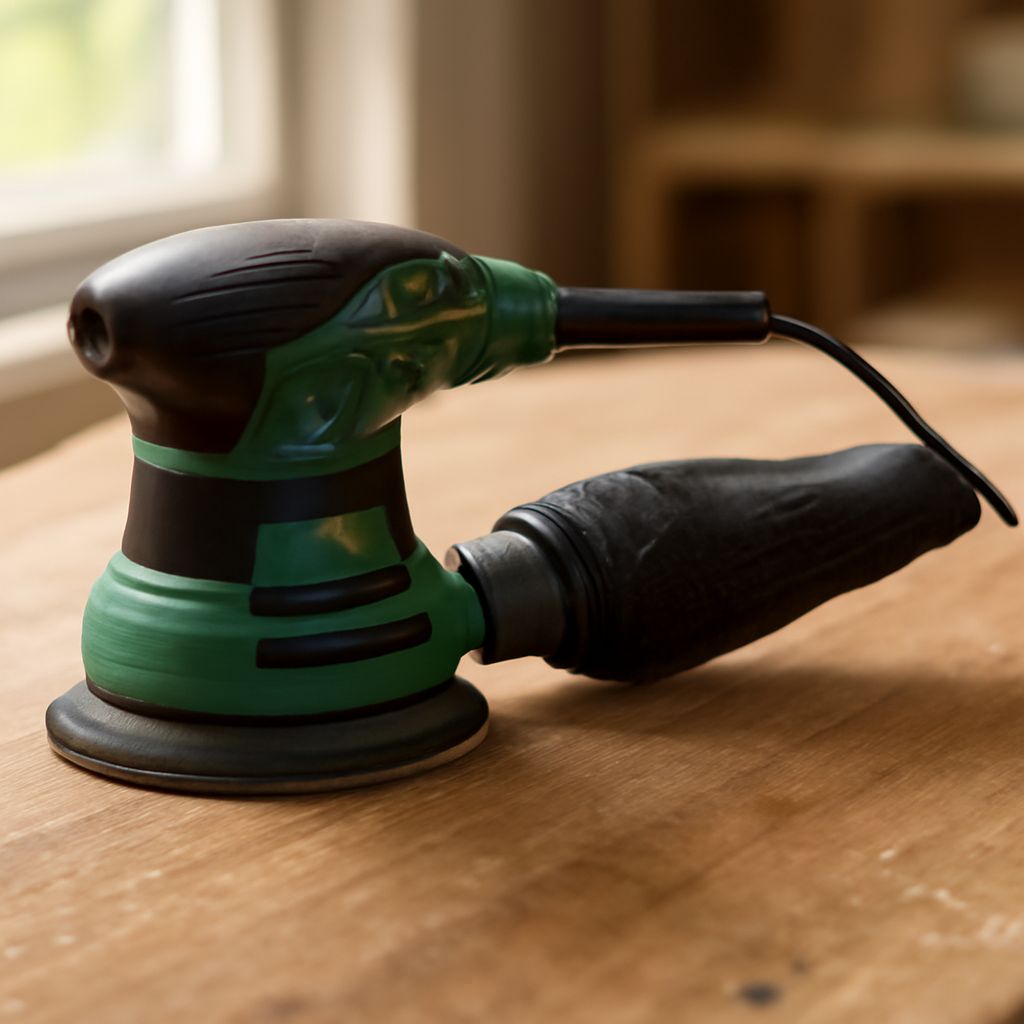
The right sander depends on how much surface you need to cover and where you will work. A compact corded machine suits repeated jobs near an outlet; a battery model earns its keep when you move around a deck or between rooms. The best orbital tool for a homeowner is the one that can reach the work and stay comfortable until the job is done.
For most furniture and general wood preparation, the best random-orbit sander balances a manageable pad, dust collection, and adjustable speed. A random orbital sander moves its round pad in overlapping orbits while the pad rotates, helping produce a smooth surface without the regular scratch pattern of a simple vibrating sheet sander. It still takes care and the right abrasive to leave a clean finish.
Best Random Orbital Sander: Match the Tool to the Work
The best random orbital sander for many owners is a 5-inch model, a practical first purchase for cabinet doors, shelves, tabletops, and patching projects. Its round pad covers flat areas efficiently while remaining manageable on modest pieces. It will not reach into a square inside corner; finish those spots by hand or with a detail sander.
For a broad tabletop or several large panels, a 6-inch pad covers more area per pass. The larger machine and discs can cost more, and the pad needs enough support to stay flat. On narrow rails, a smaller tool is easier to control. The best orbital sander for a particular job should fit the surface before its power rating enters the discussion.
A belt sander removes material quickly when leveling rough stock, while a random orbital model is better suited to refining the surface afterward. The best sander for a project may therefore be two tools used in sequence, especially when rough lumber needs substantial flattening before finishing. Sanding will not correct a deeply warped board efficiently.
Corded or Cordless?
A corded model supplies continuous power as long as an outlet is available. It makes sense for a workshop bench, a long furniture restoration, or a homeowner who does not already own a compatible battery. Account for the cord’s reach and keep it clear of the pad and the edge of the workpiece.
A top cordless orbital sander is convenient for outdoor furniture, built-in shelving, and work in several locations. Battery runtime depends on the tool, battery capacity, load, and speed, so plan charging or a spare battery for long sessions. Include the battery and charger in the price if they are sold separately. If you already use a tool platform, a compatible battery can make the cordless option more economical.
The best random orbit sander for a room-by-room project may be cordless, but a vacuum hose can still limit mobility. Set up the hose and power source together before deciding which convenience matters most.
Dust Collection and Disc Fit
Sanding dust obscures the surface and spreads through the room. The best random orbital models offer collection; a bag or canister is convenient for a small outdoor job; a compatible vacuum connection is a better arrangement for longer indoor work. Check the port diameter and whether an adapter is included. Empty the bag or canister before it fills, following the tool’s instructions, so airflow can continue through the pad.
Match the disc diameter, attachment type, and dust-hole pattern to the backing pad. Hook-and-loop discs are quick to change, but they need to seat flat and align with the extraction holes. Check local availability and the price of replacement discs and pads: inexpensive equipment can become costly when consumables are difficult to find.
Wear appropriate eye and respiratory protection and control dust at its source. Before disturbing old paint, find out whether it contains lead; ordinary dry sanding can spread hazardous dust. EPA guidance explains lead-safe renovation practices.
Speed, Comfort, and Control
Variable speed lets you adjust the tool to the material and stage of work. Use a lower setting when working carefully near an edge or between finish coats, and test on scrap or an inconspicuous area. Higher speed can remove material faster, but the abrasive grit also matters. Select a coarser disc when appropriate instead of pushing hard on the machine.
Even the top orbital sanders need a comfortable grip. Vibration matters over a long session. Hold a top random orbital sander in your normal working position, including the battery if applicable. Can you reach the switch and speed dial without changing your grip? Can you keep the pad flat on the piece? The best orbital sanders will be easier to guide when their weight and shape suit the operator and the work.
Look for a brake or pad-control feature if a model offers one, and read its manual for starting and stopping technique. Keep the pad flat and move steadily in overlapping passes. Let the abrasive cut; pressing or tipping the tool can leave uneven spots or round an edge.
Read Specifications and Reviews With a Job in Mind
A random orbital sander review is most helpful when it describes the material, grit, dust setup, and duration of the work. A single result on a clean pine board tells you less about a long session stripping a tabletop. Look for details about replacement pads, switch access, and whether the machine can connect to your existing vacuum.
Compare random orbital sander reviews on the same criteria, especially if one model includes a battery and another is sold as a bare tool. A random orbit sander review can also reveal an awkward hose connection or a grip that may matter more to you than an impressive speed range. Check the manufacturer’s specifications and current package contents before buying.
Choose an orbital sander with a 5-inch pad for varied household work, or consider a larger, continuously powered setup for extensive flat surfaces; choose cordless when moving between work areas saves more time than charging costs.