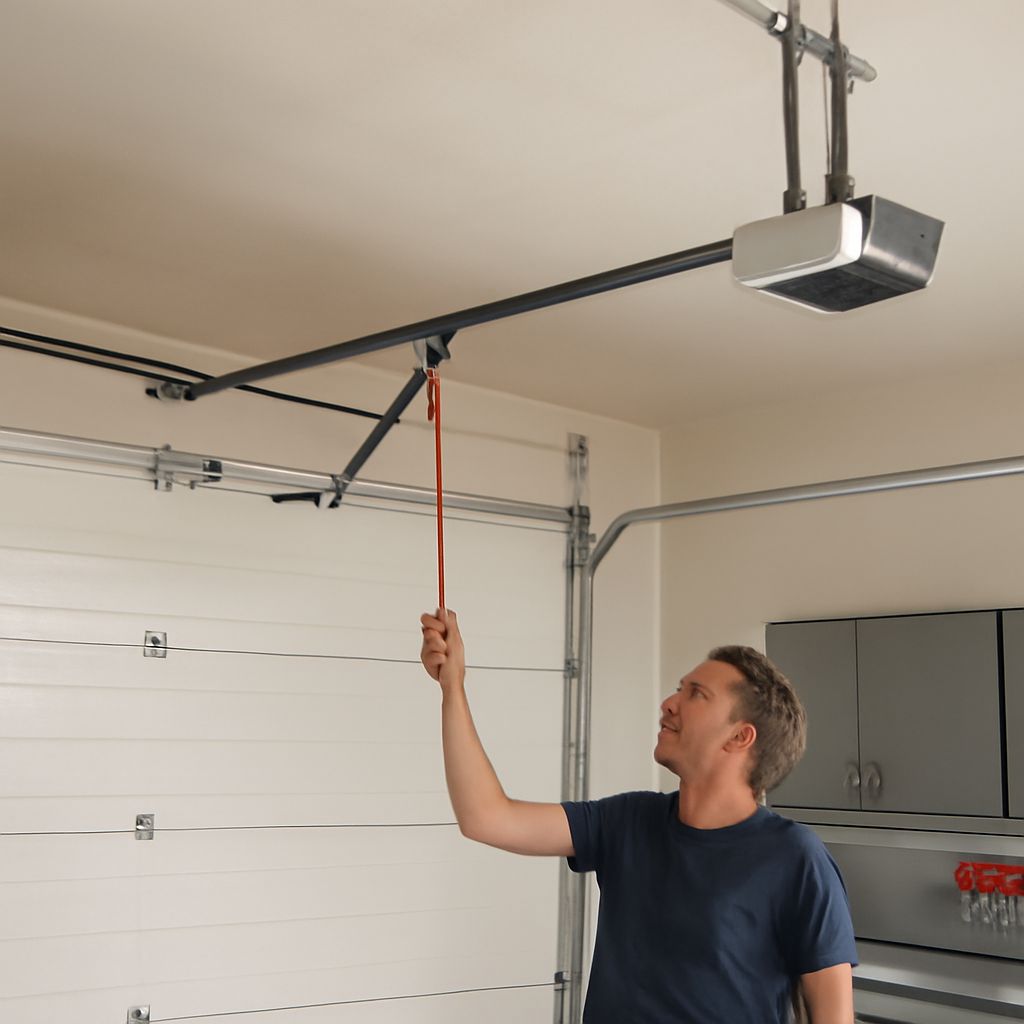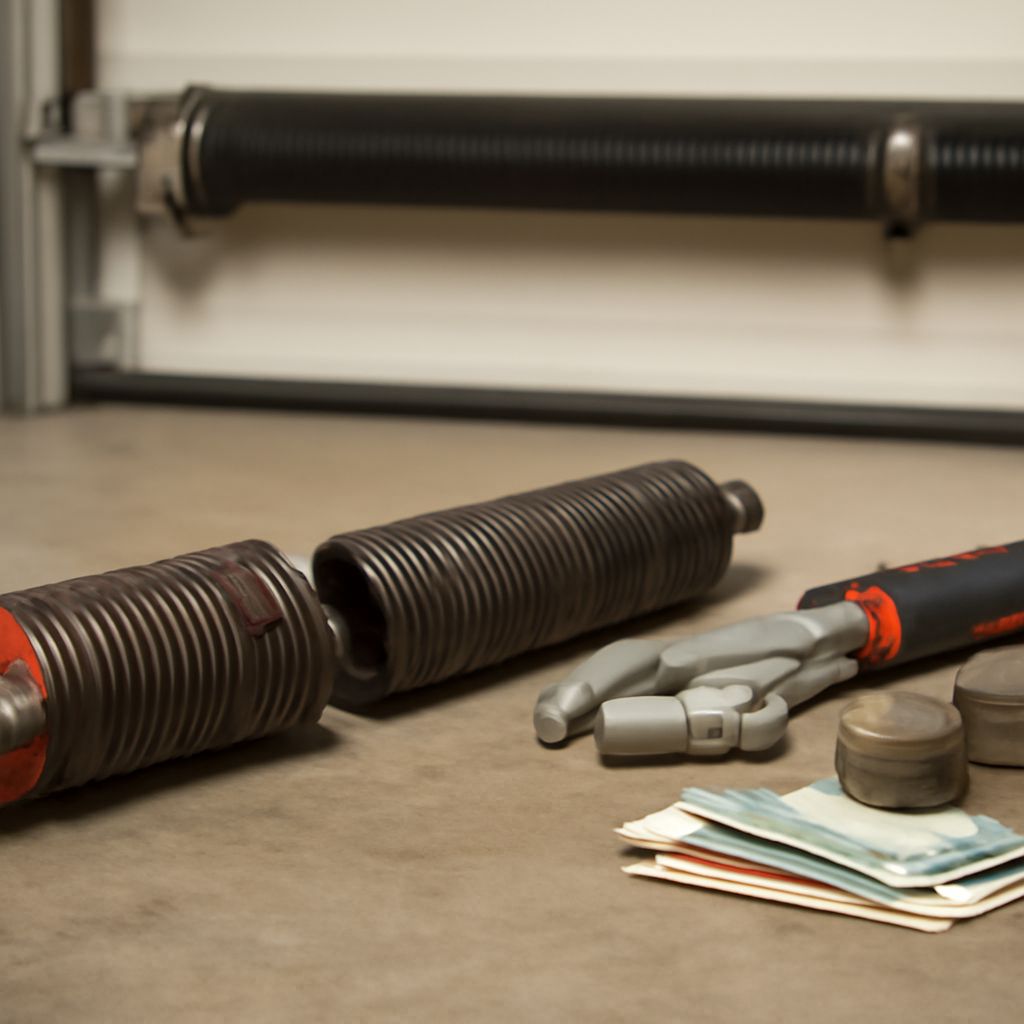
Look at the hardware from a safe distance with the door closed. A torsion spring on a garage door is usually mounted on a shaft above the opening; extension springs usually run beside the horizontal tracks. Springs for garage doors counterbalance the door’s weight and store enough energy to cause serious injury. Leave adjustment and replacement to a trained technician.
Garage door torsion spring: How it works
A torsion system typically uses one or more coiled springs on a metal shaft above the door. As the door closes, the springs wind and store energy. As it opens, that energy turns the shaft and cable drums, helping lift the door. Lift cables connect the drums to the lower part of the door. The opener moves a properly balanced door; it is not a substitute for the counterbalance.
A garage door torsion spring may be visible above the header, although some systems enclose the spring. Do not remove a cover to identify it. From the floor, note whether there is a shaft across the opening and whether one or two coils can be seen. A photograph taken from a safe position can help a service company identify the arrangement.
A torsion spring for a garage door must be selected for the weight and dimensions of that particular door and its hardware. A spring that looks similar is not necessarily the right match. The technician determines the specification and adjusts the complete system so the door is properly balanced. A spring matched to the garage door must suit its actual installed weight, including any windows or added insulation.
How extension springs differ
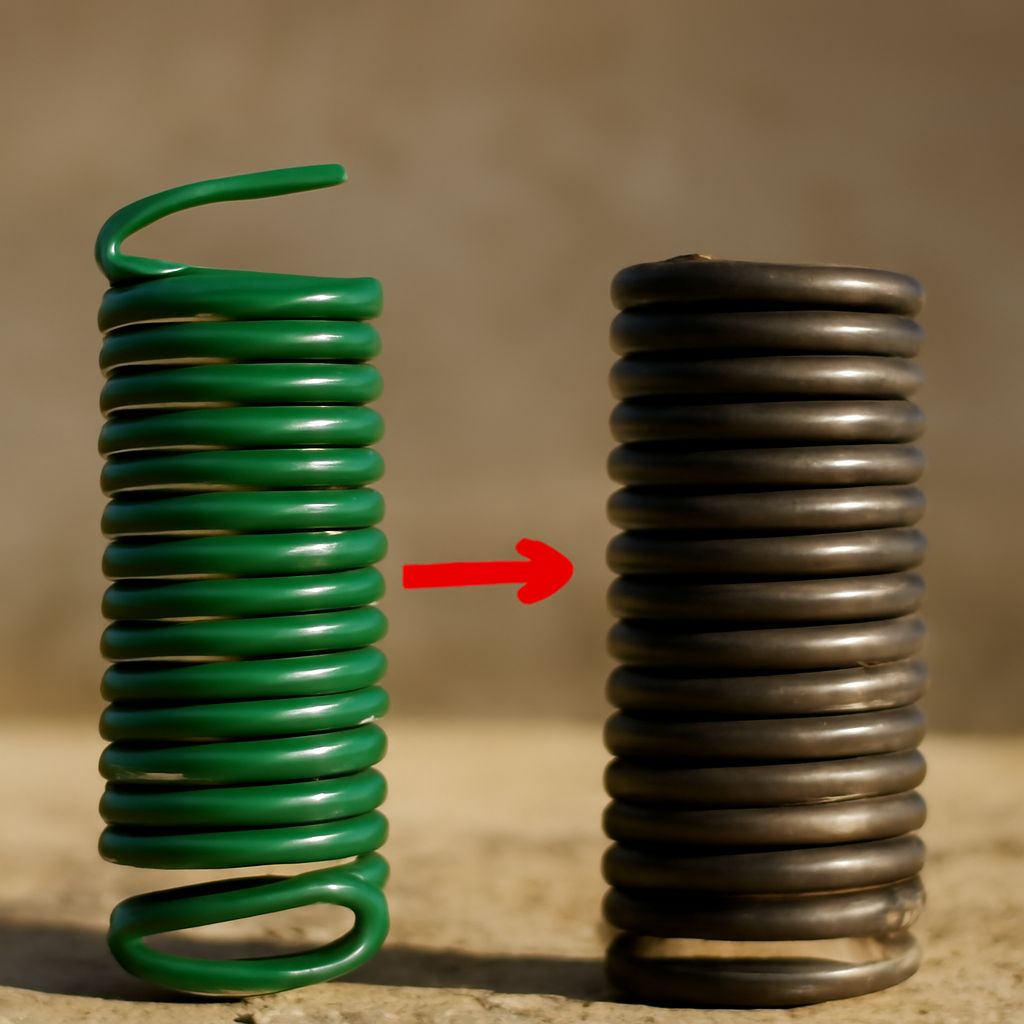
Extension springs usually sit along the sides of the horizontal tracks and stretch as the door closes. They work with cables and pulleys to help raise the door. A typical sectional door has a spring on each side. Some other door designs use different arrangements, so use location as a clue and let the technician confirm the system.
You may hear extension units called garage door tension springs because they stretch under load. The name describes their action, but both main garage door spring types store energy. A safety cable should pass through each extension spring and attach securely at both ends; it helps restrain a broken spring. The Door & Access Systems Manufacturers Association advises having these cables in place. If one is missing or damaged, keep clear and arrange service.
Some homeowners describe either style as a garage spring. Tell the service company what you can see rather than relying on the name alone. Torsion systems generally sit above the opening; extension systems commonly lie alongside the overhead tracks. Do not touch, disconnect, or test a spring or its attachments to settle the question.
Recognize a problem without taking the system apart
A loud bang, a visible gap in a torsion coil, a hanging cable, or a door that looks crooked can signal a failure. An opener that strains or a door that suddenly feels unusually heavy can also point to a counterbalance problem, although tracks, rollers, and other parts may be involved. Report the symptoms and let the technician diagnose them.
If you suspect a broken spring, stop using the door and keep people away from it. Do not pull the emergency-release cord while the door is open: an unbalanced door may fall. Do not force the door, loosen hardware, or try to wind a coil. Use another entrance and tell the service company whether the door is open, closed, or stuck partway.
A garage-door spring can weaken from repeated cycles, corrosion, or changes in the door’s weight. One cycle is an opening and a closing. Ask about the rated cycle life of the proposed part and compare the warranty as well as the price. A household that opens the door many times a day may value a higher-cycle option.
Compare the part price with the whole repair
The cost of garage door springs is only one line in a repair bill. In its 2026 guide, This Old House estimates average parts costs of $20–$60 for extension springs and $80–$120 for torsion springs. These figures exclude installation; size, specifications, brand, and local supply affect the price.
The installed price also covers the service visit, labor, matching and fitting the parts, balance adjustments, and testing. Extra work on cables, pulleys, bearings, or damaged hardware can add to it. As a broad comparison, This Old House reports an average of $300–$540 for replacement including parts and professional labor. Ask whether the quoted total includes tax, disposal, travel, and any after-hours charge; prices and the number of parts included vary.
For a two-spring system, ask the technician to assess both units and explain whether replacing the pair is appropriate. Springs that have worked together may have similar wear, but the estimate should identify each part and the reason for replacing it. Compare warranty terms for parts and labor, and ask what happens if further damage is found after inspection.
Keep this service checklist
- Note the door’s approximate width and height, whether it is stuck, and any visible damage from a safe distance.
- Describe the spring location and send a photograph if the service company requests one. Do not handle a garage torsion spring or an extension assembly.
- Ask for an itemized quote for replacement garage door springs, labor, service fees, testing, and any additional parts.
- Confirm the spring type, cycle rating, warranty, and safety-cable condition with the technician. Leave the door unused until the repair is complete.