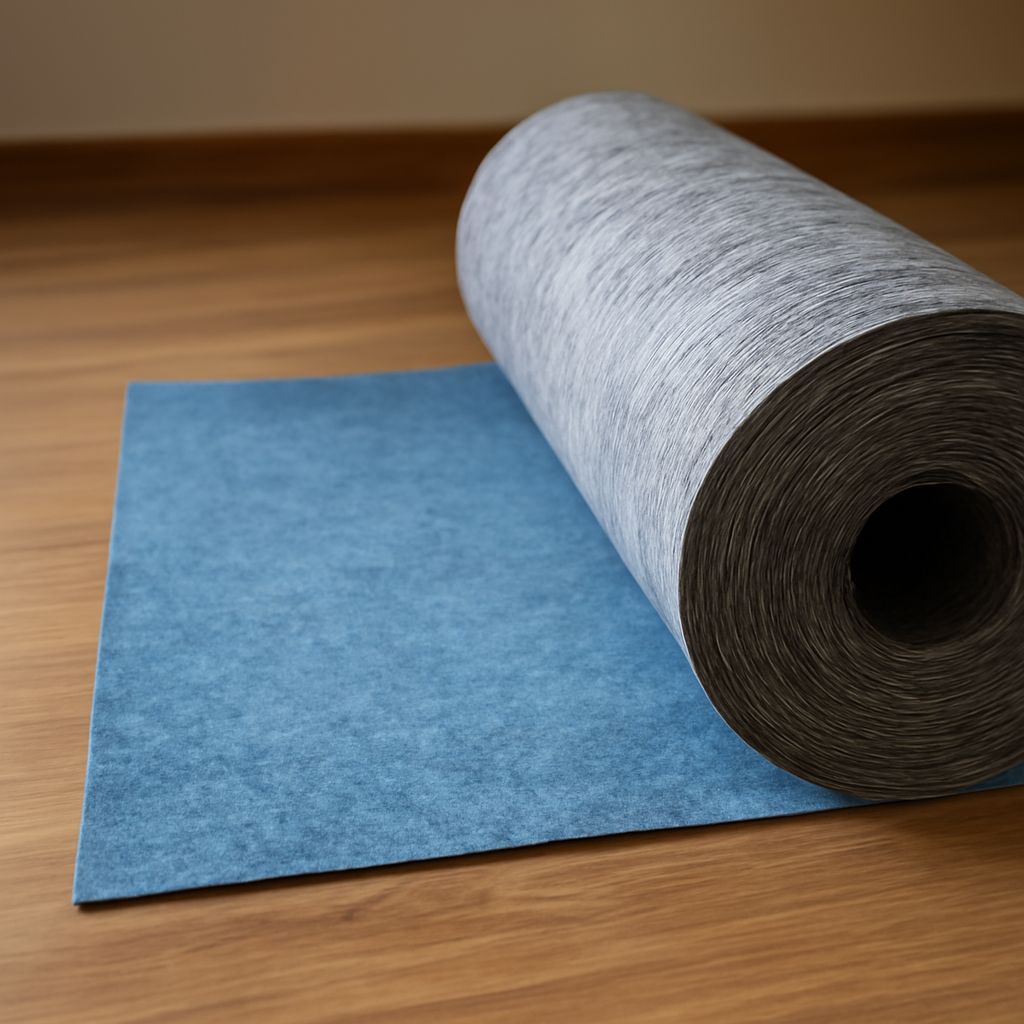
Read the installation instructions for your exact vinyl plank before buying a separate underlay. Some planks already have an attached pad, and some manufacturers prohibit another cushion beneath it; others permit or require a particular product. The right underlayment for a vinyl plank floor depends on that instruction and on whether the base is concrete or wood.
Vinyl Flooring Underlayment: Pad, Panel, or Barrier?
Vinyl flooring underlayment can take several forms. A cushioning underlay sits between a floating floor and the prepared subfloor. Depending on the product, it can help with sound or feel underfoot. A thin plastic vapor retarder has a different job: it limits moisture vapor movement and is not a substitute for an acoustic cushion. A rigid underlayment panel is different again; it can provide a smooth surface over an approved wood base.
The flooring maker’s directions decide which layers can be combined. An attached pad may rule out extra foam yet still require a separate vapor retarder over concrete. Another product may allow a specific acoustic underlay. Check the exact model and installation method rather than selecting a layer because it worked for a neighbor.
Excessively soft or thick material can allow floating planks to flex and place stress on their locking joints. Use only the type, thickness, and compression properties approved for your floor. Keep the instructions and receipt with the flooring documents in case a warranty question arises.
Attached Pad or Separate Underlay?
Turn a sample over or read the product specification to see whether cushioning is attached. Then locate the installation section covering your substrate. If extra padding is prohibited, install the planks over the prepared base using only any separately required moisture layer. If a separate pad is permitted, confirm the specific product and installation details with the manufacturer.
Glue-down planks require special attention. Their adhesive needs the substrate described in the manufacturer’s instructions; a loose floating-floor cushion generally cannot replace that bonding surface. A compatible rigid panel or approved specialty system may be specified instead. The layer beneath a vinyl plank floor must match the adhesive method. Ask the installer to identify the complete assembly, from subfloor to adhesive to finished plank.
When shopping for underlayment for vinyl plank flooring, compare total cost with the floor’s attached backing included. Paying twice for cushioning may buy trouble instead of comfort. If the product’s documents leave the combination unclear, get the manufacturer’s written guidance before ordering.
Concrete: Moisture and Flatness
Start with a clean, sound slab and investigate water stains, seepage, or a musty smell. Repair the source of water before installation. A waterproof plank can resist damage from a surface spill while moisture beneath it still affects the assembly or surrounding materials.
Test the slab using the method required for the flooring and any adhesive or moisture-control product. Compare the result with each product’s stated limit; a slab that looks dry may still release too much moisture. If a vapor retarder is required, use the specified material and follow the directions for overlaps, taped seams, and edges. A thin film is not a remedy for active leaks or a failed moisture test.
Check which layers belong beneath the vinyl plank flooring before preparing the slab. Check flatness with a straightedge and compare gaps and high points with the floor manufacturer’s tolerance. Grind or fill areas as directed, using a compatible repair compound. An underlay beneath vinyl planks can accommodate only the minor irregularities its instructions allow; it cannot bridge a dip or fix a moving slab.
Wood: Support Comes First
Inspect plywood or other approved wood subflooring for loose panels, squeaks, damaged areas, and protruding fasteners. Secure loose sections, replace compromised material, and check flatness. Investigate dampness and correct its source before covering the floor. If there is a crawl space below, inspect its ventilation and ground-moisture controls as part of that assessment.
A rigid panel may be needed to create a suitable surface, especially under a flexible glue-down product. Its grade, thickness, fastening pattern, and joint treatment must match the flooring instructions. Do not add a plastic sheet over wood simply because it is used over concrete; the assembly needs to follow the manufacturer’s approved moisture plan.
The choice of vinyl plank underlayment for a wooden base starts with support, not softness. A separate underlay for vinyl planks cannot stiffen a weak subfloor or silence a loose panel permanently.
Sound, Comfort, and Cost
An approved acoustic layer may reduce some impact noise between floors. Its published ratings are measured in a particular tested assembly, so compare the whole assembly, including the subfloor and any ceiling below. If you live in a condo, ask the association which acoustic documentation it requires before choosing a product.
Underfoot feel also varies. A firmer approved layer can protect the joints better than a thick, soft pad. Compare the price of a compatible vinyl-floor underlay with any expected benefit in sound or comfort; the thinnest assembly that meets the floor’s requirements may be all you need.
The answer to what goes under vinyl plank flooring may therefore be a moisture film, an approved cushion, a rigid panel, or only a properly prepared subfloor. The installation method and the condition of the base determine which. Count preparation, testing, tape, leveling compound, and labor along with the cost of any underlayment for vinyl plank flooring.
Before buying, read the exact plank’s installation instructions, inspect and test the concrete or wood base as required, and select only the layers approved for that combination.