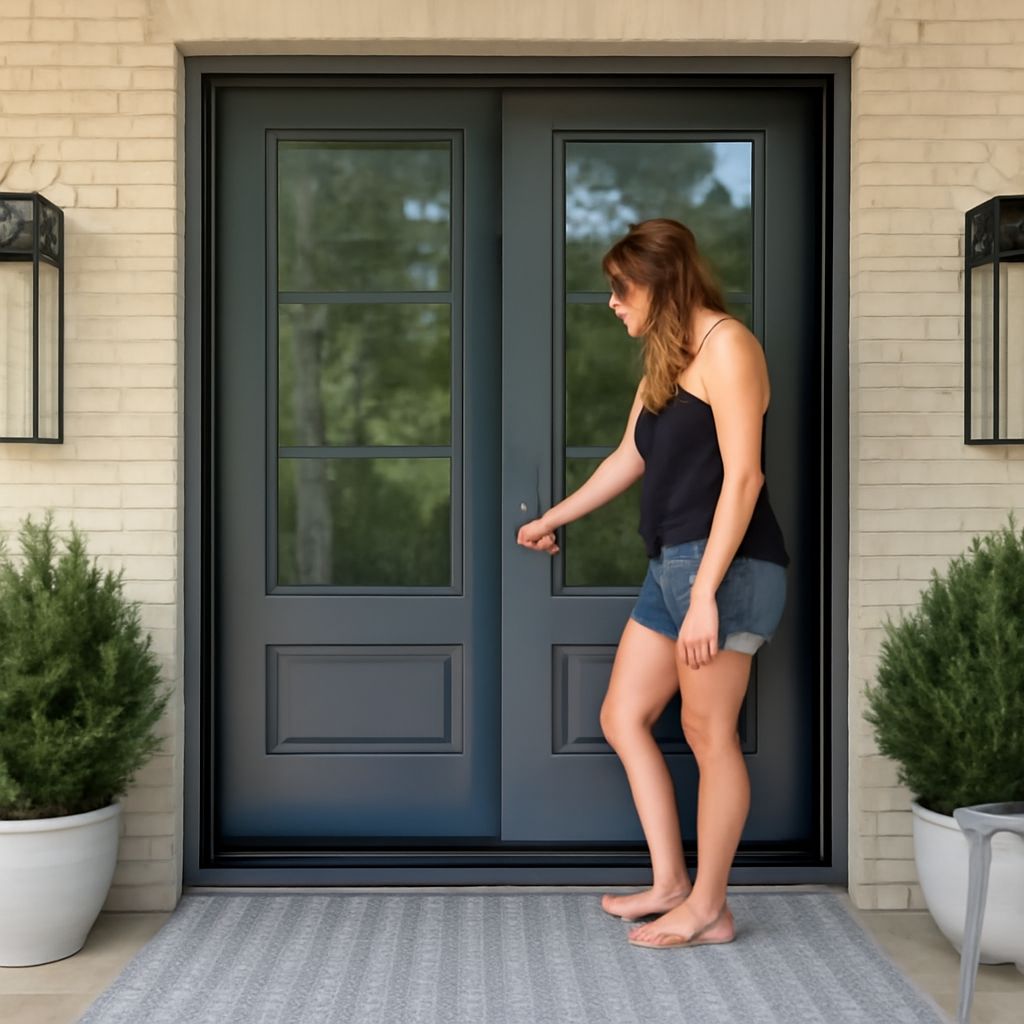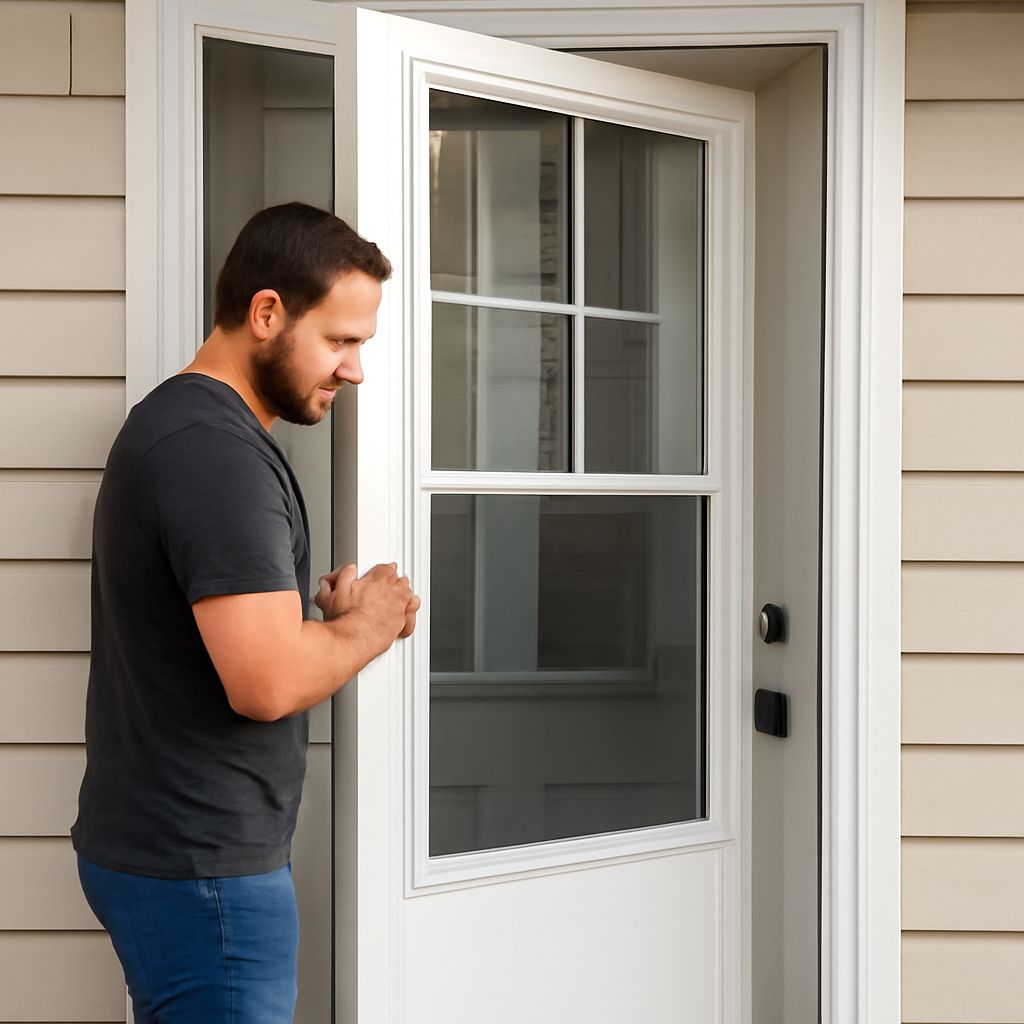
A suitable door must fit the opening, wall, and way into your home. Some manufactured-home openings accept a purpose-built unit with an exterior mounting flange; others can take a conventional prehung door if its dimensions and installation details match. Check the opening before buying an entry door for a mobile home.
Listings for doors sold for mobile homes can look alike while calling out different dimensions. Measure the existing assembly, confirm the supplier’s sizing method, and check the swing and threshold before placing an order.
Mobile home doors for sale: start with the assembly
A slab is the moving panel alone. A prehung unit includes the panel and frame, usually with hinges and a threshold. A combination unit may also include a storm door and its frame. Decide which parts need replacement: a sound frame might accept a compatible slab, while a damaged frame or a change in design calls for a closer look at the complete assembly.
Some mobile home doors for sale have an integral exterior flange that fastens over the siding at the opening. A conventional prehung unit may use a different jamb and fastening method. Compare mobile home doors by the full assembly dimensions. Doors offered for a manufactured home may differ in the hardware included. Ask the seller for the actual unit dimensions, required rough opening, wall-depth range, and installation instructions for the specific model.
Measure the opening and the old frame
Use a tape measure and write down each dimension in inches. Measure the existing slab’s width and height, then measure the outside dimensions of the frame separately. Record the depth of the jamb and the thickness of the wall from the exterior surface to the interior finished surface. Label each number so a seller can see exactly what was measured.
The rough opening is the framed space that receives the door assembly. If the framing is accessible, measure its width at the top, middle, and bottom and its height on both sides, from the subfloor to the framing above. Check diagonal measurements for a badly out-of-square opening. Trim may conceal the framing; if exposing it would leave the entrance unsecured or damage the finish, have an installer measure before ordering.
Do not treat the slab, frame, and rough opening as interchangeable measurements. The Lippert installation manual for one manufactured-home door series defines its call size by the rough opening, but another product may use a different convention. Compare your measurements with the chosen manufacturer’s requirements, including the flange or trim outside the opening. Leave the existing door in place until you have confirmed the new unit and arranged the work.
Confirm swing and handing
Stand outside and note which side carries the hinges and whether the panel swings into the room or out onto the landing. Take a photo with the door open and send it with your measurements. Manufacturers do not always describe handing from the same point of view, so ask the seller to confirm its diagram against your photo rather than ordering on “left” or “right” alone.
Mobile home entry doors need enough clearance for their full swing. Check the arc of the moving panel. An outward-opening door needs clear space on the landing; an inward-opening one must clear the floor, furniture, and any nearby interior door. Check how a screen or storm door operates with the main panel. Changing the swing may affect the landing and the path out, so discuss the plan with the local building department before ordering a different arrangement.
Match the threshold, wall, and weather seal
The threshold joins the bottom of the frame to the floor and landing. Look for soft flooring, stains, gaps, or water damage around it. The mobile home front door may need more than a new panel if the subfloor or framing beneath the sill is deteriorated. Ask an installer to assess the extent of damage and price repairs separately before fitting a new unit.
For the front entrance door of a manufactured home, check the height and profile of the proposed sill against the finished floor and exterior landing. A mismatch can leave a trip or drainage problem, or keep the door from sealing. Confirm how the threshold will be supported and how the door will shed water onto the exterior. Keep the landing and exit usable during and after the work.
For mobile home replacement doors, read the installation instructions before the old unit comes out. The chosen frame needs sound material for its specified fasteners, and the installer must integrate its flashing and sealant with the siding and weather barrier. Ask what happens if hidden rot appears and how the opening will be protected if repairs take longer than a day.
Compare construction and the complete price
Steel, fiberglass, and other facings differ in finish, maintenance, insulation, and price. Compare the actual construction and warranty instead of choosing by facing alone. Manufactured home exterior doors can come with several finish and hardware options. If the door has glass, check privacy, the glazing’s safety markings, and the manufacturer’s specifications. Examine the weatherstripping and hardware supplied with the unit, including whether a lockset or screen is included.
When comparing mobile home front doors, check that each quote covers the same assembly and work. Front entry doors for manufactured homes may be sold as slabs or complete units, so ask which is priced. One price may cover only the panel; another may include the frame, removal, flashing, trim, and disposal. Ask whether repairing the surrounding wall or changing the landing is included. For doors for mobile homes, check the return terms if concealed framing damage changes the required size. Compare the warranty for both the product and installation.
Before paying, send the supplier your measurements and photos and ask for written confirmation of the model, required opening, swing, and included parts. A door sold for a mobile home should come with installation details that match its frame and your wall.
Choose the unit whose documented opening, swing, threshold, and mounting method fit your home and the intended exit route.