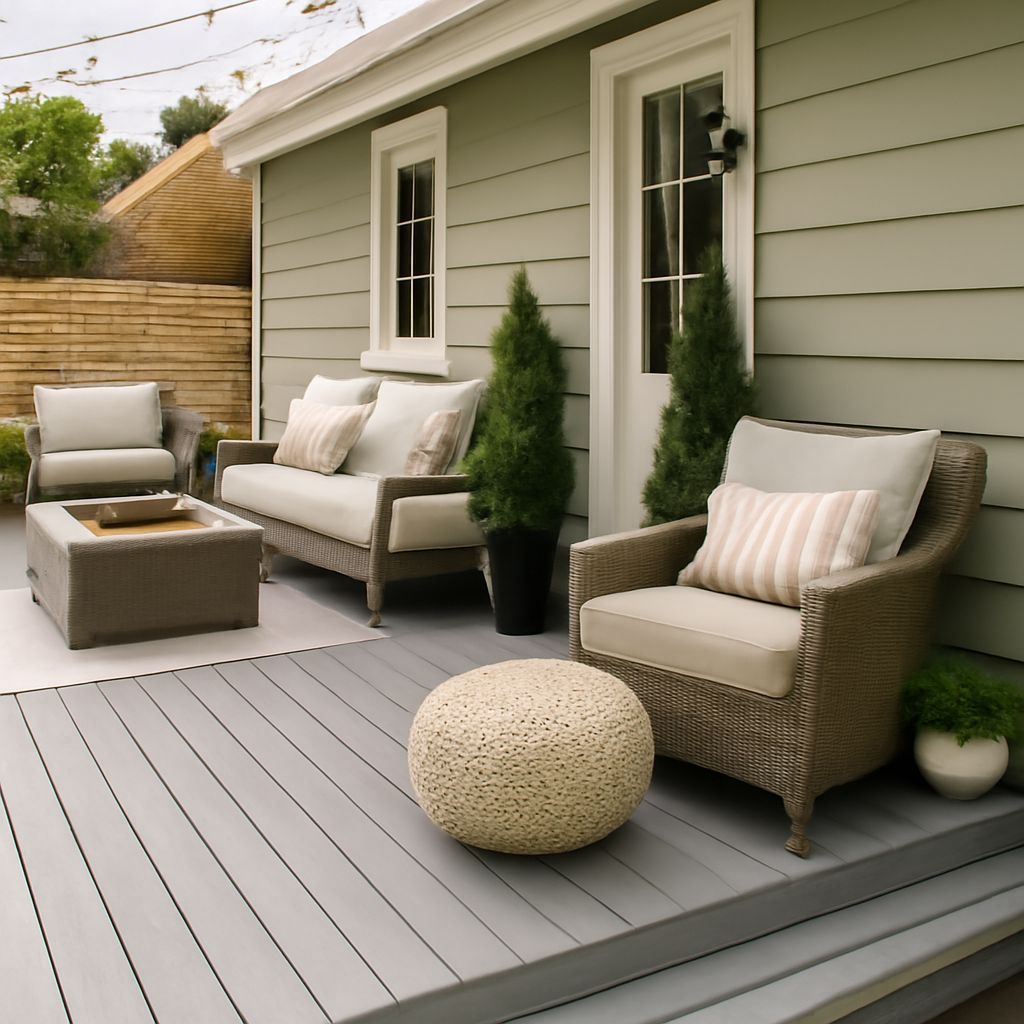
Start by probing the boards, especially around fasteners and where water collects. The right paint for an old deck needs sound wood, a clean surface, and enough dry weather to cure. If a screwdriver sinks into soft wood or a board bends underfoot, repair the deck before choosing a coating.
A good deck coating for older boards can cover weathered color and protect the surface from wear and water. It cannot restore lost strength. Check the framing and connections too; widespread softness or movement calls for a qualified deck professional before the deck is used.
Best Deck Paint for Old Decks: Start With the Surface
Look along board tops, ends, joints, and the ledger where the deck meets the house. Probe suspicious areas with an awl or screwdriver. Sound wood resists the point; soft, crumbling wood needs further investigation. Replace damaged boards and address the source of trapped water. Loose railings, corroded fasteners, or questionable framing deserve repair before any finish goes on.
Before sanding or scraping, consider whether old paint on a pre-1978 home contains lead; the EPA’s lead-safe guidance explains testing, dust containment, and cleanup. Shallow checking and a rough surface are different from rot. On sound boards, sand raised fibers and splinters after cleaning and drying. Drive protruding fasteners flush or replace them with suitable exterior fasteners. Choose the best deck paint for old decks only after you know how much solid wood and firmly attached finish remain.
If the existing coating peels across broad areas, the new layer will rely on that weak layer wherever it remains. Scrape loose material, feather the edges of sound paint, and follow the new product’s instructions for previously coated wood.
Match the coating to the job
Choose a product labeled for exterior wood decks and horizontal foot traffic. Ordinary exterior wall paint is formulated for a different surface and may not hold up under shoes, furniture, and standing moisture. The best wood deck paint for this job should also be approved for the surface you have: bare wood, an existing coating, or both.
For moderately weathered but solid boards, an exterior porch-and-floor coating is one option when its label permits deck use. A thicker resurfacing coating may fill small surface cracks and smooth roughness within its stated limits. It takes more material and can be harder to remove later, so read the coverage rate and preparation directions before buying. Neither type replaces a split or decayed board.
The best deck paint for old wood must bond to what is actually on the deck. If you cannot identify an existing finish, ask the coating manufacturer how to assess compatibility. Apply a small test patch on a prepared, inconspicuous area and let it cure according to the label; check its appearance and adhesion before committing to the whole floor. A test patch helps reveal a problem, though it cannot predict years of service.
Prepare a surface that can hold paint
Sweep leaves and grit from gaps, then use a deck cleaner suited to the wood and existing coating. Scrub with a stiff synthetic brush, rinse as directed, and keep cleaner out of nearby soil and plants according to the label. A pressure washer can damage soft wood if held too close; use a low setting and keep the tip moving along the grain.
Let the boards dry thoroughly. The surface may look dry while moisture remains in the wood, particularly at joints and shaded ends. Use a moisture meter if the coating specifies a maximum moisture content. Follow that limit and the product’s drying directions instead of choosing a fixed waiting period for every climate.
Once the surface is dry, remove loose finish and sand rough edges. Clear away sanding dust. For the best paint on an old wooden deck, use the primer specified for bare areas or the entire surface if the coating system calls for it. Do not seal over mildew, loose fibers, or chalky residue: each can interfere with adhesion.
Plan around weather and application
Read the can for air and surface temperatures, humidity restrictions, and rain-free and recoating intervals. A sunny afternoon can heat the boards well above the air temperature; hot wood may cause the coating to dry too quickly. Dew or a cold night can also interfere with drying. Pick a stretch of weather that covers preparation, application, and the required cure time.
Measure the deck and divide its area by the label’s coverage rate to estimate material for each coat. Allow extra for rough wood and waste, but do not thin the product unless the manufacturer permits it. Work a few boards at a time with the recommended brush or roller, keeping a wet edge. Coat board ends and exposed edges where the label directs, without filling drainage gaps.
Paint for an aging deck needs the specified film thickness to perform. Too little leaves thin spots; too much can slow drying or hide gaps. Respect the interval between coats and keep furniture and foot traffic off until the coating has cured for the use stated on the label.
Keep the finish working
Sweep debris from the gaps and move planters so water can drain. Inspect each spring and fall for peeling edges, exposed wood, soft spots, and loose fasteners. Clean and touch up small worn areas using the same system while the surrounding film is sound. If peeling spreads, find the moisture or adhesion problem before recoating.
When choosing a paint for weathered deck wood, favor the system whose preparation, weather window, and future upkeep you can actually meet.