Start with the roof, not the color chart. Gutters made of aluminum can be a practical choice for a house, but the right channel size, downspouts, supports, and discharge route matter as much as the metal. A light gutter that overflows or sags will not protect the wall beneath it.
Ask each contractor to show how water will move from the roof edge to a safe outlet. Then compare the proposed material, thickness, finish, and installation details on the same terms. The best proposal is the one that accounts for the conditions at your house.
Aluminum Gutter Choices: Shape and Size
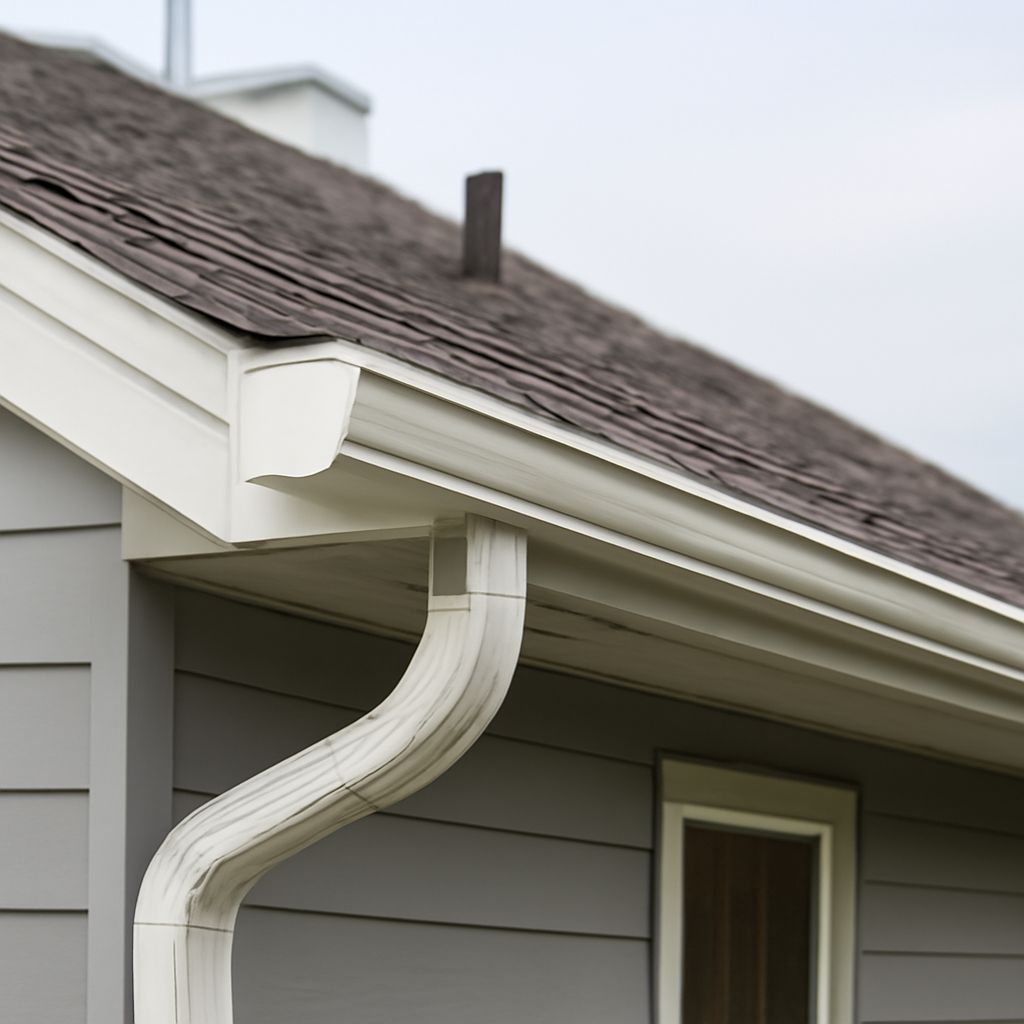
Most residential aluminum gutters use a K-style profile, with a flat back and a shaped front. Half-round gutters have a curved trough and a different appearance. Both must be sized for the roof area draining into them, the local rainfall, and the number and location of downspouts. A steep roof or a valley that concentrates water can put more demand on a short section than its length suggests.
A 5-inch K-style channel is common, while a 6-inch channel offers more capacity. The larger size is not automatically necessary for every roof. Ask the installer to explain the sizing and show where each downspout will go. The downspout opening and pipe need to carry the water collected by the channel; an oversized trough with too few outlets can still overflow.
The U.S. Department of Energy recommends appropriately sized gutters and downspouts that carry water away from the foundation. Look at the whole route, including extensions or drains, rather than stopping your comparison at the roofline.
Sectional or Seamless?
Sectional aluminum roof gutters use lengths joined on site. Their pieces are easier to transport and can be useful for a manageable repair, but each joint needs proper assembly and sealing. Seams can leak as seals age or parts move.
Seamless aluminum rain gutters are formed in long runs to fit the house, generally with a machine brought to the site. They reduce joints along straight runs, but they are not joint-free: corners, end caps, and downspout connections still need attention. Ask what material and sealant the installer will use at those points and how leaks are handled under the workmanship warranty.
Compare a sectional aluminum gutter with a seamless run by looking at access as well as price. A short, low repair may suit a homeowner with the right tools. A long run above a second story needs safe handling and accurate support; professional installation can be the more practical choice.
Thickness, Finish, and Durability
Aluminum does not rust like steel, but it can corrode under certain conditions. The metal can also dent under a ladder, a falling branch, or heavy ice. A thicker sheet generally resists deformation better than a thinner one, although support spacing and installation are just as important. Ask for the thickness in inches rather than accepting “heavy duty” as a specification.
For comparison, the Department of Energy’s weatherization field guide specifies at least 0.027-inch material in its context and prefers 0.032 inch in heavy snow and ice areas. That is a useful question for a proposal, not a universal guarantee: local loads, profile, fasteners, and manufacturer instructions still matter.
Factory-finished aluminum guttering comes in a range of colors. A coating helps provide the desired appearance and protects the surface, but scratches and worn areas deserve attention. Ask what finish is supplied, what its warranty covers, and how to clean it without damaging the coating. If another metal touches the system, ask the installer about compatible fasteners and separation; contact between dissimilar metals in wet conditions can accelerate corrosion.
The term aluminium gutters uses the British spelling of the same metal. The spelling does not specify the sheet thickness or quality of the finish; the product details do.
Installation Details That Matter
A well-made gutter system of aluminum still depends on the wood and hardware holding it. Examine fascia boards—the boards along the roof edge—for soft or rotted areas before installation. New hangers fixed to damaged wood cannot provide reliable support. Include fascia repairs in the estimate if they are needed.
Aluminum roof gutter runs should be pitched toward downspouts, with supports installed according to the product instructions and local conditions. Ask how the installer will handle corners, roof valleys, and long runs. The channel must catch runoff from the roof edge without trapping water behind it; flashing details are part of that conversation.
Check where each downspout empties. Water should move away from the foundation to a suitable location without creating a problem for a neighbor, walkway, or drainage system. Extensions need to remain in place after mowing and yard work. If water is to enter an underground drain, ask where that drain ends and who will check that it is clear.
Maintenance and a Side-by-Side Quote
Leaves, roof grit, and small twigs can block aluminum rainwater channels and their outlets. Inspect them after heavy leaf fall and during a substantial rain from ground level. Overflow, dripping joints, or standing water after rain can point to a blockage, a leak, or a slope problem. Guards may reduce some debris, but they do not remove the need for inspection.
Use a stable ladder and follow safe ladder practices if you can work at that height safely; otherwise hire a service. Remove debris without scraping the finish, then flush the channel and confirm water exits the downspout. Repair leaks or loose supports before water and weight make the problem worse.
When comparing aluminum gutters with alternatives, ask about total installed work, not metal alone. Vinyl is lightweight but may be less suitable under some temperature and load conditions; steel is strong but needs protection against corrosion; copper has a different appearance and usually a higher initial cost. The right choice depends on the roof, climate, maintenance, and budget.
For each bid, require the channel profile and size, metal thickness and finish, downspout locations, fastening method, discharge plan, and warranty in writing; choose the proposal that explains how those parts will handle your roof’s water.