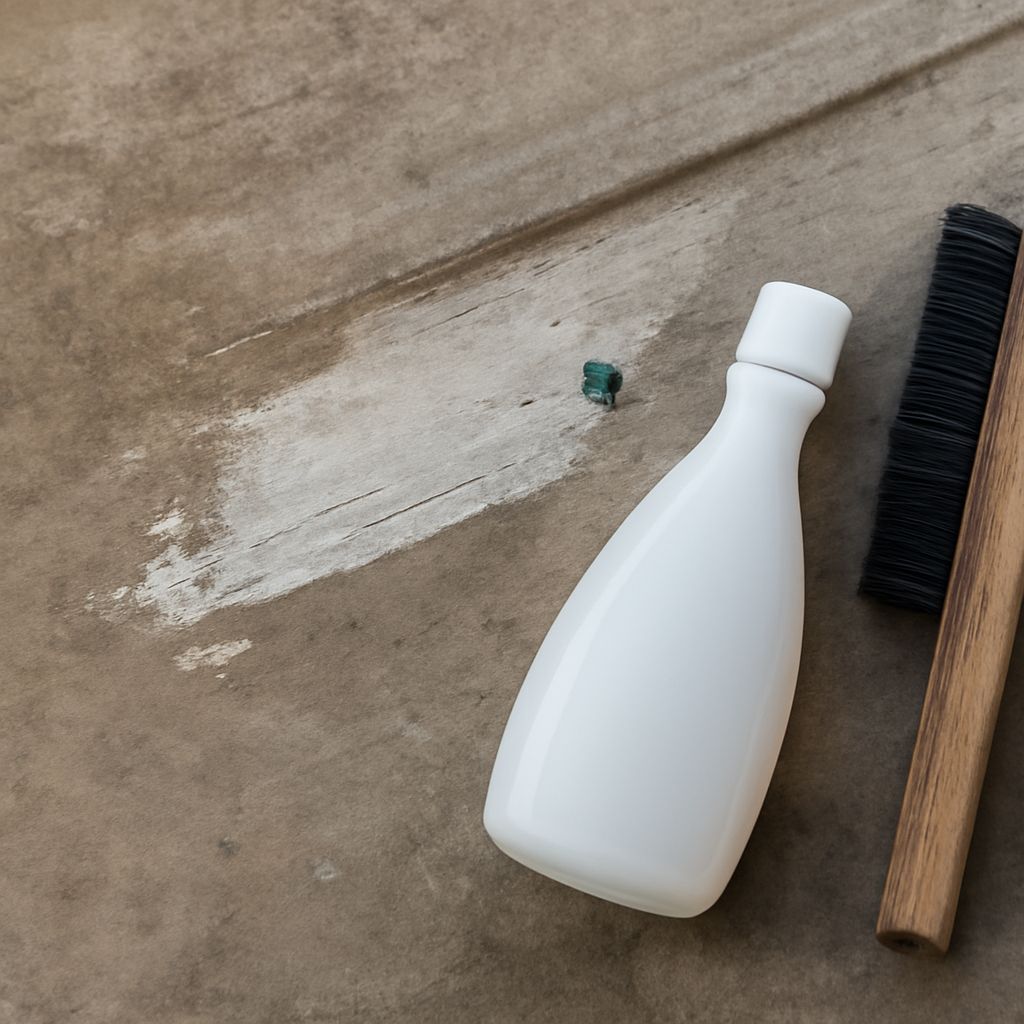
A fresh drip on a garage floor may lift with a scraper, while an old, bonded coating on a basement slab can call for a chemical stripper and several passes. The right approach to removing paint from a concrete surface depends on the coating, the concrete, and what surrounds the work area.
Before deciding how to get paint off a concrete surface, look for loose edges, thick layers, cracks, and nearby finishes that could be damaged. A small trial reveals the effort and surface change before you commit the whole floor to a method.
How to get paint off concrete: choose a method
For a small, loose patch, how to get paint off concrete is straightforward: start with a hand scraper held at a shallow angle. A stiff nylon brush can work residue out of shallow texture after the coating has softened. The edge should lift paint without digging into the slab; if it leaves a gouge, reduce pressure or stop. A little patience costs less than a scar across the floor.
For bonded paint, a stripper labeled for both the coating and masonry may soften layers that a scraper cannot lift. Removing paint from concrete with a compatible stripper can also preserve a smoother finish than grinding. Gel or paste can stay in contact longer on a vertical surface than a thin liquid. Check the label for indoor use, ventilation, dwell time, protective equipment, and cleanup before purchase. How to remove paint from concrete becomes a question of matching that product to the job: a coating of unknown type may need a test before you buy enough for the whole area.
Mechanical grinding can remove stubborn material, but it also removes concrete and can leave an uneven texture. It produces hazardous respirable silica dust; OSHA describes controlled equipment for this work. For a large bonded area, hire a contractor with the right dust controls and agree on the expected surface finish. Pressure washing outdoors can spread chips and contaminated water, and excessive pressure can mark the slab. Plan containment and disposal first.
The best way to remove paint from concrete is the least aggressive method that passes your test and leaves an acceptable surface. To remove paint from a concrete surface, a wide scraper may be enough for flaking paint; an intact, thick coating can require a compatible stripper or professional equipment. Compare the result and cleanup burden, not just the speed of the first pass.
Check the coating and protect the work area
Establish the age of the building and coating before disturbing it. Homes built before 1978 are more likely to contain lead paint, and newer layers can cover older ones. If lead is possible, have a certified lead inspector or risk assessor evaluate the coating, or assume it contains lead. EPA advises against DIY removal of lead-based paint; use a qualified lead-safe professional. Do not dry scrape, sand, or grind suspect coating while waiting for an answer.
Move furnishings and cover adjacent trim, drywall, and finished surfaces with protection compatible with the product. Keep children and pets away. Block access to drains and protect soil outdoors; do not let paint debris or chemical wash water enter a storm drain. Ask your local waste authority how to handle the residue before opening the container.
Read the stripper label and safety data sheet. Use the specified chemical-resistant gloves, eye protection, and ventilation, and keep ignition sources away where the label requires it. Avoid methylene chloride products; EPA has prohibited their consumer sale for paint removal. Do not mix removers or assume a dust mask protects against chemical vapors. If the room cannot meet the product’s ventilation requirements, choose another suitable method or hire a professional.
Test, then work in manageable sections
Choose a small, inconspicuous area that includes a representative layer and texture. Tape off the boundary. To learn how to remove old paint from concrete, apply the selected product at the label’s recommended thickness and wait the stated time; do not let it dry out if the directions prohibit it. Lift a corner with a scraper and observe whether the coating releases or merely smears.
Collect the softened material in a compatible container using a scraper and absorbent material as directed. If the label calls for a rinse or neutralizer, use its specified method and contain the liquid. Let the test area dry fully. Compare its color and texture with the surrounding concrete and check whether paint remains in pores. Concrete can absorb pigments, so removing the film may leave a stain.
Once the trial works, divide the remaining area into sections small enough to finish within the product’s working time. To get the paint off the concrete without spreading residue, keep the collection container close. When you remove paint from a concrete floor, work toward an exit and keep wet residue off completed sections. Apply, wait, scrape, and collect each section; repeat only as directed. For walls or steps, protect the lower surfaces from drips and begin where you can collect the residue safely.
If the question is how to get paint off of concrete with deep pores, expect a brush and a second labeled application to reach spots the scraper misses. Do not force a metal edge into the pores. Getting stubborn paint off porous concrete takes more time than lifting a surface film, and the test shows whether the result is worth that effort.
Judge the result before continuing
To decide how to clean paint off concrete after a first pass, inspect the dry surface in side light. A raised, colored film indicates coating remains; isolated color within pores may be a stain rather than a loose layer. If a fingernail or plastic scraper catches an edge, remove that paint from the concrete with another tested treatment according to the label. If the surface is becoming rough or the remaining color does not lift, stop and consult a concrete restoration professional. Stripping paint from the concrete should not cost more surface than you intended to lose.