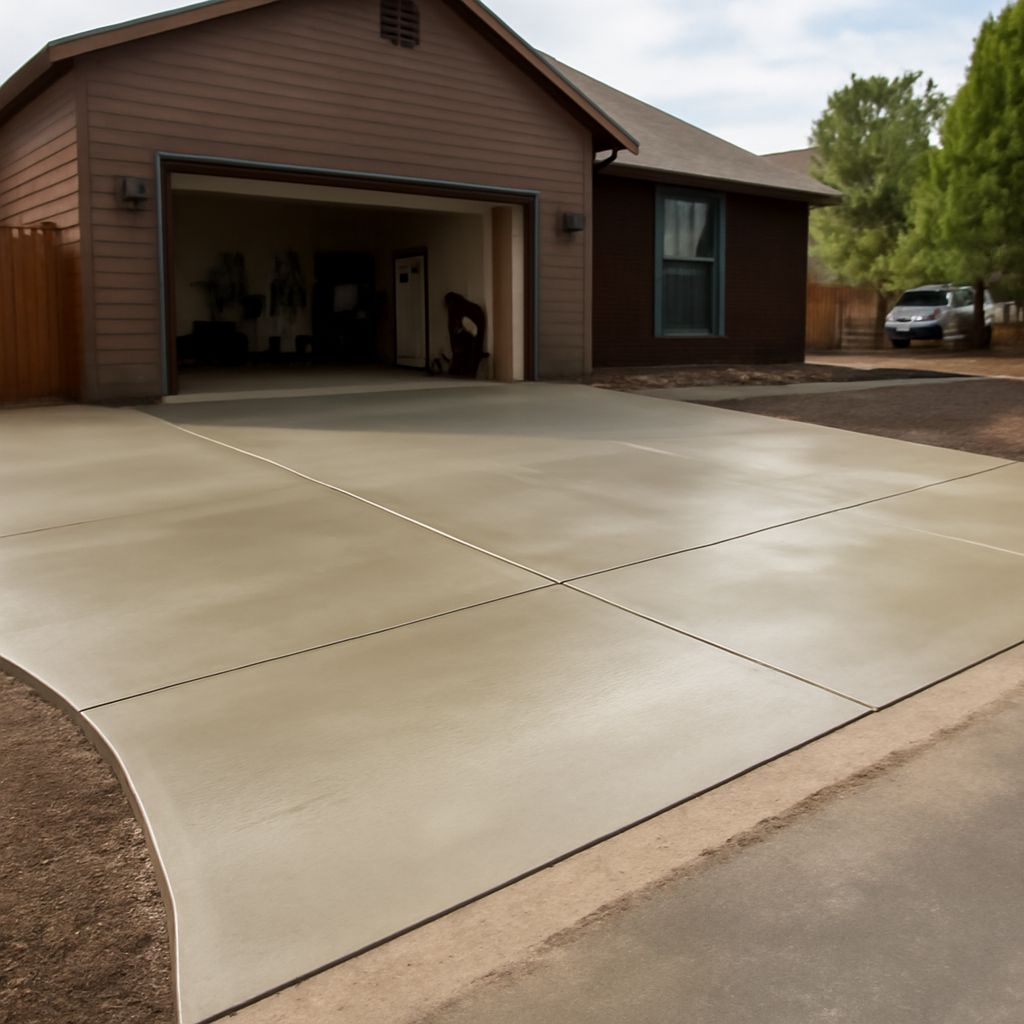
Measure the driveway’s length and width, then ask contractors for itemized bids covering demolition, disposal, base preparation, and the new slab. The price of a concrete driveway depends on all four stages, so a quote for the pour alone is not a complete replacement budget.
The expense of removing and replacing a concrete driveway also changes with slab thickness, access, soil condition, and finish. Use the same assumptions for each bid, and keep an allowance for conditions that cannot be seen until the old concrete is removed.
Cost to remove and replace a concrete driveway: build the budget
Divide the job into four lines: break up and haul away the old slab; prepare and compact the ground and base; supply and place the new concrete; and finish, joint, and cure it. Add permits, drainage work, and restoration of disturbed areas where needed. Ask each bidder to identify which charges for demolition and replacement of the concrete driveway are included and which are allowances.
How much does a concrete driveway cost when the old slab must come out? The answer is the sum of those items, not just the price of concrete delivered to the site. A contractor needs to see the drive and its access before giving a dependable local price. Take photos of cracks, low spots, steps, and garage edges to support that discussion.
Calculate area and compare the same scope
For a rectangular drive, multiply length by width. A 20-foot by 30-foot driveway covers 600 square feet. Divide an irregular shape into rectangles and triangles, calculate each area, and add them. Measure any apron or widened parking area separately; confirm whether it belongs in the work area and whether the municipality has requirements for it.
The concrete driveway cost per square foot is the quoted installed total divided by the area covered by that quote. Compare figures only after checking what each total includes. A low per-square-foot figure for placement and finishing may omit demolition, hauling, or the base.
Here is a teaching example, not a local estimate. Assume the 600-square-foot slab is 4 inches thick, has ordinary truck access, a sound underlying soil, a prepared granular base, and a plain broom finish. The sample prices below are chosen only to show the arithmetic:
- Removal and disposal: 600 square feet × $3 = $1,800.
- Base preparation: 600 square feet × $2 = $1,200.
- Concrete, placement, joints, curing, and finish: 600 square feet × $10 = $6,000.
- Illustrative total: $9,000, or $15 per square foot.
That example excludes tax, permits, drainage changes, reinforcement upgrades, and unforeseen soil repair. At 4 inches thick, the slab itself contains about 7.4 cubic yards of concrete before any allowance for waste. A thicker slab needs more material; the contractor should determine the appropriate section for the vehicles, ground, and local conditions.
Removal and the ground below
The cost to remove and replace a concrete driveway depends partly on the old slab’s thickness, reinforcement, and access for breaking equipment and trucks. Ask whether the removal price includes loading, haul-off, disposal fees, and protection for nearby landscaping. If the old concrete extends beneath a gate or alongside a foundation, point that out during the visit.
Once the slab is gone, soft spots, poorly compacted fill, roots, or drainage problems can change the work. Ask the contractor to describe the assumed base depth and compaction, and to quote a unit price or approval process for extra excavation and fill. The price of taking out and replacing a concrete drive can rise if weak soil must be removed; a written allowance makes that risk visible.
Placement, finish, and curing
The cost to pour a concrete driveway includes more than the mix. Forms, placement labor, equipment, finishing, joints, and curing all have to be accounted for. A truck that can reach the full site may avoid extra handling; a narrow side approach or an overhead obstacle may require different equipment. Ask who pays if a pump or smaller delivery vehicle is needed.
A basic broom finish provides texture; decorative color, stamping, borders, or special aggregates add work and materials. Ask for the mix, slab thickness, any reinforcement, joint layout, and curing method in writing. The American Cement Association’s guidance explains that contraction joints help manage cracking in slabs; ask where the contractor plans them and how the finished drive will drain.
The cost to concrete a driveway should also account for protecting the fresh work and restoring access. Confirm when people and vehicles may use it, who removes the forms, and whether the crew will repair disturbed lawn or edging. Keep runoff away from the garage and foundation; the American Concrete Institute notes that poor drainage can leave water standing on concrete and contribute to deterioration.
Read the bids side by side
Ask each contractor for the same area, thickness, base, finish, and disposal scope. A concrete driveway replacement cost should identify payment terms, schedule, warranty, permit responsibility, and any conditions that can change the price. Check whether the price to install a concrete drive includes removal of the existing slab or only new work.
How much is a concrete driveway if one bid is lower? Compare its quantities and exclusions before treating the difference as savings. A quote for replacing a concrete driveway may leave out disposal or assume the existing base can be reused, while another includes new material. Ask for the additional price if that assumption proves wrong.
Choose the bid that states the full scope and a clear approval process for unexpected work, using comparable materials and site assumptions.