3/8 Drywall and 3/4 Inch Drywall: Which Thickness Do You Need?
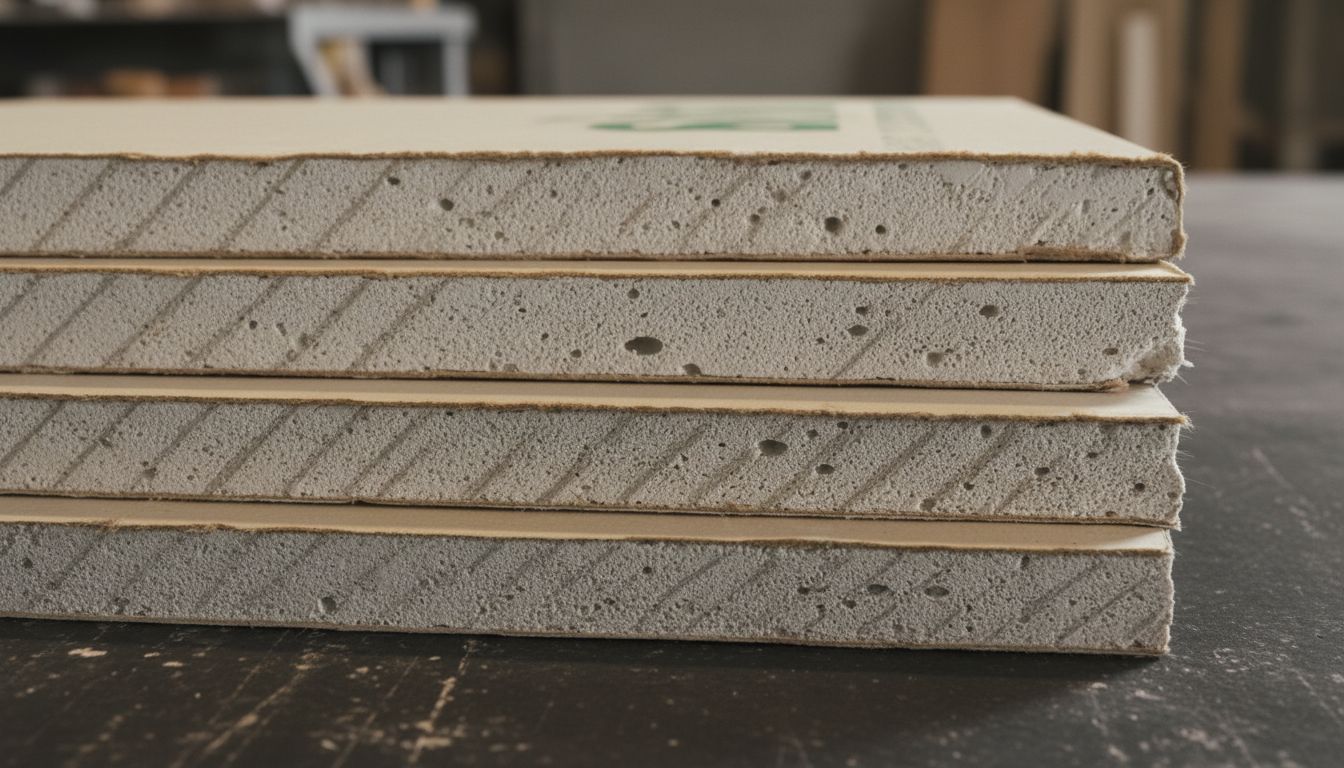
3/8 drywall is a thin, flexible panel used primarily for curved walls and as a second layer over existing drywall in renovation projects. At the other end of the spectrum, 3/4 inch drywall offers greater mass and rigidity for applications where acoustic performance or impact resistance matters. Understanding the full range of sizes of drywall helps you specify the right product for each application rather than defaulting to whatever the local supply house stocks. 3/4 inch drywall and 3/8 inch drywall fill specific niches, and using either in the wrong application wastes money or creates structural problems.
This guide covers every standard thickness, explains where each fits, and helps you plan your material order accurately.
Standard drywall thicknesses and their uses
1/4 inch and 3/8 inch
Quarter-inch drywall is the thinnest standard panel and bends easily for curved installations. It has limited structural value and works best as a second lamination layer over existing surfaces. 3/8 drywall sits between 1/4 and 1/2 inch in flexibility and strength. Installers use 3/8 inch drywall in curved wall forms where 1/2-inch panels crack under bending, and in two-layer applications where the combined thickness of two sheets matches a thicker single panel. Some older construction used 3/8 drywall as the standard wall material, so you may encounter it during renovation work.
1/2 inch: the residential standard
Half-inch drywall covers the majority of residential walls and ceilings. It is the product you will find at every lumber yard and home center stocked in volume. The sizes of drywall available in 1/2 inch include 4×8, 4×10, 4×12, and occasionally 4×16 for commercial work. Standard residential framing at 16-inch on-center spacing works well with 1/2-inch panels on walls. Ceiling applications on 24-inch framing require 5/8 inch to prevent sag.
5/8 inch: fire-rated and ceiling use
Five-eighths inch drywall is required by code in one-hour fire-rated wall and ceiling assemblies. It also resists sag better than 1/2-inch material on ceilings with wide joist spacing. Type X 5/8-inch drywall contains glass fibers that extend its fire resistance rating. This is the standard panel for garage ceilings shared with living spaces above and for walls between attached garages and habitable rooms.
3/4 inch drywall applications
At 3/4 inch, panels deliver higher sound transmission class ratings and greater impact resistance than standard residential thicknesses. 3/4 drywall appears in commercial construction for impact-resistant corridor walls, in home theaters for acoustic control, and in specific fire-rated assemblies where the engineer specifies extra mass. The cost per panel runs significantly higher than 5/8-inch material, so using 3/4″ drywall only where specified avoids unnecessary expense.
Choosing the right thickness
Match thickness to application. Curved walls get 3/8 inch or two layers of 1/4 inch. Standard residential walls and ceilings on 16-inch framing get 1/2 inch. Garage ceilings and fire walls get 5/8-inch Type X. Acoustic and impact applications specified by an engineer get 3/4 drywall. Ordering the wrong thickness creates problems that are expensive to correct after installation is complete.
Next steps
Measure each surface area before ordering. Note the framing spacing for ceilings; 24-inch spacing requires at least 5/8 inch to prevent visible sag. Ask your supplier about the available sizes of drywall in each thickness and whether 4×12 panels are stocked locally, as longer panels reduce the number of butt joints and speed up taping. Have the panels delivered flat to prevent warping during storage.