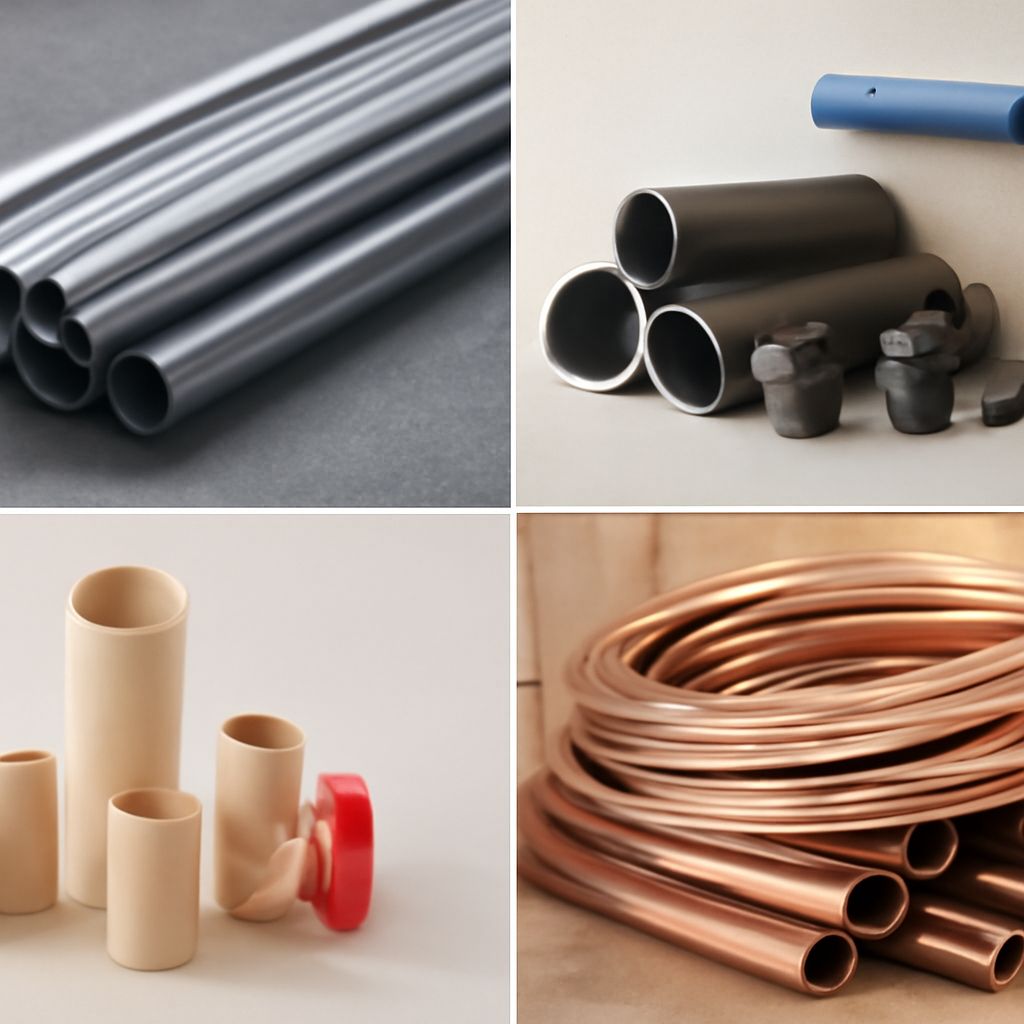
Understanding the different types of plumbing pipes is essential for constructing an efficient plumbing system. Whether you’re building a new home or renovating an existing one, selecting the right plumbing materials can significantly impact the performance and durability of your plumbing system. This guide will introduce you to the various plumbing pipe types, helping you make informed decisions.
Plumbing systems comprise various materials, each suited for specific functions. From copper pipes known for their robustness to PVC pipes favored for their cost-effectiveness, the choices are vast. We’ll delve into the characteristics of each type to help you identify the best fit for your needs.
Introduction to plumbing pipe types
Why choosing the right pipe matters
Selecting the appropriate piping is crucial as it affects the system’s longevity and efficiency. The wrong choice can lead to leaks, contamination, or even system failure. Each material offers unique benefits, making it essential to match the pipe type with your specific requirements, whether it’s for water supply, drainage, or gas lines.
Overview of common plumbing systems
Plumbing systems can be complex, involving water delivery, waste removal, and gas lines. The integration of various types of plumbing pipes ensures a seamless operation. Common systems involve a mix of materials such as metal pipes for durability in high-pressure areas and plastic pipes for flexibility and ease of installation.
Common types of plumbing pipes
Copper pipes
Copper pipes are renowned for their reliability and durability. They are often used in both residential and commercial settings for water supply. Copper’s natural resistance to corrosion and bacteria makes it a hygienic choice, while its ability to withstand high temperatures adds to its versatility.
PVC pipes
PVC pipes are a popular choice for drainage and waste systems due to their affordability and ease of use. These pipes are lightweight and resistant to chemical corrosion, making them ideal for a variety of applications. However, they are not suitable for high-temperature systems.
PEX pipes
PEX pipes have grown in popularity for residential plumbing due to their flexibility and resistance to scale and chlorine. They are easy to install and require fewer fittings, reducing potential leak points. PEX is suitable for both hot and cold water supply, making them a versatile option.
Galvanized steel pipes
Galvanized steel pipes were once a staple in plumbing systems due to their strength and durability. However, they are prone to rust over time, which can lead to water contamination. While less common today, they are sometimes used in replacing existing galvanized systems where matching materials are required.
Different types of plumbing pipes materials
Metallic plumbing materials
Metallic plumbing materials include copper and galvanized steel. These materials are known for their durability and are often used in high-pressure applications. Their ability to withstand physical stress makes them ideal for certain systems, though they can be more expensive and challenging to work with.
Non-metallic plumbing materials
Non-metallic materials, such as PVC and PEX, offer flexibility and resistance to corrosion. These are easier to install and often more cost-effective than metallic options. Non-metallic pipes are versatile, suitable for a range of applications, and generally require less maintenance.
Factors to consider when choosing plumbing pipes
Durability and longevity
When selecting plumbing pipes, consider their durability and expected lifespan. Materials like copper provide long-term reliability, whereas others like PEX offer flexibility and resistance to wear. It’s essential to balance these factors with your specific plumbing needs.
Cost and budget considerations
Your budget will significantly influence the choice of plumbing materials. While copper may be more expensive, its longevity could justify the initial investment. Conversely, PVC and PEX can be cost-effective solutions for those working with tighter budgets.
Environmental impact
Consider the environmental impact of the materials you choose. Copper is a recyclable material, and PEX requires less energy to produce than most metals. Balancing environmental concerns with performance requirements can lead to a more sustainable plumbing system.
Conclusion and final thoughts
Understanding the types of plumbing pipes and their materials is crucial for developing a functional plumbing system. Whether you prioritize durability, cost, or environmental factors, knowing the advantages and disadvantages of each material will help you make informed decisions.
Next steps: For complex plumbing decisions or installations, it’s advisable to consult with a professional plumber. They can provide expert guidance on the best materials for your specific needs, ensuring long-term efficiency and reliability in your plumbing system.