Grout Color: How to Choose the Right Tile Grout Colors
Grout color does more to define the look of a tile installation than most people realize until they’re staring at a finished floor that doesn’t look quite right. Getting tile grout colors right means understanding how the grout line reads at scale — what looks good on a small sample chip looks completely different across 200 square feet of floor. This guide covers how to use a tile grout color chart effectively, what color grout choices do to different tile styles, how the full range of colors of grout breaks down by tone, and when to call in a professional for complex color decisions.
Whether you’re tiling a bathroom, kitchen backsplash, or large-format floor, the color decision affects maintenance, visual weight, and longevity. Read through before you commit to a color at the store.
How Grout Color Affects the Overall Look
Matching vs. Contrasting Tile Grout Colors
The fundamental choice with tile grout colors is whether to match the tile closely or contrast it intentionally. Matching grout — a color grout that approximates the tile tone — makes individual tiles disappear visually and the surface reads as a unified field. This works well with large-format tile, natural stone, and modern minimalist aesthetics where you want the surface to appear as one material.
Contrasting grout does the opposite. Dark grout on white subway tile turns every grout line into a design element, giving the installation a grid-like graphic quality. Light grout on dark tile creates the same effect in reverse. Used well, a contrasting color grout pattern is a deliberate design choice. Used poorly, it makes irregular tile layouts look messy.
Light vs. Dark Colors of Grout: Maintenance Reality
Among the full range of colors of grout available, the maintenance implications vary significantly by tone. Light grout — whites, off-whites, pale grays — shows dirt, staining, and discoloration faster than darker shades. In a kitchen or bathroom floor that gets heavy foot traffic, a white grout line will look dingy within months without regular sealing and cleaning.
Dark grout holds up better to everyday grime but shows efflorescence (white mineral deposits from moisture migration) more visibly. Mid-tone grays and taupes balance both concerns reasonably well, which is why they’re the most common choice in residential installations.
Reading a Tile Grout Color Chart
How Color Charts Are Organized
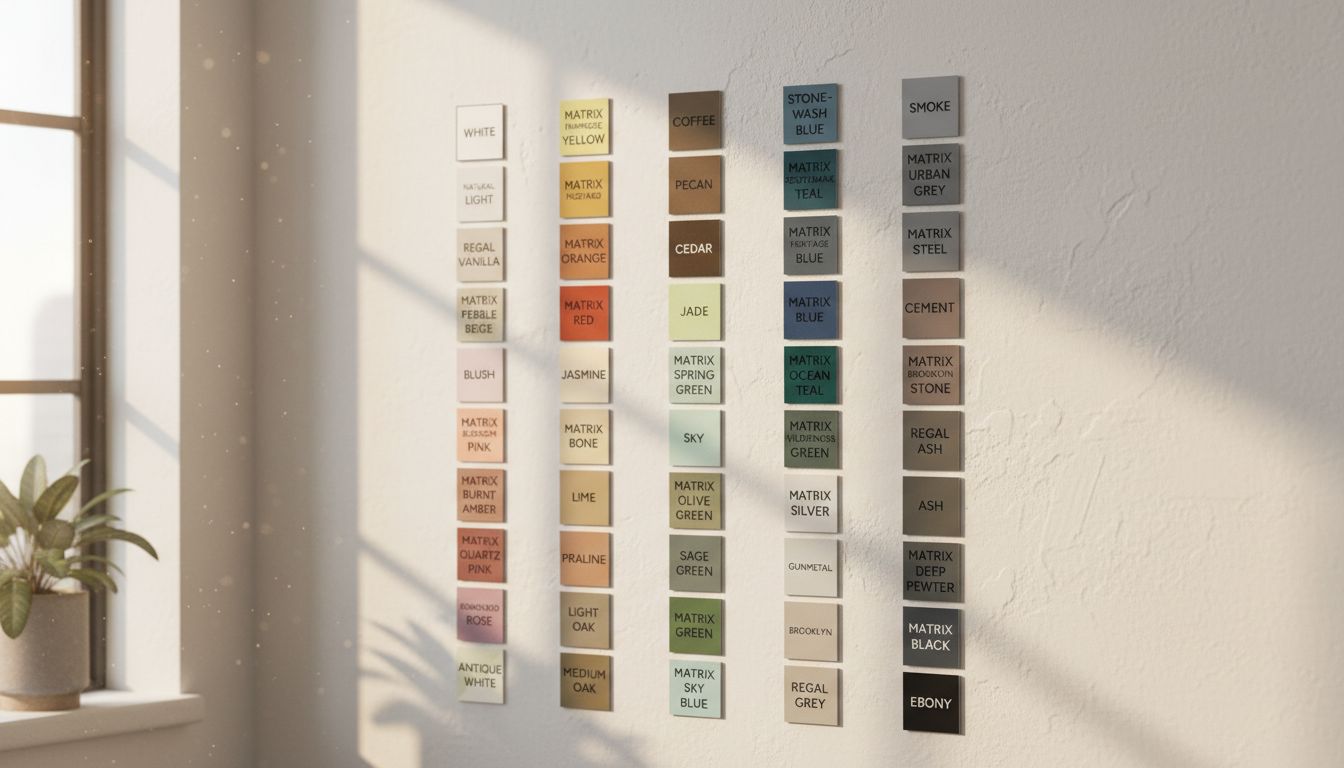
A tile grout color chart from major manufacturers (Laticrete, Custom Building Products, Mapei) typically organizes colors by tone from light to dark, with separate sections for sanded and unsanded versions of the same color families. The chip on the chart is your baseline, but it’s not your decision point — always request a larger sample or borrow a bag of the color grout you’re considering and do a test section.
Wet grout is darker than cured grout. That difference can be significant with lighter colors — what looks like a medium gray when wet dries to a pale, almost white tone. Most manufacturers note the wet-to-dry shift on the color chart, but always test before you commit to a full install.
Matching Color Grout to Tile
Bring actual tile samples to the store when selecting from a tile grout color chart. Hold the grout chip against the tile face in the lighting conditions of the room where it will be installed — showroom lighting is typically brighter and more even than residential lighting, and the color match that looks right under fluorescents may disappoint under warm incandescent or mixed daylight conditions.
For natural stone tile, selecting color grout that matches the stone’s mid-tone (not its lightest or darkest variation) generally works better than trying to match a single color across a stone with natural variation.
Practical Tips for Choosing Colors of Grout
A few rules that hold up in most situations:
- For floor tile in high-traffic areas, choose a mid-tone gray or warm beige from the grout color chart — they hide dirt without looking dingy the way light colors do.
- For white subway tile backsplashes, both white (unified) and charcoal (graphic grid) work; avoid medium gray, which reads muddy.
- For natural stone, use an unsanded color grout formulation in joints under 1/8 inch to avoid scratching the stone face during application.
- For pool and wet areas, confirm the color grout product is rated for continuous water exposure — not all grout formulations are.
If you’re dealing with an existing installation where the tile grout colors have discolored beyond cleaning, grout colorant products let you change the color without regrouting. Results are durable for several years with proper preparation. For severely damaged or crumbling grout, regrouting is the right answer — consult a tile professional if the scope is large or if water damage to the substrate is suspected.
Safety recap: When mixing or applying grout, wear gloves and avoid skin contact with fresh grout — alkaline compounds in grout are caustic. Work in ventilated areas and wear a dust mask when mixing dry grout. If you experience skin irritation, rinse thoroughly with water and consult a physician if irritation persists.