Circuit Breaker Types: A Guide to Every Switch in Your Panel
Understanding circuit breaker types helps you maintain your home’s electrical system safely and make informed decisions when something trips or fails. Every circuit breaker switch in your panel has a specific amperage rating and a job to do. Whether you’re replacing a house circuit breaker that keeps tripping or adding a new circuit, knowing how an electric circuit breaker works makes the process less intimidating. Some situations call for a plug in circuit breaker rather than a hardwired panel breaker. This guide explains each type clearly.
Electrical panels in American homes hold anywhere from 12 to 42 circuit breaker slots. Each breaker protects a specific circuit by interrupting current when it exceeds safe levels. Choosing the wrong type of breaker creates both safety risks and code violations.
Standard Circuit Breaker Types Explained
The most common residential circuit breaker types are single-pole, double-pole, and GFCI or AFCI breakers. Single-pole breakers control 120-volt circuits and typically handle 15 or 20 amps. They protect lighting circuits, standard outlets, and small appliances. Double-pole breakers control 240-volt circuits for large loads like dryers, electric ranges, water heaters, and air conditioners. They occupy two slots in the panel.
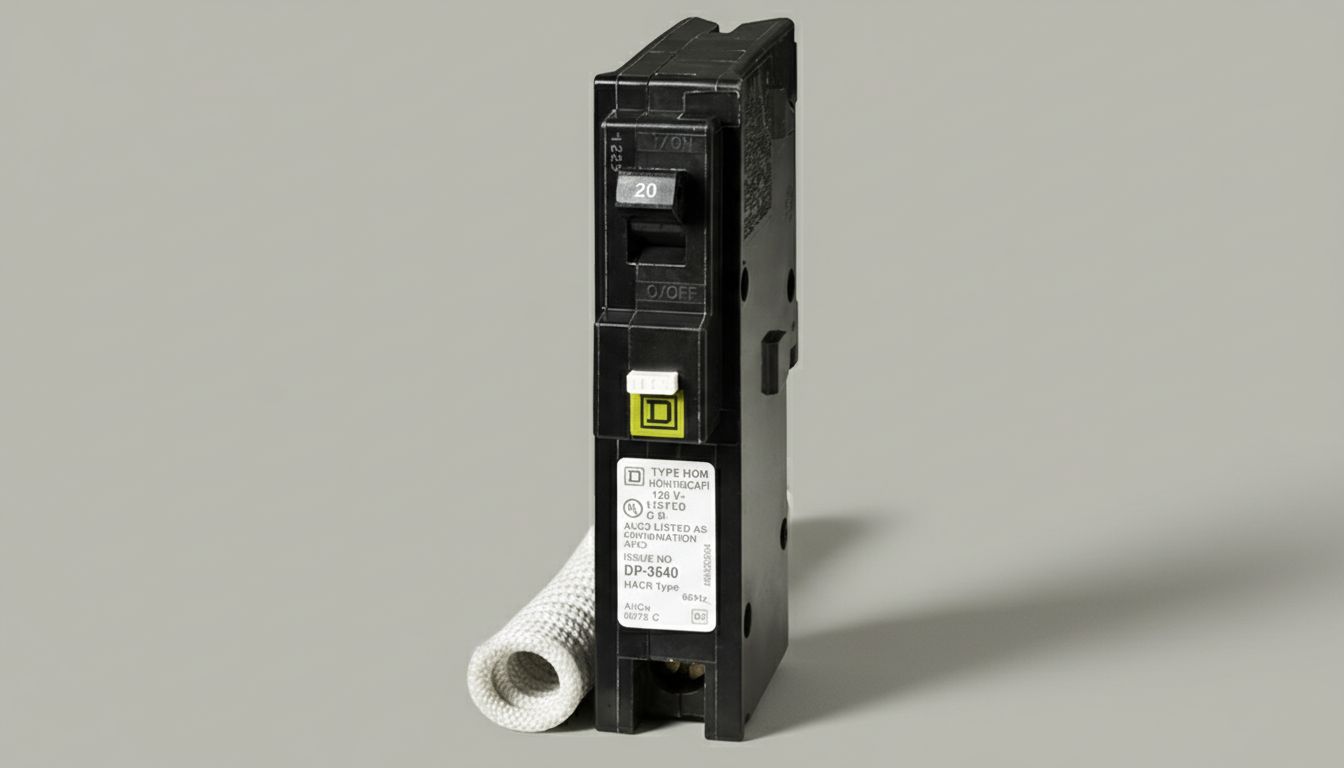
GFCI breakers protect against ground faults in areas where water is present. They detect tiny current imbalances and trip before shock can occur. AFCI breakers protect against arc faults, a common cause of house fires. Modern electrical codes in the U.S. require AFCI protection on most bedroom and living area circuits. Combination AFCI/GFCI breakers provide both protections in a single unit, useful for bathrooms and kitchen circuits.
Tandem breakers, sometimes called slim or half-size breakers, fit two circuits into a single panel slot. They’re used when a panel is full but additional circuits are needed. Not every panel accepts tandems. Check your panel’s load center directory before purchasing.
How a Circuit Breaker Switch Works
A circuit breaker switch operates through a bimetallic strip or an electromagnet, depending on the fault type. Under normal load, current flows freely through the breaker. When current exceeds the breaker’s rating, the bimetallic strip bends from heat and trips the switch to the off position. For severe short circuits, the electromagnetic mechanism trips the breaker almost instantly.
The circuit breaker switch has three positions: on, off, and tripped. A tripped breaker sits in the middle position, not fully on or off. To reset it, push it fully to the off position first, then back to on. If it trips again immediately, the underlying problem is still present and you need to investigate before restoring power. Repeated tripping without an obvious overload means the breaker itself may be failing and needs replacement.
House Circuit Breaker Panel: Layout and Load
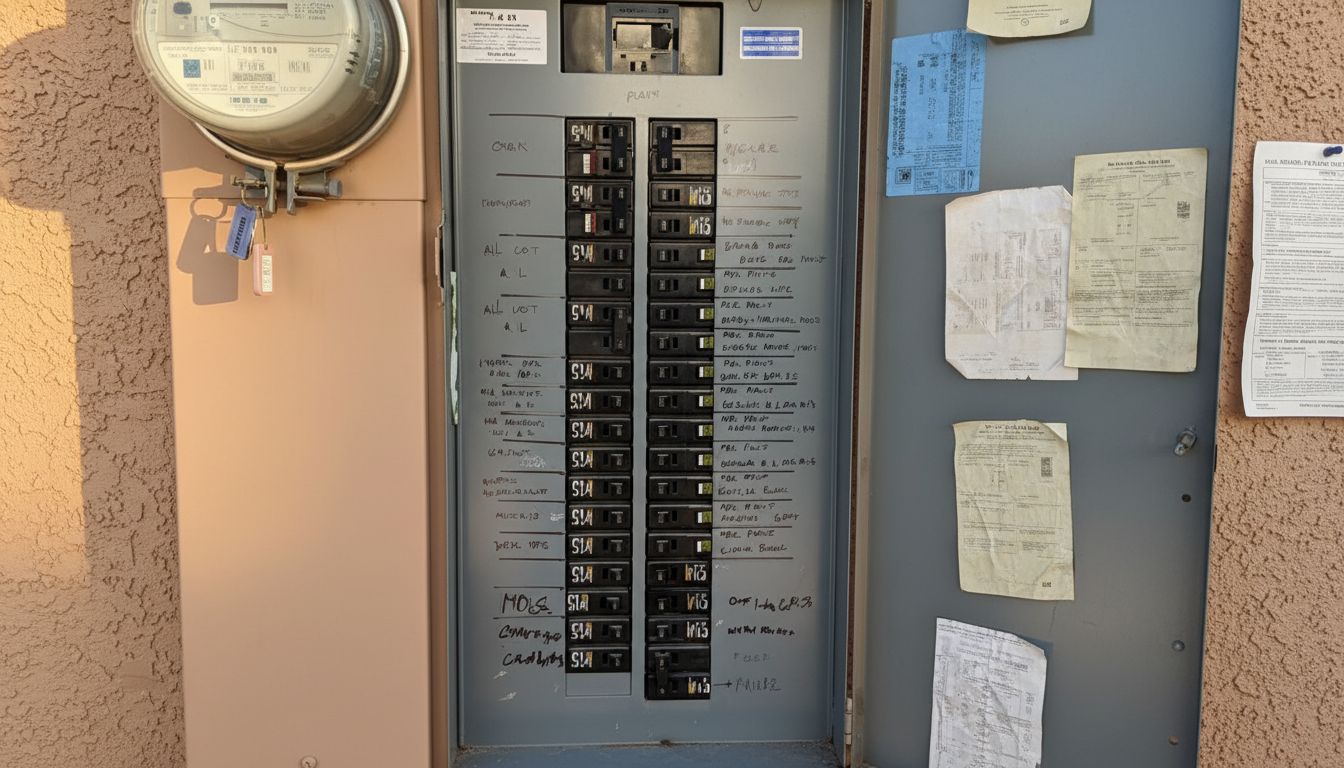
Your house circuit breaker panel organizes all circuits for the home. The main breaker at the top or bottom controls the entire panel and is sized to match your service entry, typically 100, 150, or 200 amps for residential use. Branch circuit breakers below the main handle individual circuits.
A well-organized house circuit breaker directory labels each breaker with its corresponding room or appliance. If your panel lacks labels, mapping each breaker is a useful project. Turn on a lamp in each room, then flip breakers one at a time to identify which one controls it. This also lets you spot any unidentified or double-loaded circuits that need attention.
Electric Circuit Breaker Ratings and What They Mean
Every electric circuit breaker carries an amperage rating stamped on the handle, typically 15, 20, 30, 40, or 50 amps for residential use. The rating specifies the maximum continuous current the breaker allows before tripping. You must match the breaker’s amperage to the wire gauge on that circuit. A 20-amp electric circuit breaker requires 12-gauge wire. A 15-amp breaker uses 14-gauge wire. Mixing them incorrectly creates a fire hazard.
Voltage rating matters too. Most residential single-pole breakers are rated for 120 volts, while double-pole breakers are rated 240 volts. Never substitute a breaker with a higher amperage rating to stop nuisance tripping. That defeats the protection the breaker provides. If a circuit trips regularly under normal load, the circuit is either undersized for the connected load or a fault exists.
When to Use a Plug In Circuit Breaker
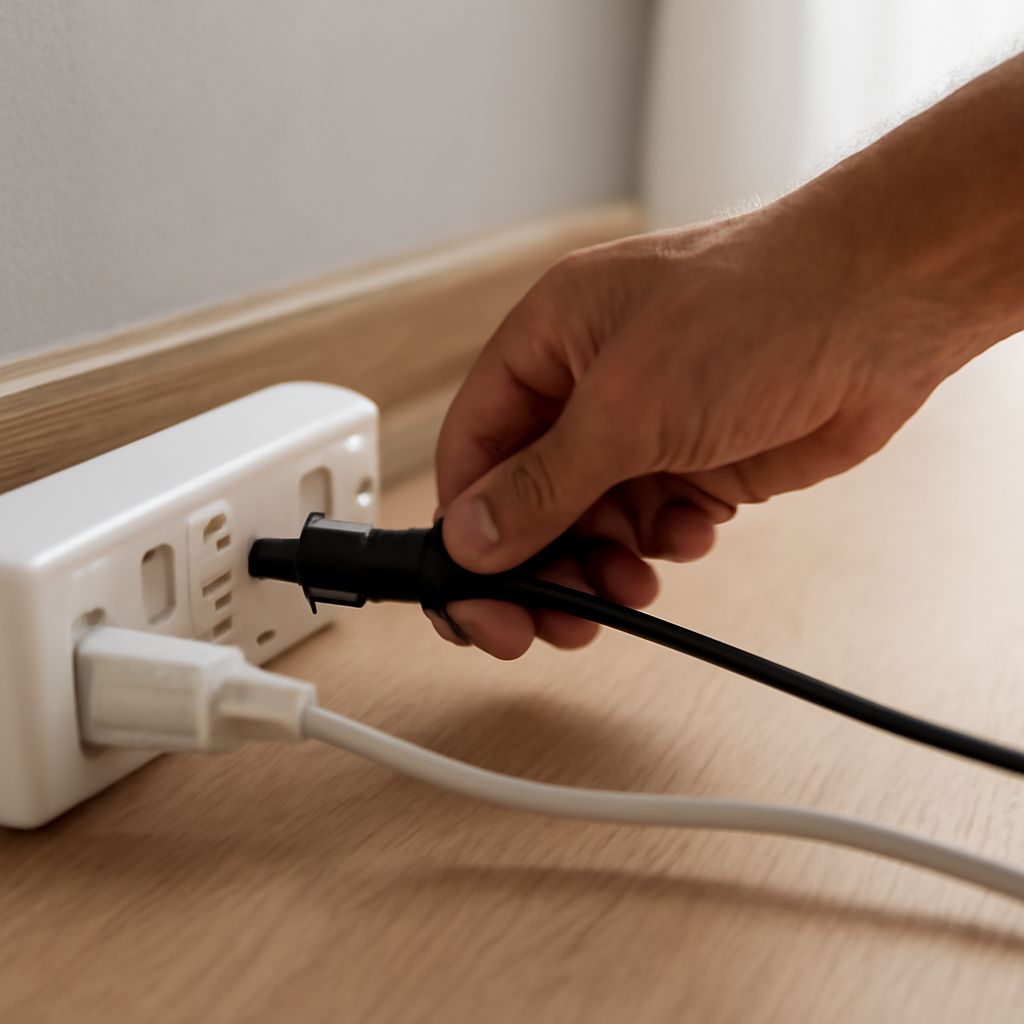
A plug in circuit breaker, sometimes called a portable GFCI or inline circuit interrupter, provides temporary protection for tools and equipment used in outdoor or unprotected locations. It plugs into a standard outlet and offers GFCI protection for whatever you connect to it. Use one when working outdoors with power tools, near water, or in any location where the outlet itself lacks GFCI protection.
Plug-in GFCI devices are not a permanent replacement for hardwired GFCI outlets or breakers. For any permanent installation near water, code requires a hardwired GFCI outlet or a GFCI circuit breaker in the panel. Consult a licensed electrician for any panel work, new circuit installations, or when a breaker fails to hold after resetting. Working inside an energized electrical panel is dangerous and should not be a DIY project without proper training.