Types of Vinyl Siding: Styles, Profiles & How to Choose the Right Look
The different types of vinyl siding available today range far beyond the basic horizontal lap panels that dominated construction for decades. Modern vinyl siding styles include vertical board-and-batten, shake and shingle profiles, beaded designs, and insulated options—each suited to different architectural styles, climates, and budgets. Understanding the full range of vinyl siding types helps you make a choice that fits both your home’s character and your long-term maintenance expectations.
This guide covers the main styles of vinyl siding by profile type, explains the performance differences between standard and premium grades, and helps you narrow down the options for your specific project.
Horizontal lap siding
Horizontal lap siding is the most common of all vinyl siding types. It’s installed in overlapping horizontal courses that shed water and replicate traditional clapboard or bevel siding. The main variables within horizontal lap are the panel width (exposure), the surface texture, and the profile shape.
Dutch lap vs. clapboard profile
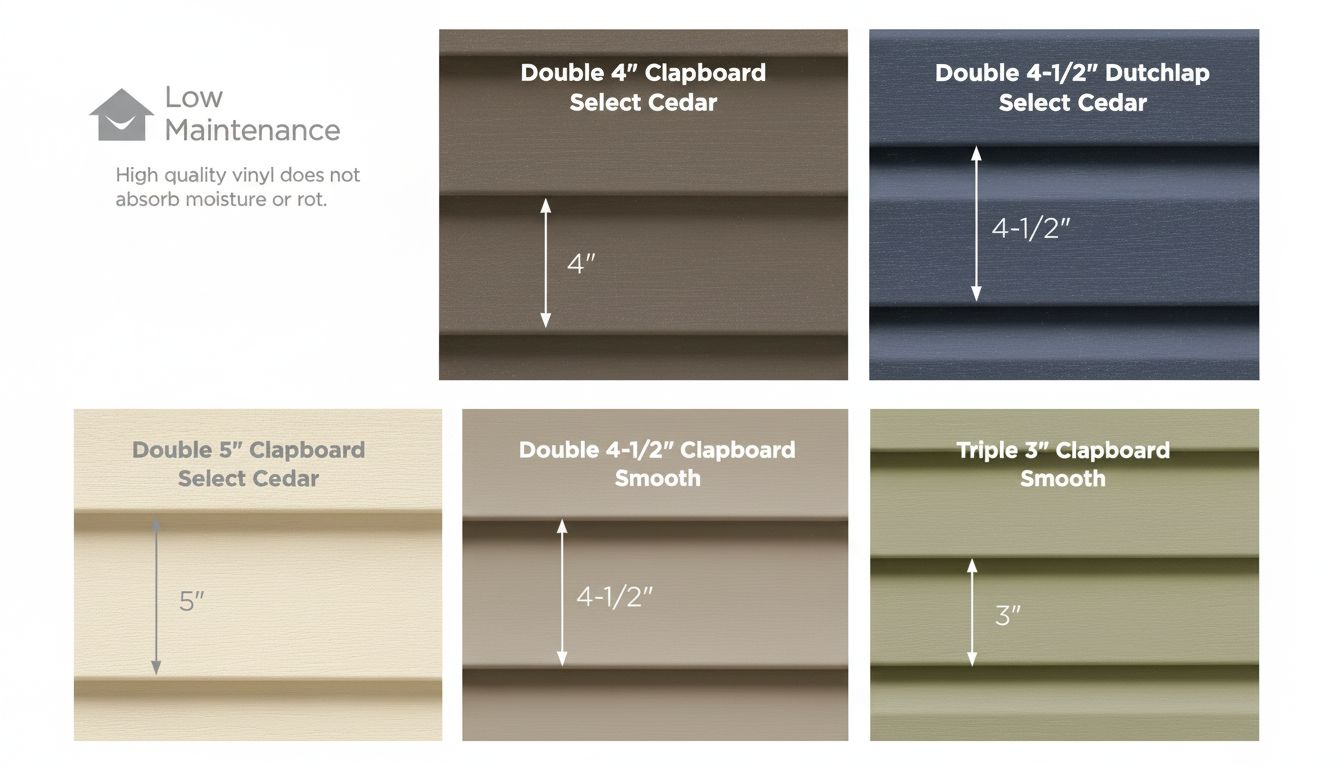
Dutch lap panels have a concave scalloped channel cut into the top edge of each course, creating a shadow line that adds visual dimension. Clapboard profile is flat with a uniform taper—cleaner and more contemporary. Both are standard vinyl siding styles, with Dutch lap being slightly more traditional in appearance.
Panel width (exposure) runs from 4 inches to 8 inches. Wider exposures (6 to 8 inch) install faster, use fewer panels, and create a bolder horizontal line. Narrower exposures (4 to 5 inch) look more like historical clapboard and tend to read as higher-end from a distance.
Vertical and board-and-batten styles
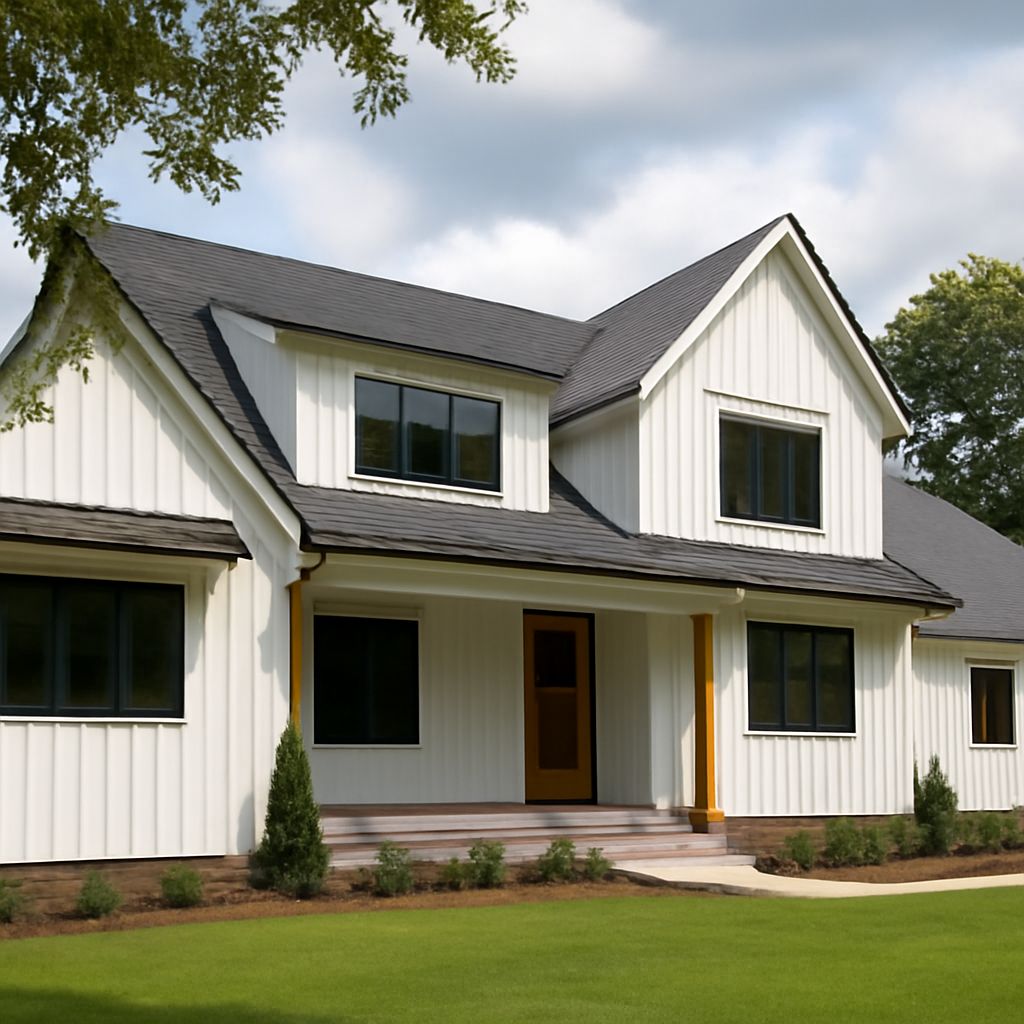
Vertical vinyl siding is one of the different types of vinyl siding that’s grown in popularity as modern farmhouse and contemporary architectural styles have become more common. Board-and-batten—wide flat boards with narrow strips (battens) covering the seams—is the traditional form; vinyl versions replicate this with panels that include the batten as a molded profile.
Vertical siding can be used as an accent—gable ends, dormers, or lower portions of a two-story home—or installed across the entire facade. Mixed installations, with horizontal on the main body and vertical on accent areas, are one of the most effective ways to add architectural interest to a simple box-shaped home without adding structural elements.
Shake and shingle profiles
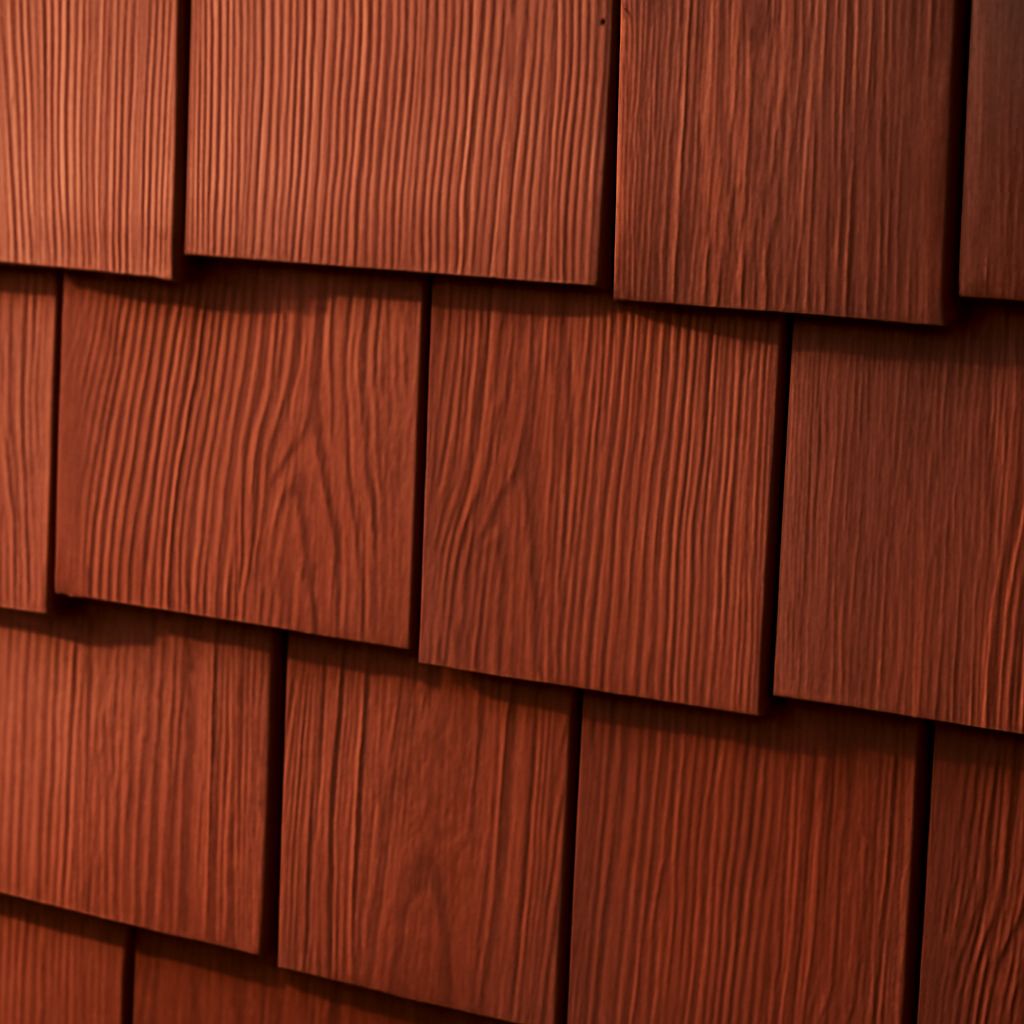
Vinyl shake and shingle siding mimics the appearance of hand-split cedar shakes or sawn wood shingles. These vinyl siding types are produced as panel systems—multiple shingle profiles molded onto a single backing panel—that install quickly compared to real individual shingles.
Shake siding is particularly well-suited for accent areas: gable ends, dormers, and bump-outs where the texture contrast with smooth horizontal lap adds visual richness. Full-home installations in shake vinyl are common on Cape Cod and Craftsman style homes where the shingle aesthetic is architecturally appropriate.
Staggered vs. straight-cut profiles
Staggered shingle profiles have an irregular bottom edge that replicates the random butt-end line of hand-cut cedar shakes. Straight-cut profiles have a consistent bottom line, replicating sawn wood shingles. Staggered reads as more rustic; straight-cut reads as more formal and refined.
Insulated vinyl siding
Insulated vinyl siding bonds a layer of expanded polystyrene (EPS) foam to the back of a standard vinyl panel. This continuous insulation layer adds R-2 to R-6 depending on foam thickness, which meaningfully reduces thermal bridging through wall studs. It also stiffens the panel, making it more impact-resistant and reducing the hollow sound that standard vinyl can produce.
The upfront cost is 20–40% higher than standard vinyl, but the energy savings and improved appearance (insulated panels don’t flex or wave as visibly in temperature swings) can justify the difference on a long-term hold.
Choosing the right style for your home
Match profile to architecture: traditional colonials and cape cods look best with horizontal lap or shake; contemporary and modern farmhouse homes often look better with board-and-batten or wide-exposure horizontal panels; craftsman and bungalow styles pair naturally with shingle profiles and mixed materials.
Also consider the neighborhood context—dramatically different styles of vinyl siding from surrounding homes can affect resale value. Aim for a style that fits your home’s bones while allowing you to differentiate through color and trim choices rather than through profile contrast alone.
Vinyl siding’s color range and profile variety are wider than ever. Whatever style you choose, buy from a reputable manufacturer with a documented warranty and a track record in your climate. Cheap generic vinyl discolors and becomes brittle faster than premium product—the savings disappear quickly when you’re repainting or replacing panels within a decade.