Green Board Drywall: 4×8 Drywall Options, Lightweight Panels, and When to Use Each
Green board drywall is the moisture-resistant version of standard gypsum board, and knowing when you need it versus regular product saves money without compromising performance. The most common panel size is 4×8 drywall, which handles the majority of residential wall and ceiling applications. Stepping up to 1/2″ drywall versus thicker panels, or down to lightweight drywall, involves specific trade-offs. And for anyone carrying panels up stairs or working on large ceiling installations, lightweight drywall changes the job significantly. This guide explains each product and helps you choose the right one for your project.
Choosing the wrong drywall type is a common and costly mistake. Using green board where cement board is required, or standard drywall in a high-moisture area, leads to failures that show up as mold, bubbling tape, or structural deterioration within a few years.
Green Board Drywall: What It Is and Where to Use It
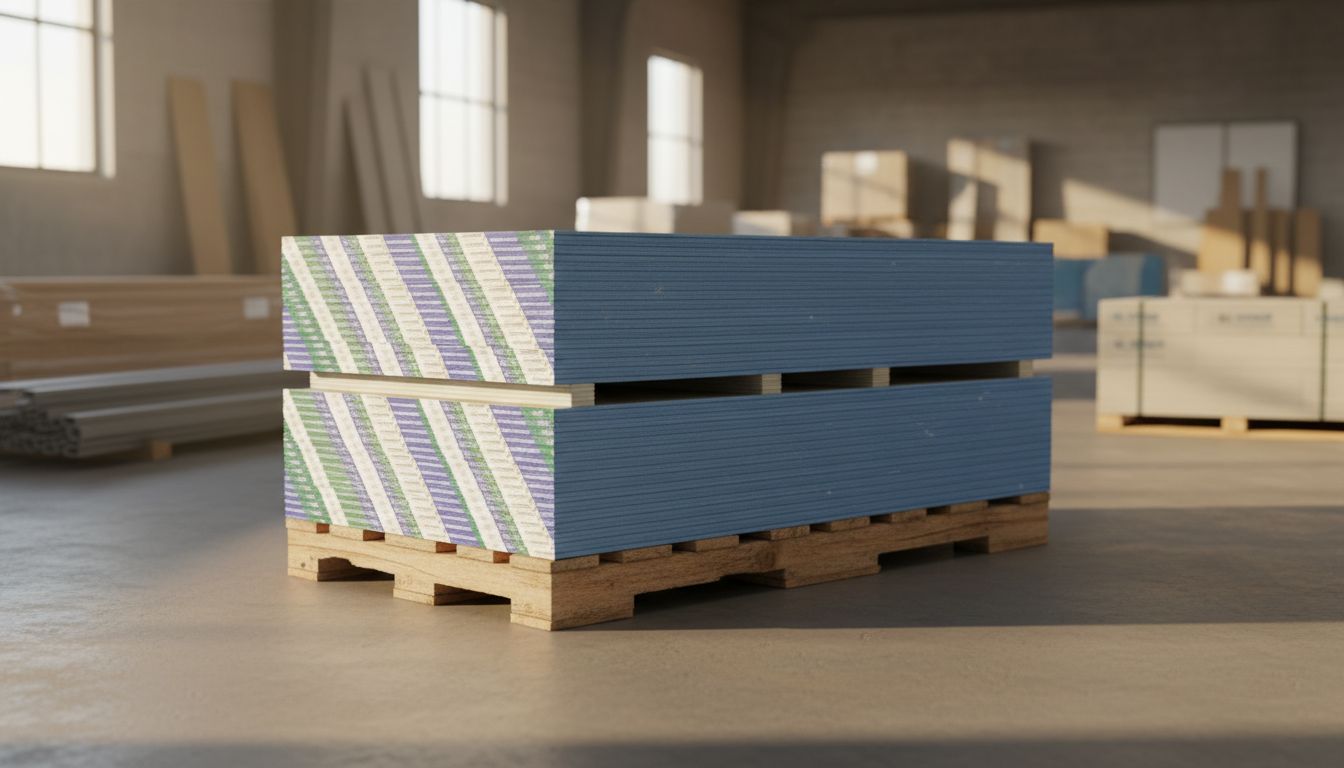
Green board drywall gets its name from the green-colored facing paper on one side. That paper contains moisture-resistant additives that slow water absorption compared to standard drywall facing. The gypsum core is also treated to reduce moisture uptake. Green board drywall is rated for use in areas with intermittent or low moisture exposure, like the walls behind a sink, in a laundry room, or as a backer for tile in a half-bath where splash is occasional rather than constant.
Green board drywall does not replace cement board or waterproofing membranes in wet areas. Inside showers, around bathtub surrounds, or anywhere that the surface will be regularly wet, green board is not an appropriate substrate for tile. Use cement board, glass mat gypsum, or a bonded waterproofing membrane behind tile in those locations. Installing moisture-resistant drywall where cement board is required leads to tile failure as the substrate deteriorates from water intrusion over time.
Standard 4×8 Drywall and 1/2″ Panels
The standard 4×8 drywall sheet in 1/2-inch thickness is the default choice for residential walls and ceilings on 16-inch framing. A drywall 4×8 panel covers 32 square feet. Three panels cover one roofing-style square of wall area. Standard 4×8 drywall panels weigh 54 to 57 pounds each, which is manageable for two people but heavy enough that proper lifting technique matters to avoid back injury.
Longer 4×12 panels in 1/2″ drywall reduce seam count on walls and ceilings, especially in rooms with 9-foot ceilings. Fewer seams mean less taping and finishing labor, which often offsets the higher material cost per sheet. The trade-off is that 4×12 panels are heavier at roughly 81 pounds and require two people to handle safely without a panel lift.
Lightweight Drywall: When It Pays Off
Lightweight drywall reformulates the gypsum core with air entrainment to reduce sheet weight by 15 to 25 percent. A standard 4×8 lightweight drywall panel in 1/2-inch thickness weighs approximately 44 to 48 pounds versus 54 to 57 pounds for standard product. That difference matters on large projects, for solo installation, and any time panels must be carried up stairs or positioned overhead.
Lightweight drywall costs 20 to 30 percent more per sheet than standard product. On a full room or whole-house project, that premium adds up. Do the math for your specific project to decide whether the weight savings justify the price difference. For a single ceiling installation or a large room where you’re working alone, lightweight drywall is often worth every additional dollar.
Specialty Drywall Options
Beyond green board and lightweight panels, the drywall category includes Type X fire-rated panels in 5/8-inch thickness for garages and fire-rated assemblies, soundproofing drywall with damping compounds between gypsum layers, and mold-resistant panels with fiberglass mat facing instead of paper. Each serves a specific purpose. Don’t use standard paper-faced 4×8 drywall in spaces requiring fire separation or in areas with chronic moisture problems. The code and performance requirements exist for good reasons.
Next Steps
Identify the moisture conditions, fire rating requirements, and structural conditions in each area before purchasing drywall. For bathrooms and kitchens, confirm whether green board, cement board, or a waterproofing system is appropriate for each wall and floor location. For ceilings, evaluate lightweight drywall against the labor savings from reduced handling effort. For any fire-rated assembly, verify the product and installation method with your local building inspector before covering framing. Purchasing the correct product upfront costs less than reworking wrong selections after installation is complete.