Plumbing Rough-In Guide: Heights, Diagrams, and Key Dimensions
A plumbing rough in guide gives you the precise measurements needed to set drain stubs, supply valves, and vent penetrations before the walls close. Without accurate rough-in data, fixtures do not align at finish day, and corrections mean opening finished walls. A bathtub rough in plumbing diagram shows exactly where the drain, overflow, and supply connections must land for a standard alcove tub. Knowing the requirements for rough in plumbing bathroom work ensures your drain slopes meet code and your vent connections satisfy the inspector. Bathroom rough plumbing that misses the plumbing rough in heights for supply valves or drain flanges creates expensive rework at finish trim time.
This guide covers all standard fixture rough-in dimensions, what a bathtub rough-in diagram should show, and how to plan the sequence of rough-in work.
Toilet rough-in dimensions
Drain location and flange height
The toilet drain center sits 12 inches from the finished rear wall for most residential toilets. Verify this measurement against the toilet specification before setting the flange. The closet flange must sit at or slightly above the finished floor surface, typically 1/4 inch above the finished tile, to allow the toilet to mount flush without rocking. Bathroom rough plumbing that sets the flange flush with the subfloor creates a problem when tile adds height and sinks the flange below the floor surface. Side clearance minimums from the flange center to any wall or obstruction are 15 inches on each side for standard bathrooms and 18 inches for ADA-compliant installations.
Supply valve location
The toilet cold water supply stub-out lands 6 to 8 inches to the left of the flange center when facing the toilet installation wall. Plumbing rough in heights for the toilet supply valve run 6 to 8 inches off the finished floor. This keeps the supply stop valve behind the toilet tank where it remains accessible. Rough in plumbing bathroom supply connections that land too high create awkward angles at the supply tube connection.
Bathtub rough-in plumbing diagram
Drain and overflow location
A standard alcove bathtub uses a drain centered 14 to 15.5 inches from the long wall and placed at the drain end of the tub, as specified by the tub manufacturer. The overflow plate sits higher on the same end wall, typically 15 to 18 inches above the tub floor. A bathtub rough in plumbing diagram from the tub manufacturer supersedes all general guidelines; always use the product-specific drawing before cutting the subfloor.
Supply and valve height
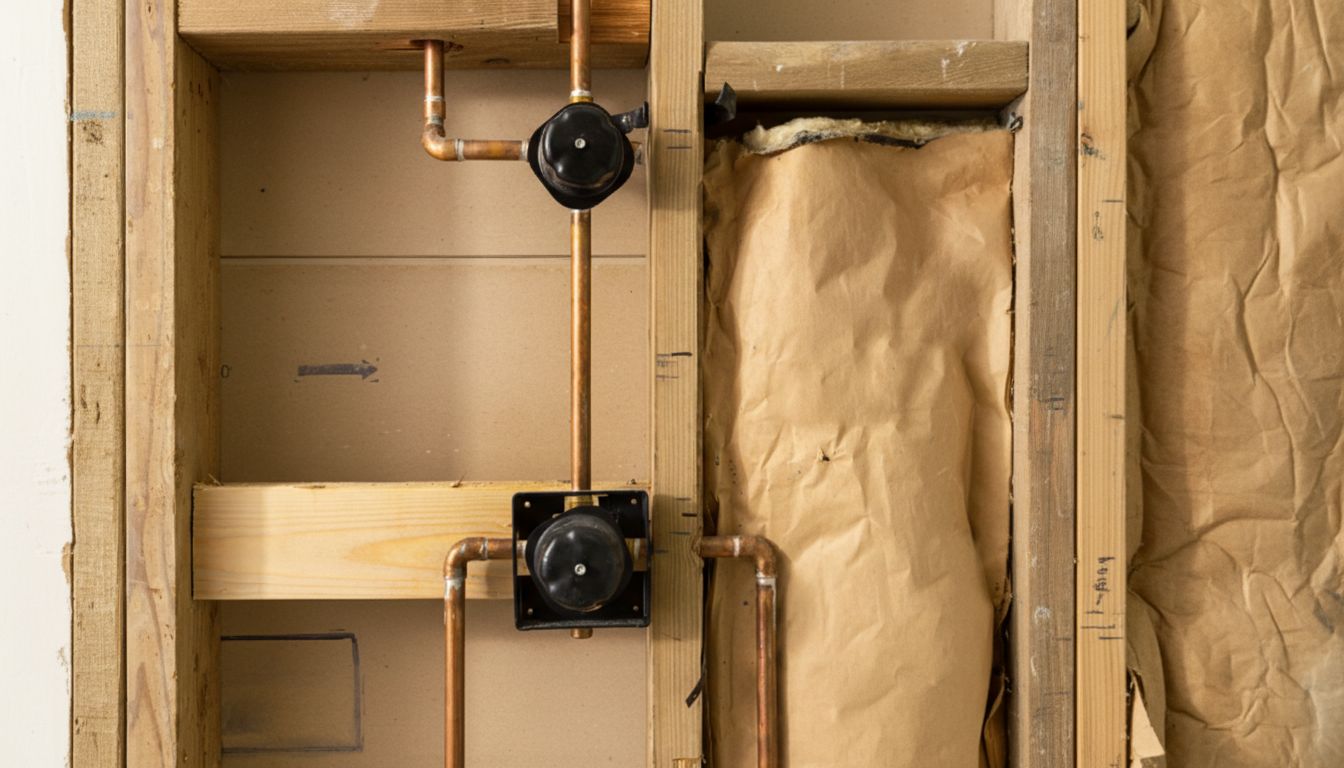
Tub spout stub-out height for a standard bathtub combination faucet is 24 to 30 inches off the finished floor. The mixing valve rough-in center sits at 26 to 32 inches. Shower-only applications with no tub spout place the valve higher, typically 42 to 48 inches. Plumbing rough in heights for these connections vary by trim kit; always check the faucet manufacturer’s rough-in specification before drilling or notching studs.
Sink and lavatory rough-in
Standard pedestal sink drain stub-out height is 18 to 24 inches off the finished floor. Wall-mount vanities with 30 to 36-inch height range place the drain stub at 18 to 22 inches. Hot and cold supply valves land at the same height as the drain, spaced 8 inches apart on center for most single-hole faucets. Bathroom rough plumbing for vessel sinks requires higher drain stubs because the drain exit from the bowl is at counter height.
Next steps
Draw a rough-in plumbing bathroom plan before starting any work. Mark every fixture location on the subfloor with chalk lines and verify clearances meet local code minimums before cutting. Keep your bathtub rough in plumbing diagram at the job site for the rough-in inspection. Inspectors verify drain slope, vent connections, and fixture rough-in heights before approving wall closure. Passing rough-in inspection on the first visit is the goal, and accurate preparation from your plumbing rough in guide makes that outcome far more likely.