Grout Brush Guide: How to Pick and Use the Right Tool
A grout brush is one of the most underrated tools in your tile-cleaning kit. When regular mopping leaves grout lines gray and grimy, reaching for a quality grout cleaning brush makes the difference between dull floors and fresh-looking tile. Whether you’re tackling a bathroom floor or a kitchen backsplash, the right grout scrubber does the job in far less time than generic scrub brushes.
This guide covers what separates a quality grout cleaner brush from a cheap option, how to use a tile and grout brush properly, and which type works best for different tile surfaces.
What Makes a Good Grout Brush
Bristle Type and Stiffness
The bristles carry the whole job. Stiff nylon bristles are the standard for most residential grout lines — they’re firm enough to break up soap scum and mildew without scratching glazed tile. For natural stone like marble or travertine, softer bristles prevent micro-scratches that dull the finish over time. Some heavy-duty brushes for scrubbing grout lines use brass or stainless wire bristles, but those are meant for unglazed quarry tile and concrete grout, not porcelain or ceramic.
The bristle width matters too. A narrow profile — around 1 to 1.5 inches wide — fits directly into the grout channel without riding up onto the tile face. Wider brushes scrub a larger area but work better on wide grout joints.
Handle Design and Grip
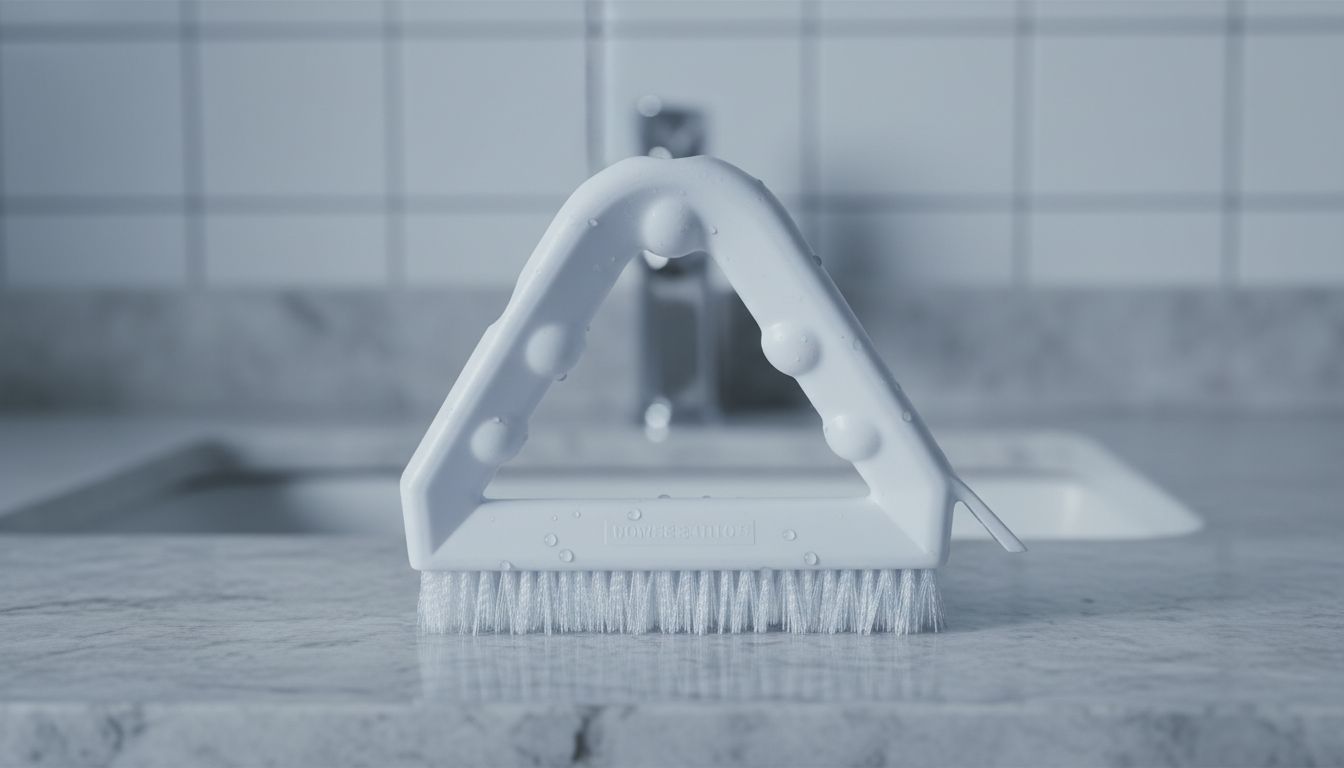
Long-handled models let you scrub floor grout without kneeling for extended periods. Short handheld styles give you more control for walls, backsplashes, and detail work around fixtures. Ergonomic handles with rubber grips reduce fatigue when you’re cleaning grout in a large bathroom or hallway. Some tile and grout brush models attach to a broom handle or drill adapter — that’s worth considering if you have large floor areas to clean.
How to Use a Grout Cleaning Brush
Dry Sweep First
Before applying any cleaner, sweep or vacuum the tile surface. Loose debris and grit act like sandpaper when you scrub — they can scratch tile and clog the bristles, reducing the effectiveness of your cleaning brush for grout lines. A quick dry sweep takes two minutes and protects your tile.
Apply Cleaner and Scrub
Apply your grout cleaner directly to the lines or spray the area and let it sit for three to five minutes. Dwell time matters — the cleaner needs contact with the mildew and mineral deposits before your scrubbing brush for grout does any mechanical work. Then work in short back-and-forth strokes along the grout channel, not across it. Scrubbing perpendicular to the lines moves dirt onto the tile surface instead of lifting it out.
Rinse the brush frequently during cleaning. A clogged brush redistributes grime rather than removing it. After scrubbing, rinse the tile with clean water and check your work before the surface dries.
Choosing the Right Grout Scrubber for Your Tile
For Floor Grout
Floor grout takes the most abuse — foot traffic, dropped food, wet footprints. For floors, a long-handled brush designed for scrubbing grout lines saves your back and covers ground faster. Look for models with durable nylon bristles rated for floor use. If the grout is heavily stained, a power scrubber attachment with a narrow head gets better results than manual brushing alone.
For Wall and Backsplash Tiles
Wall grout, especially in showers, collects soap scum and hard water deposits rather than dirt and grime. A compact handheld grout cleaner brush with medium-stiffness bristles works well here. Electric toothbrush-style tools are popular for shower grout because the oscillating action cleans using a tile grout brush motion without tiring your hand. For backsplash areas, a small scrub brush lets you maneuver around outlets, switches, and corners easily.
Next steps: After cleaning, consider applying a grout sealer to floor and shower grout lines. Sealed grout resists future staining, which means your next brush cleaning session will take half the time. Re-seal once a year in heavy-use areas like showers and kitchen floors.