Drywall Sizes: Complete Chart for Thickness, Width, and Length
Drywall sizes aren’t one-size-fits-all, and buying the wrong dimensions for a job wastes money and time. Understanding thickness of drywall options before you buy saves unnecessary cuts and callbacks. A quick drywall sizes chart breaks down which dimensions work for walls, ceilings, and specialty applications. Getting the best drywall for your project means matching the type and thickness to the specific use — and the best drywall for basement installations requires different properties than what you’d hang on interior living room walls.
Standard Drywall Sizes and Dimensions
Sheet Width and Length Options
Standard gypsum board comes in 4-foot widths with lengths ranging from 8 to 16 feet. The most common sheet for residential wall work is 4×8 feet. Longer panels — 4×10, 4×12, and 4×16 — reduce the number of vertical seams when installed horizontally on walls, which cuts finishing labor. For 9-foot ceiling heights, a 4×9 sheet is available specifically to eliminate horizontal seams at the standard chair-rail height that result from using two 4×8 sheets stacked.
Ceiling panels are also available in 4×12 format, which is more manageable than 4×16 for two-person crews hanging ceilings. Larger sheets require more people or a drywall lift — they’re popular on commercial jobs but less practical for a DIY bathroom or bedroom ceiling project.
Thickness of Drywall by Application
The thickness of gypsum board you choose depends on where it’s going. Here is a basic sizing guide by application:
- 1/4 inch: Re-covering curved walls and over existing paneling. Not structural on its own.
- 3/8 inch: Light remodeling work and curved radius walls. Less common in new construction.
- 1/2 inch: Standard wall panels for 16-inch on-center stud spacing. The most widely used thickness in residential construction.
- 5/8 inch: Ceilings with 24-inch joist spacing, fire-rated assemblies (Type X), and commercial applications requiring extra rigidity.
Best Drywall by Application Type
Regular vs Specialty Panels
Regular white-board drywall is appropriate for interior living spaces with normal humidity. Specialty panels handle specific demands:
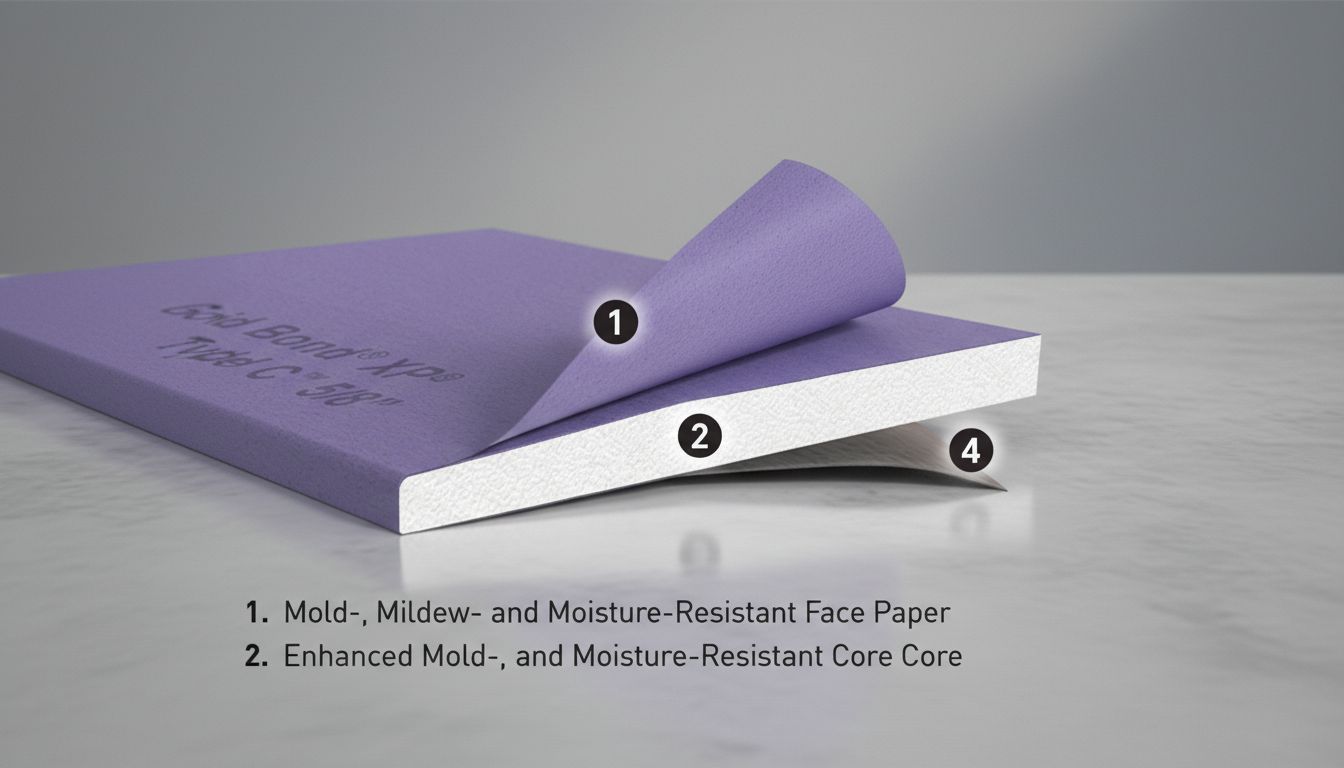
Moisture-resistant drywall (green board) goes in bathrooms outside the wet zone, laundry rooms, and kitchens. It has a treated face paper that resists moisture but isn’t appropriate as a tile substrate. Mold-resistant panels use a fiberglass face mat or antimicrobial core additives for areas with chronic humidity. Type X fire-rated drywall uses glass fibers in the core to maintain its shape under fire longer than standard board — required in garage-to-house wall assemblies in most codes.
Best Drywall for Basement Walls
The best drywall for basement applications needs mold resistance over moisture resistance. Basements have persistent humidity that paper-faced products absorb over time, even without visible water intrusion. Mold-resistant panels like DensArmor Plus or USG Sheetrock Mold Tough use fiberglass mat faces that eliminate the paper food source mold needs. These cost about 15 to 20 percent more per sheet than standard board — worth every cent in a basement where long-term humidity is predictable.
Avoid cheap drywall for basement applications. Budget panels often use lower-quality gypsum mixes that are heavier per sheet and more prone to sag on ceiling applications over time.
Drywall Sizes Chart Quick Reference
Here’s a condensed reference for the most common gypsum board dimensions:
- Walls, 16″ o.c.: 1/2″ thickness, 4×8 or 4×12 sheets
- Walls, 24″ o.c.: 5/8″ thickness recommended
- Ceilings, 16″ o.c.: 1/2″ or 5/8″ (5/8 preferred for sag resistance)
- Ceilings, 24″ o.c.: 5/8″ required
- Curved walls: 1/4″ in multiple layers
- Fire-rated assemblies: 5/8″ Type X minimum
- Basement walls: 1/2″ mold-resistant minimum
Pro tips recap: Always buy 10 percent extra to account for cuts and waste. Mold-resistant board costs slightly more than standard, but in any area with humidity exposure, standard board is a false economy. For ceiling work on 24-inch spacing, don’t compromise with 1/2-inch board — sag within two years is almost certain without the added rigidity of 5/8-inch panels.