Moisture Resistant Drywall: Types, Costs, and When to Use Each
Moisture resistant drywall is a category, not a single product — and the differences between types matter significantly in wet applications. Drywall replacement cost climbs fast when water damage causes wall failure prematurely, so choosing the right type upfront is worth the extra per-sheet cost. Finding the best drywall for bathroom and wet-area applications requires understanding what ‘moisture resistant’ actually means for each product. Cheap drywall may look similar on the shelf but performs very differently under humidity. When renovating, the cost to remove drywall adds to the total project budget — understanding what’s worth saving vs replacing helps you budget accurately.
Types of Moisture Resistant Drywall
Green Board (Standard Moisture-Resistant)
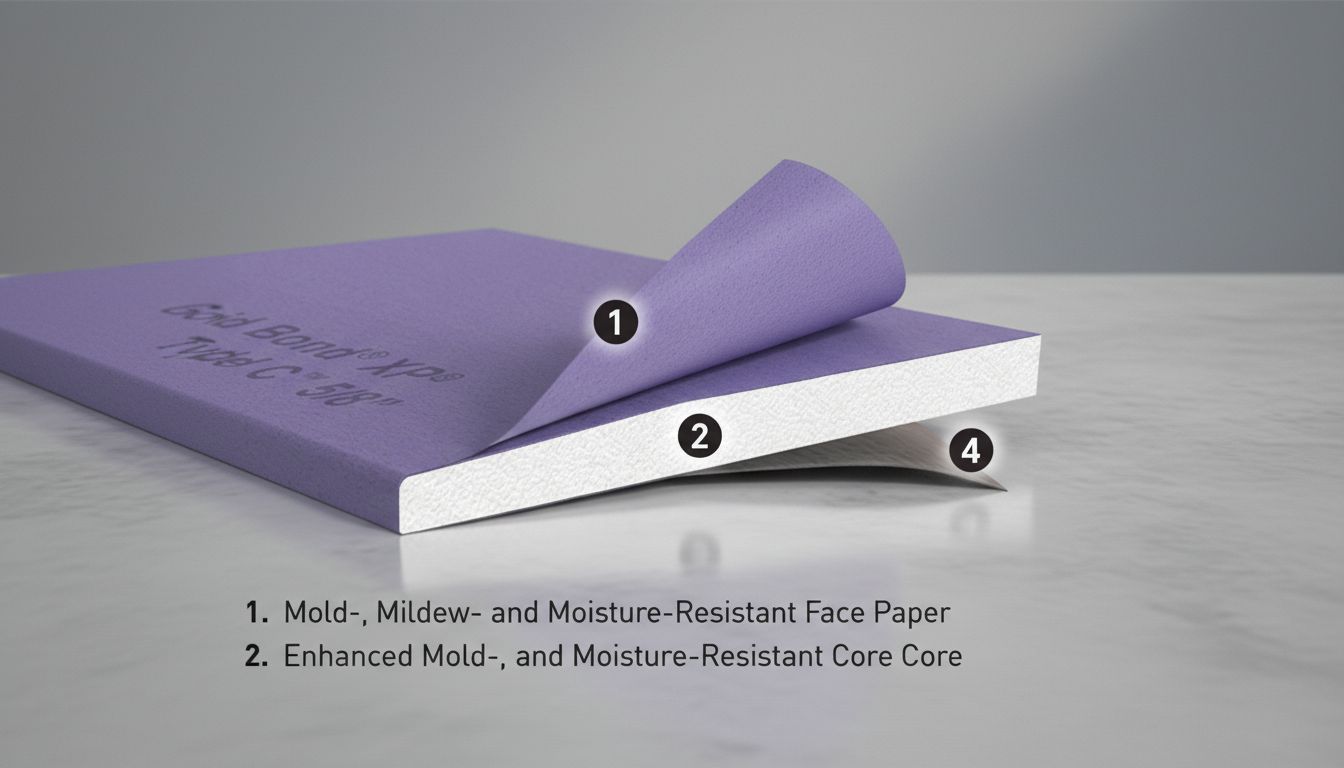
Green board is standard gypsum drywall with a moisture-resistant treated face paper. The green color identifies the product. It performs adequately in areas with indirect moisture exposure: bathroom walls above the tile line, laundry room walls, and kitchen walls near sinks but not in direct splash zones. Green board is not rated for direct water contact or as a tile substrate in wet areas. Pricing runs 10 to 20 percent above standard white board — a 4×8 sheet averages $12 to $16.
Mold-Resistant Drywall
Mold-resistant panels use a fiberglass mat face instead of paper, eliminating the organic food source that mold needs. Products like USG Sheetrock Mold Tough and Georgia-Pacific DensArmor Plus fall in this category. These are the best drywall for bathroom applications that see consistent humidity — especially ceilings over showers and walls in steam rooms. They cost $18 to $25 per sheet and are worth using wherever green board would be marginal.
Cement Board
Cement board is not drywall — it’s a fiberglass-reinforced cement product that’s essentially unaffected by water. For the wet zone of any tile installation (shower walls, tub surrounds), cement board is the correct substrate. Using moisture resistant drywall as a tile substrate in direct wet zones violates most tile manufacturer warranties. Cement board runs $12 to $18 per sheet but is far denser and requires a carbide blade or scoring tool for cutting.
Drywall Replacement Cost
Replacing drywall in a standard 10×12 room costs $400 to $900 for materials and labor, assuming one or two walls need replacement. If water damage extended to framing, insulation, and multiple walls, total costs climb to $1,500 to $3,000 or more depending on scope. The cost to remove drywall alone runs $1 to $3 per square foot for labor — this is the demolition and disposal cost before any new material goes up.
Removing drywall also carries a practical concern: in homes built before 1978, there’s risk of lead paint on existing surfaces. In homes built before the mid-1980s, asbestos-containing drywall compound existed in some products. Have a professional test before demolishing in older homes, or at minimum use proper respiratory protection during removal.
Cheap Drywall: Where It Costs More in the Long Run
Budget gypsum board from lesser-known manufacturers often uses lower-quality gypsum that’s heavier per sheet, less consistent in thickness, and more prone to surface defects. In low-stakes applications — a utility closet or storage room interior wall — cheap drywall is fine. In any area with humidity exposure, the extra cost of a moisture-resistant product is earned back several times over when you don’t need to replace water-damaged board five years after installation.
Pro tips recap: Always specify moisture-resistant board throughout the entire bathroom, not just near the shower. Humidity in an enclosed bathroom affects all walls and the ceiling over time. The per-sheet price difference between standard and mold-resistant board is small enough that using moisture-resistant board throughout the bathroom is the right call on every renovation.