Cedar Shingles and Wood Shingles: Cost, Types, and Installation
Cedar shingles have a history on North American homes stretching back centuries — and the material is still chosen today for its natural beauty, dimensional character, and reasonable longevity when properly maintained. Wood shingles and cedar shake shingles are related but distinct products: shingles are sawn on both faces for a smooth, uniform taper, while shakes are split (hand-split or taper-split) for a rougher, more rustic texture. Cedar siding cost and cedar shake siding cost overlap significantly because both products install on walls and roofs with similar labor demands. If you’re comparing real cedar to modern alternatives, understanding the true cost picture — including maintenance — helps you make the right long-term call.
Cedar Shingles vs Cedar Shake Shingles
Product Differences
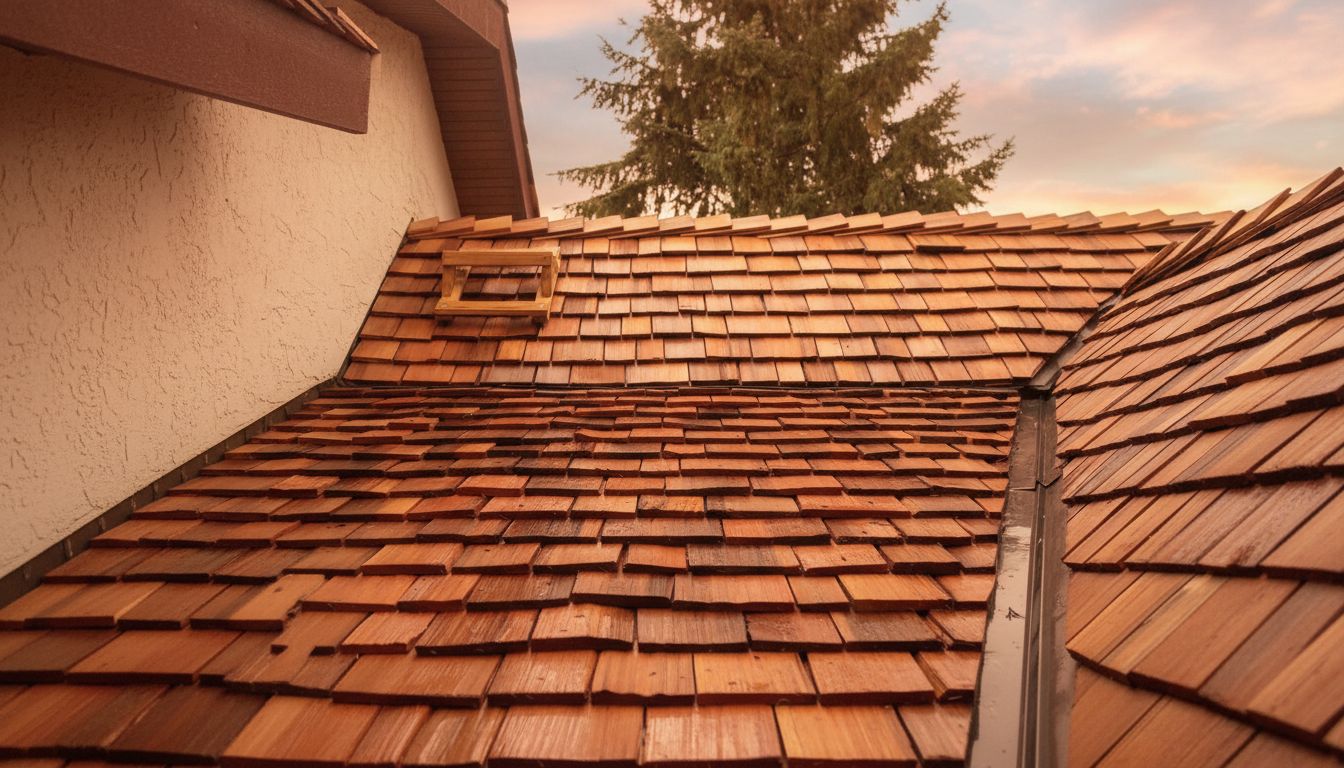
A cedar shingle is smooth on both faces, machine-cut from clear-grade cedar to a consistent taper. Cedar shakes are thicker, with one split face and one sawn face (hand-split and resawn shakes) or two split faces (straight-split shakes). The split face creates deeper shadow lines and a more textured, handcrafted look. For roofing, both types work, but shakes are more commonly used on steep-pitch roofs for their visual weight. For siding, shingles give a cleaner, more refined appearance while shakes add rustic character.
Grades and Quality
Cedar shingles come in grades #1 Blue Label (clear heartwood, full length), #2 Red Label (slight imperfections permitted, clear within exposed area), and #3 Black Label (lower quality, utility use). For roofing and finished siding, #1 grade is the correct specification. Lower grades save money upfront but have more knots and sapwood that weather faster and require earlier replacement.
Cedar Siding Cost and Cedar Shake Siding Cost
Material cost for cedar shingles runs $150 to $350 per square (100 sq ft), depending on grade and region. Cedar shake shingles cost slightly more at $200 to $450 per square for comparable quality. Installation labor adds $150 to $250 per square for standard residential work. Total installed cedar siding cost for a standard home ranges from $10,000 to $20,000 depending on home size and complexity.
Compare that to fiber cement at $6,000 to $12,000 or vinyl at $5,000 to $10,000 installed, and the premium for real wood shingles is clear. The counter-argument is longevity and maintenance trajectory: well-maintained cedar can last 30 to 50 years on vertical siding applications. Poorly maintained cedar, or cedar in a high-moisture climate without adequate detailing, may need replacement in 15 to 20 years.
Installing Wood Shingles on Siding
Cedar siding shingles install over building wrap on solid sheathing or spaced furring strips (preferred for drainage). Exposure — the amount of shingle visible below the course above — determines how much each shingle overlaps. For a 16-inch shingle, a 5-inch exposure is standard on siding. For 18-inch shingles, 7.5 inches. Proper exposure ensures two layers of coverage at every point on the wall, which is the minimum for reliable water shedding.
Fasten each shingle with two stainless or hot-dipped galvanized nails — standard steel nails bleed tannin stains into the face of cedar within one season. The nail should sit flush, not countersunk. Leave 1/8-inch gaps between adjacent shingles to allow for seasonal expansion.
Safety recap: When installing cedar siding shingles from scaffolding or ladders, secure your work surface before beginning. Cedar siding work involves repetitive upward motion that can shift ladder footing. Use proper scaffolding for any wall section exceeding one story, and work with a second person for material handling on tall installations.