Drywall Screw Guide: Sizes, Bits, and Anchor Drill Sizes
Choosing the right drywall screw for the job prevents stripped heads, missed framing, and bugled panels. A drywall screw bit matters as much as the screw itself — a worn or wrong-size bit strips heads and makes flat driving nearly impossible. A drywall screw gun attachment limits drive depth automatically, protecting the paper face from overdriving damage. Knowing what size drill bit for drywall anchor use avoids over-drilling that leaves anchors too loose to hold. Every screw for drywall application has an appropriate type, length, and thread design matched to the substrate and material being fastened.
Types of Drywall Screws by Application
Coarse vs Fine Thread
Coarse-thread drywall screws are designed for wood framing. The wider thread spacing grips wood fiber aggressively and drives smoothly with a standard screw gun. Fine-thread screws are for metal studs — the closer thread pitch grips the thin steel more reliably than coarse threads, which tend to strip metal tracks. Using a coarse-thread screw for drywall on metal framing creates a loose connection that allows the drywall to flex and crack at seams. The thread difference is visually obvious when you hold both side by side.
Length Selection
Wall drywall fasteners typically use 1-1/4-inch screws for 1/2-inch panels on wood studs (minimum 5/8-inch penetration into framing). For 5/8-inch Type X panels, 1-5/8-inch screws are standard to maintain adequate framing penetration. Ceiling applications with 1/2-inch panels use 1-5/8-inch fasteners to account for the added mechanical load. Using too-short screws doesn’t give enough thread engagement in the framing — the panel can pull away under later impact or movement.
Drywall Screw Bit Selection and Care
A #2 Phillips bit is the standard for all drywall screw driving. The bit must be in good condition — a worn or chipped Phillips bit rounds out the screw head on contact, especially at the high RPM a screw gun runs. Replace your drywall screw bit after a full box or two of screws. The cost of a new bit is negligible compared to the time spent prying out stripped screws and patching the damage.
A drywall screw gun attachment for a standard drill controls the drive depth using a depth-stop nose. When the nose contacts the panel surface, the clutch releases and stops driving. This prevents over-driving that breaks the paper face — a broken paper face creates a weak point that compounds over time as the screw loses holding power. Adjustable depth-stop attachments are available for $15 to $30 and make a measurable quality improvement for DIY panel hanging.
What Size Drill Bit for Drywall Anchor
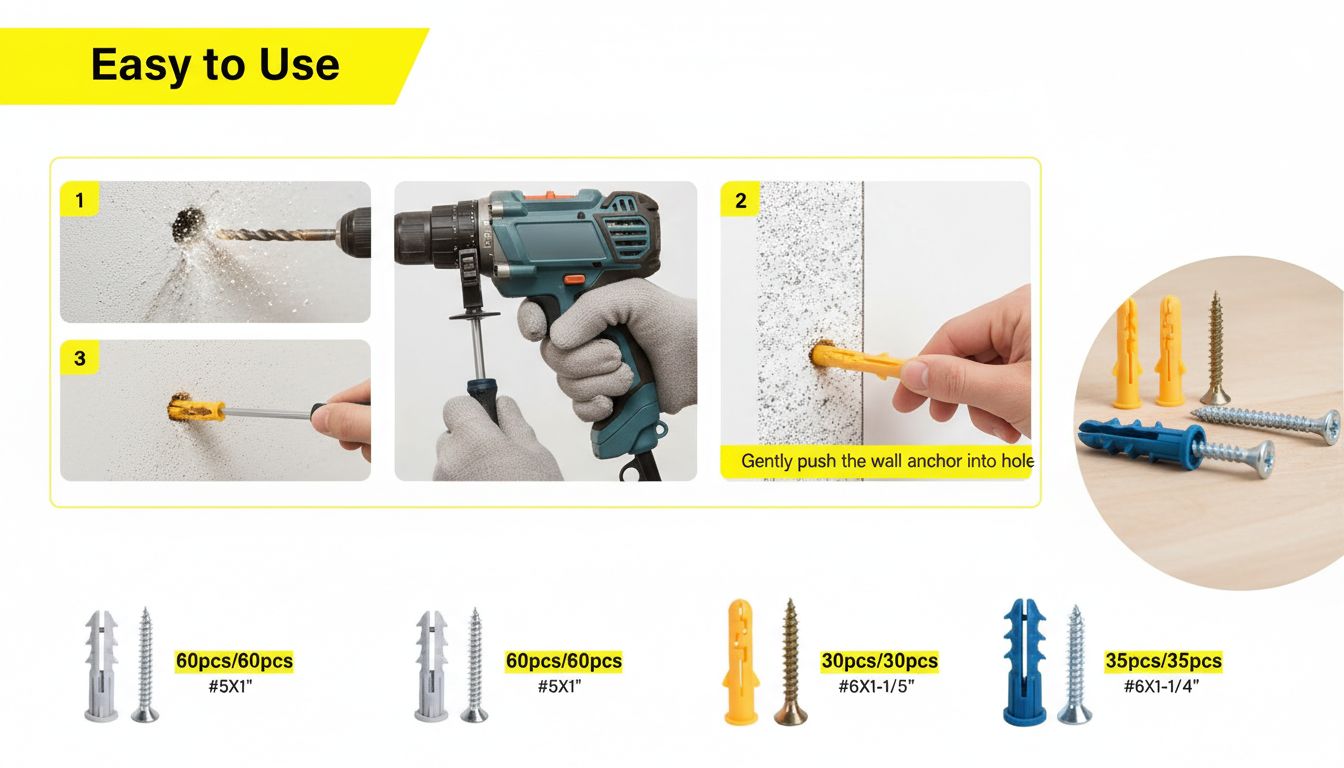
The pilot hole size for a drywall anchor depends on the anchor type. Toggle bolts require a drill bit sized to the toggle’s collapsed width — typically 1/2-inch for a standard #8-32 toggle bolt. Self-drilling anchors (E-Z Anchors) drill their own pilot and don’t need a pre-drilled hole. Standard plastic expansion anchors for light loads need a hole matching the anchor body diameter — usually 3/16-inch or 1/4-inch. The anchor package label lists the correct drill bit size — follow it exactly, because an oversized hole leaves the anchor too loose to hold rated load.
Pro tips recap: Keep a fresh #2 Phillips bit on hand before any drywall project. Use a depth-stop attachment even if you’re an experienced installer — consistent drive depth across 500+ screws on a big project is much harder to maintain manually than with a depth-stop doing it mechanically. Buy screws by the pound box rather than the small 100-count box for any significant hanging job — the per-screw cost is significantly lower.