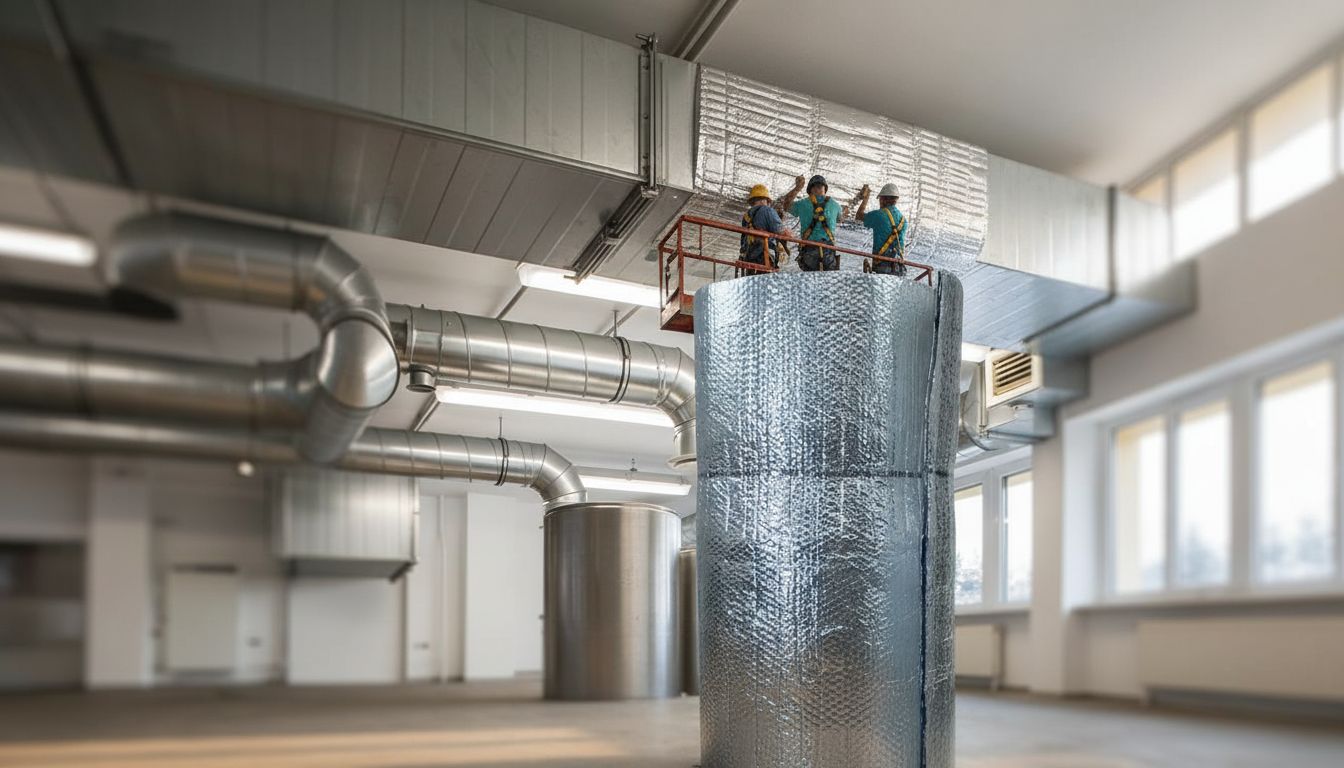
Duct Insulation Wrap: Types, R-Values, and How to Install It
Duct insulation wrap reduces the thermal losses that occur when heated or cooled air moves through unconditioned spaces like attics, crawl spaces, and basements. Duct wrap insulation is available in several types — fiberglass blanket wrap, foam board, and flexible foam with foil facing — each suited to different duct configurations and installation environments. HVAC insulation wrap is specified by R-value, with code minimums for ducts in unconditioned spaces typically starting at R-6 and going up to R-8. HVAC duct insulation wrap in attic applications faces the harshest environment, where summer temperatures regularly exceed 130 degrees Fahrenheit. Ductwork insulation wrap in a well-sealed system can cut heating and cooling energy losses by 10 to 30 percent compared to uninsulated duct runs.
Types of Duct Wrap Insulation
Fiberglass duct wrap is the most common residential product. It comes in flexible blanket rolls 1.5 to 2 inches thick, with R-values of R-4.2 to R-8 depending on thickness and density. One face is covered with a foil-kraft vapor barrier that faces outward after installation. The fiberglass core wraps around round and oval ducts and is held in place with tape and wire fasteners. Fiberglass duct insulation is affordable and widely available, but it absorbs moisture if the vapor barrier is damaged or improperly sealed — a serious problem in humid crawl spaces.
Foam duct wrap products use closed-cell foam with an integral foil facing. These are easier to install in tight spaces, resist moisture better than fiberglass, and achieve R-4 to R-6 per inch of foam thickness. Foam wraps work well for smaller round ducts but can be cumbersome to apply to large rectangular duct sections. Some foam duct products use adhesive backing for a clean, tool-free installation.
Installing HVAC Duct Insulation Wrap
Start by sealing all duct joints with mastic or foil tape before wrapping. Insulating over unsealed joints traps conditioned air leaks inside the insulation — you’re paying for insulation while the air still escapes at the seam. Mastic duct sealant is more durable than foil tape in long-term duct applications; tape eventually fails in the temperature swings of attic environments.
For round ducts, start the ductwork insulation wrap with a butt joint at the top of the duct and spiral the wrap down the length. Overlap each pass by 2 inches. Secure with wire hangers every 2 to 3 feet and seal all seams with UL 181-rated foil tape. The vapor barrier (foil or kraft facing) must face outward — the facing keeps moisture from the attic air from penetrating into the fiberglass core.
At fittings, elbows, and tee joints, cut the duct wrap to fit and tape all edges thoroughly. Gaps in the covering at fittings are the most common source of moisture intrusion and thermal bypass in otherwise well-insulated duct runs. Taking the extra few minutes to seal these transitions correctly prevents repairs later.
Pro tips recap: In attic applications, use the highest R-value duct wrap available — the temperature differential between attic air and conditioned air inside the duct is large enough to justify the cost of thicker insulation. In crawl spaces, prioritize moisture resistance over R-value and use closed-cell foam products or foil-faced products with fully sealed vapor barriers.