How to Test a Circuit Breaker: Multimeter, Voltage Tester, and More
Learning how to test a circuit breaker with a multimeter gives you a definitive answer about whether the breaker is functioning or needs replacement. How to test a circuit breaker for continuity using the same tool tells you whether the internal contact mechanism has failed. Knowing how to change a circuit breaker from 15 to 20 amp safely requires understanding what a circuit breaker often serves the same purpose as a fuse — both are overcurrent protection devices. Understanding how to test a circuit breaker with a voltage tester is a quicker method that requires no contact with the breaker terminals directly. This guide covers each approach in a practical sequence.
How to Test a Circuit Breaker with a Multimeter
Safety First
Testing panel breakers involves working near energized conductors. The main breaker disconnect at the top of the panel does NOT de-energize the service entrance conductors — those remain live at all times and require utility shutoff. Never touch the large wires entering the main breaker. For branch circuit breaker testing, turning the main breaker off while testing individual breakers allows safer work with the panel open. If you’re not comfortable working in an open electrical panel, have a licensed electrician perform this work.
Voltage Test with Multimeter
Set the multimeter to AC voltage (VAC) at a range above 120 volts. Turn the breaker to the ON position. Touch the red probe to the breaker’s output terminal (the screw where the wire connects) and the black probe to the neutral bus bar or a known ground. A functioning 120-volt breaker should read approximately 120 volts. Zero volts with the breaker on indicates a failed breaker or no power on the input side of that breaker.
How to Test a Circuit Breaker for Continuity
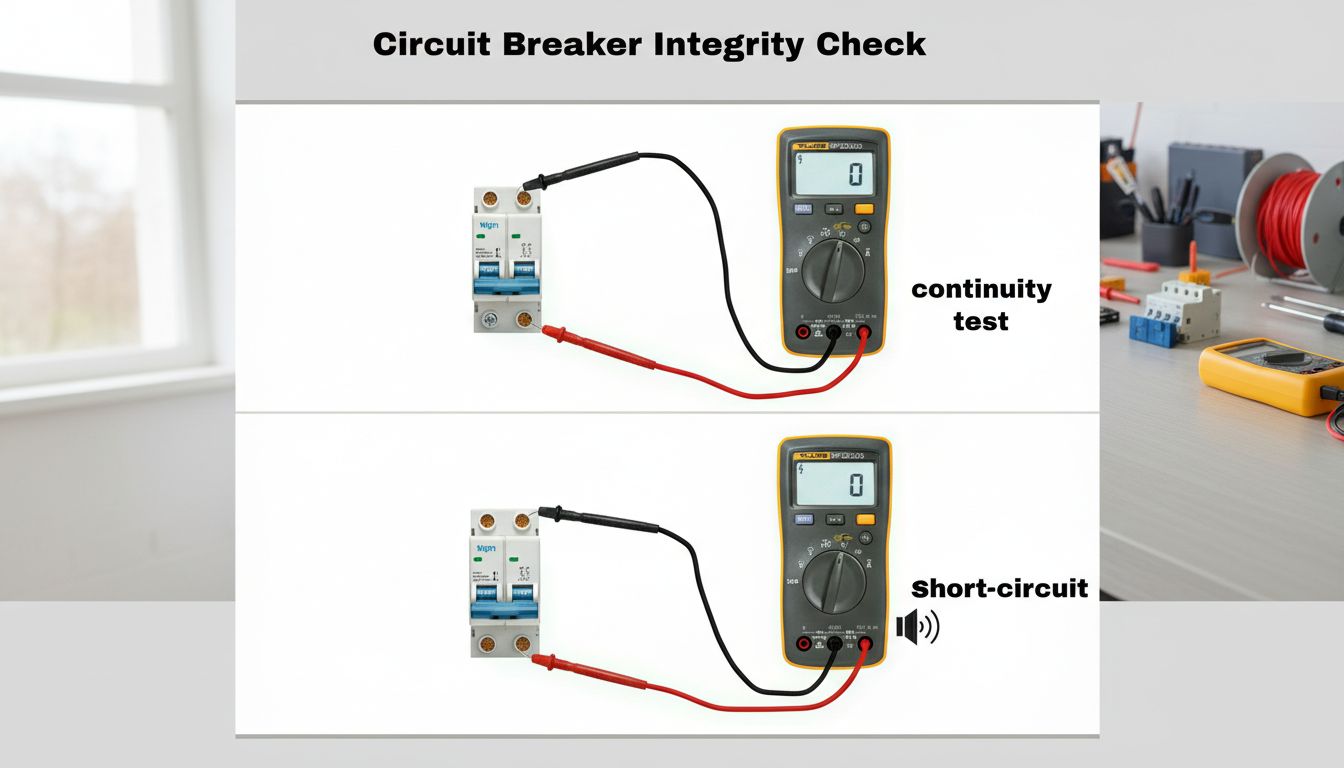
A continuity test confirms whether the internal contact path is intact. Turn the breaker OFF and disconnect the load wire from the breaker terminal. Set the multimeter to continuity mode (often marked with a diode symbol or beep icon). Touch one probe to the breaker’s output terminal and the other to the panel bus contact on the breaker’s underside. With the breaker ON, you should get continuity (a beep or near-zero resistance). With the breaker OFF, continuity should be broken (no beep, high resistance). If the breaker shows continuity in both positions, the internal contact mechanism has failed.
How to Test a Circuit Breaker with a Voltage Tester
A non-contact voltage tester (NCV tester) detects the presence of voltage without requiring probe-to-terminal contact. Hold the tester near the load terminal of the breaker with the breaker ON — it should beep or light up if the breaker output is live. Hold it near the same terminal with the breaker OFF — it should not detect voltage. This method is faster than a multimeter test and requires no contact with terminals, reducing risk. It cannot measure actual voltage values, but it confirms whether the breaker is supplying power when it should.
How to Change a Circuit Breaker from 15 to 20 Amp
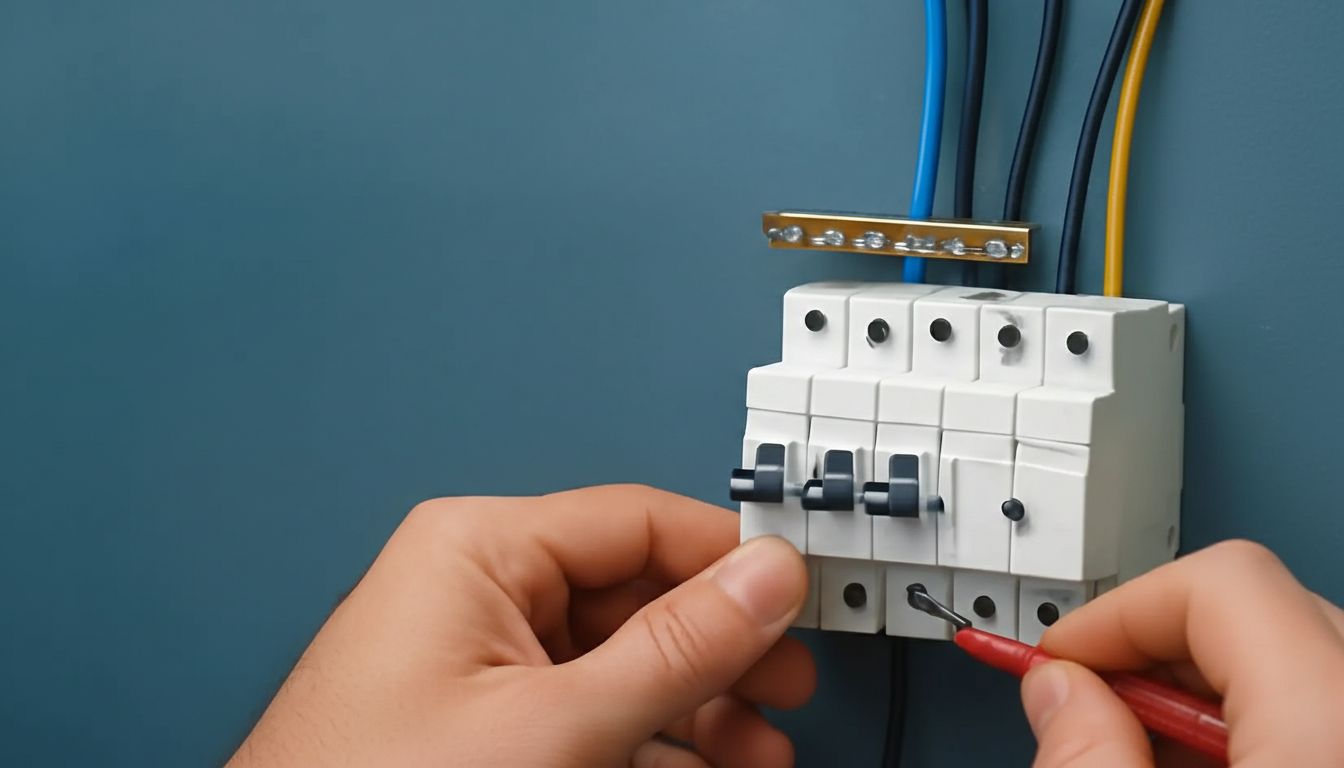
A circuit breaker often serves the same purpose as a fuse — it opens the circuit when current exceeds the rating. Upgrading from 15 to 20 amp is possible only if the circuit wiring is 12-gauge or heavier. 14-gauge wire (standard for 15-amp circuits) cannot safely carry 20 amps and must not be protected by a 20-amp breaker. If the circuit uses 12-gauge wire throughout, the breaker swap involves: turning off the main breaker, pulling the old 15-amp breaker from the bus, disconnecting the load wire, connecting it to the new 20-amp breaker, snapping the new breaker onto the bus, and restoring power.
Next steps: If a breaker fails your testing and requires replacement, confirm the exact panel brand and breaker model before purchasing a replacement. Most panels accept only specific breaker brands — mixing brands creates a safety hazard. The panel label inside the door lists the approved breaker manufacturers and types.