Ducting Insulation: Types, R-Values, and How to Insulate HVAC Ducts
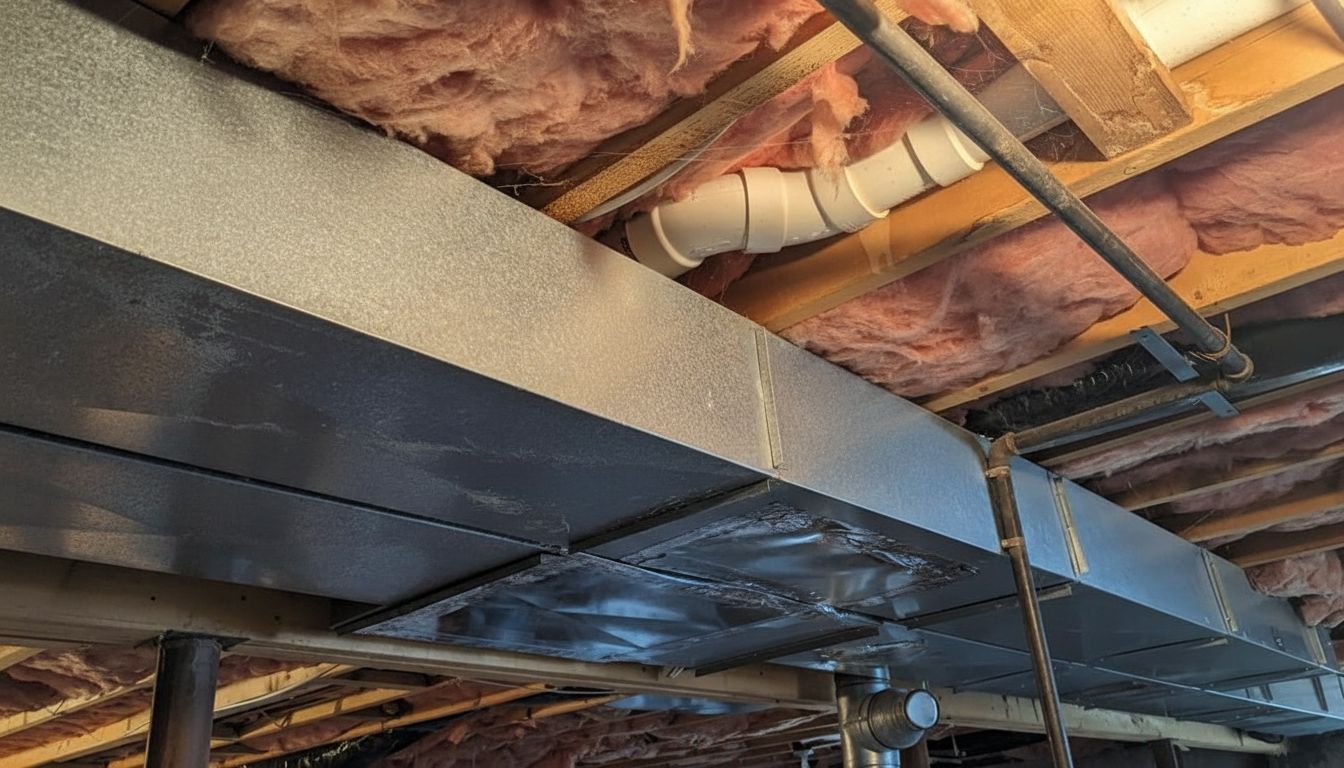
Ducting insulation reduces the thermal losses that happen when heated or cooled air travels through pipes and channels passing through unconditioned spaces. Heating duct insulation is especially important in attics, where summer temperatures can exceed 130 degrees and draw heat into supply air headed for living spaces. Duct insulation board is a rigid product used to line or wrap sheet metal ductwork in commercial buildings and large residential systems. Heat duct insulation products range from flexible fiberglass blankets to rigid polyisocyanurate board. Rigid duct insulation performs better per inch of thickness than flexible fiberglass but requires more cutting and fitting precision for round and irregular duct shapes.
Types of Ducting Insulation
Flexible Fiberglass Duct Wrap
Flexible fiberglass duct wrap is the most common residential product for insulating round ducts. It comes in rolls 1.5 to 3 inches thick with R-values from R-4 to R-8 depending on thickness and density. A kraft-faced or foil-faced vapor barrier wraps the fiberglass core. Installation requires wrapping around the duct, securing with wire fasteners every 2 to 3 feet, and sealing all seams and joints with UL 181-rated foil tape. This product is inexpensive and handles curved and irregular duct shapes easily but is susceptible to moisture damage if the vapor barrier is compromised.
Duct Insulation Board
Rigid duct insulation board uses polyisocyanurate or mineral wool in flat panels typically 1 to 2 inches thick with R-values from R-6 to R-13 per inch. This product is commonly used to line the inside of large sheet metal supply plenums or to wrap large rectangular duct runs. Cutting requires a knife and straightedge; fitting around curved surfaces requires scoring or cutting relief cuts. Rigid board achieves higher R-values per inch than flexible wrap and is more resistant to mechanical damage, but it’s harder to work with on complex duct geometries.
Pre-Insulated Flexible Duct
Flexible duct (often called flex duct) comes pre-insulated from the factory — the inner liner, air space, and insulation jacket are all manufactured as a single assembly. Standard flex duct is available in R-4.2, R-6, and R-8 configurations. While flexible duct is fast to install for branch runs, it has higher flow resistance than rigid metal duct and should not run more than 15 feet between solid supports or at more than one 90-degree bend without a significant pressure drop.
R-Value Requirements for Heat Duct Insulation
Energy code minimum R-values for ducting insulation in unconditioned spaces vary by climate zone:
- Climate zones 1-2 (Florida, Hawaii, Gulf Coast): R-6 minimum for supply ducts
- Climate zones 3-8 (most of the US): R-8 minimum for supply ducts in unconditioned attics and crawl spaces
- Return ducts: R-6 minimum in most zones when outside conditioned space
Ducts entirely within conditioned building envelope (conditioned attic with insulation at roof line, inside insulated floors) are often exempt from minimum R-value requirements. Verify with your local code official before assuming a duct location qualifies as conditioned space.
Installing Rigid Duct Insulation
For rectangular sheet metal ducts, cut duct insulation board panels to fit each face and secure with mechanical fasteners (pins or staples) plus aluminum foil tape on all seams. The foil tape is the vapor barrier in this assembly — any gaps allow moist unconditioned air to reach the cold metal surface and condensate. On rectangular ducts, fold corners tightly and tape thoroughly. The installed assembly should have no visible gaps, tears, or loose edges.
Next steps: Before insulating ductwork in an attic or crawl space, inspect all duct joints and seal any leaks with mastic compound or foil tape. Insulating over leaky joints traps the conditioned air loss inside the insulation rather than eliminating it. Sealing first, then insulating, is the correct sequence and the one that produces the greatest energy savings per dollar spent.