Cheapest Roofing Materials: 3-Tab vs. 24 Gauge Metal & Shingle Lifespan
Replacing a roof is one of the biggest home investments you’ll face, and finding the cheapest roofing material that still holds up to the elements is a real puzzle. You’ve probably searched for cheap roofing material options and wondered whether budget really equals sacrifice. The good news is that affordable choices like 3-tab shingles and 24 gauge metal roofing can protect your home without draining your savings—if you know what to look for.
This guide breaks down cost-effective roofing options, explains how long architectural shingles last compared to basic alternatives, and helps you match material to budget. Whether you’re re-roofing a shed, a garage, or a full home, you’ll leave with a clear picture of what your money buys.
Budget roofing options compared
When you’re shopping for inexpensive roofing solutions, you’re looking at a few main categories: asphalt shingles, rolled roofing, and light-gauge metal panels. Each hits a different price point and serves different project types.
Asphalt shingles remain the most affordable roofing option for most homeowners. Standard 3-tab shingles cost roughly $70–$100 per square (100 sq ft) for materials alone. Rolled asphalt roofing is even cheaper—sometimes under $50 per square—but it’s best suited for low-slope outbuildings rather than main living structures.
Corrugated steel panels, especially thinner gauges, offer a cost-effective roofing alternative for garages, barns, and sheds. They’re quick to install and last decades when properly maintained.
3-tab shingles: lifespan and value
The 3 tab shingles life expectancy typically runs 15–20 years under normal conditions. That’s shorter than premium options, but the installed cost is significantly lower—often 20–30% less than architectural shingles. For a rental property or a budget renovation where you expect to sell within a decade, that tradeoff can make sense.
Factors that shorten the life of economy-grade asphalt shingles include:
- Steep pitch with heavy UV exposure
- High wind zones (most 3-tab shingles are rated for 60–70 mph winds)
- Poor attic ventilation that lets heat build up under the deck
- Skipping ice-and-water shield in cold climates
If your roof has good ventilation and moderate exposure, a quality 3-tab installation can push toward the upper end of its lifespan. Ask your supplier for shingles that carry at least a 20-year manufacturer warranty.
24 gauge metal roofing costs and benefits
Steel roofing panels come in several gauges—the lower the number, the thicker and more expensive the metal. At 24 gauge metal roofing sits in a mid-range position: thicker than the budget 29-gauge panels commonly used on agricultural buildings but thinner than the 22-gauge panels specified for commercial projects.
24-gauge vs. 29-gauge: what you actually get
The jump from 29 to 24 gauge is meaningful. A 29-gauge panel is about 0.014 inches thick; a 24-gauge panel runs closer to 0.024 inches. The thicker metal resists denting from hail, handles higher wind loads, and holds fasteners more securely. For a residential installation, 24 gauge hits a sweet spot between durability and cost.
Expect to pay $1.50–$3.00 per square foot for 24-gauge corrugated or ribbed panels, depending on the profile and coating. Standing-seam 24-gauge panels run higher—$4–$7 per square foot—but they deliver a watertight, fastener-free surface that can last 40–70 years.
Installation tips for metal panels
You need to use the right screws—painted hex-head screws with neoprene washers prevent water intrusion at fastener points. Pre-drill pilot holes in cold weather to avoid cracking the panel coating. Always overlap panels according to manufacturer specs; a minimum 1.5-inch side lap is standard for most corrugated profiles.
How long do architectural shingles last
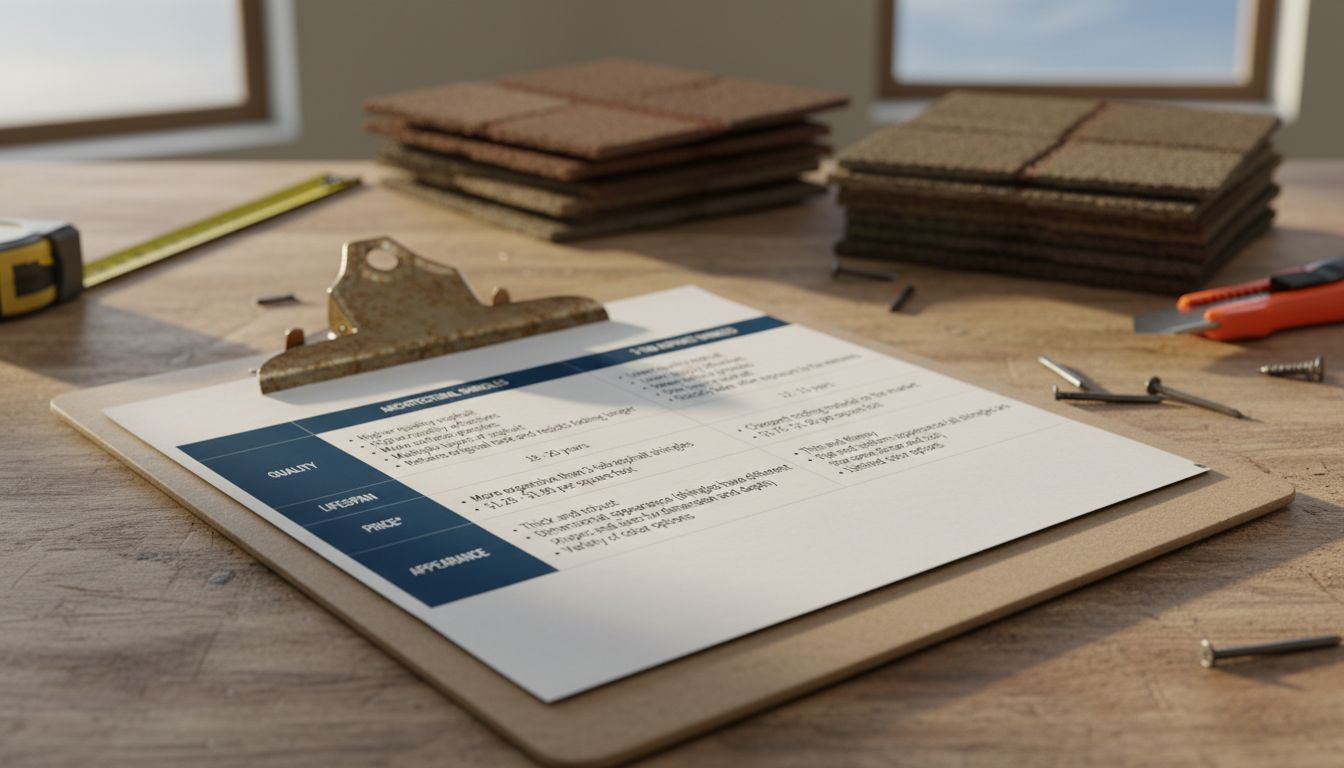
Architectural (dimensional or laminated) shingles typically last 25–30 years, though premium lines carry 30–50 year warranties. They cost more than 3-tab—usually $90–$150 per square for materials—but the added thickness and multi-layer design means better wind resistance (many are rated to 110–130 mph) and a more dimensional look that improves curb appeal.
If you’re comparing cheap roofing material versus spending a bit more on architectural shingles, run the math. A $0.50 per square foot difference can equal $500–$1,000 on a typical 2,000 sq ft roof—but you could avoid a full reroof for an extra decade. On a long-term hold, architectural shingles usually deliver better value per year of service life.
Choosing the right material for your project
Matching material to project type saves money over the long run. Here’s a quick decision framework:
- Shed or garage: 29-gauge corrugated steel or rolled asphalt roofing gets the job done at the lowest cost.
- Rental property or flip: 3-tab asphalt shingles balance upfront cost with a 15–20 year service life that fits most investment timelines.
- Primary residence, moderate budget: Entry-level architectural shingles or 24-gauge metal panels offer a meaningful durability upgrade without going top-of-market.
- Long-term family home: Premium architectural shingles or standing-seam metal roofing pays off over 40+ years, especially in hail and high-wind regions.
Before you buy, check local building codes—some jurisdictions restrict minimum shingle weight or require fire-rated materials. Also verify that your roof deck is in good shape; a new cheap material over a rotted deck is money wasted.
Next steps: Get at least three material quotes, compare the total installed cost (not just per-square price), and ask each contractor which ventilation upgrades they recommend. A $200 ventilation fix can add years to even the most affordable roofing choice you make.