3 Pole Circuit Breaker: 3-Phase Power, Sizing & American Panel Guide
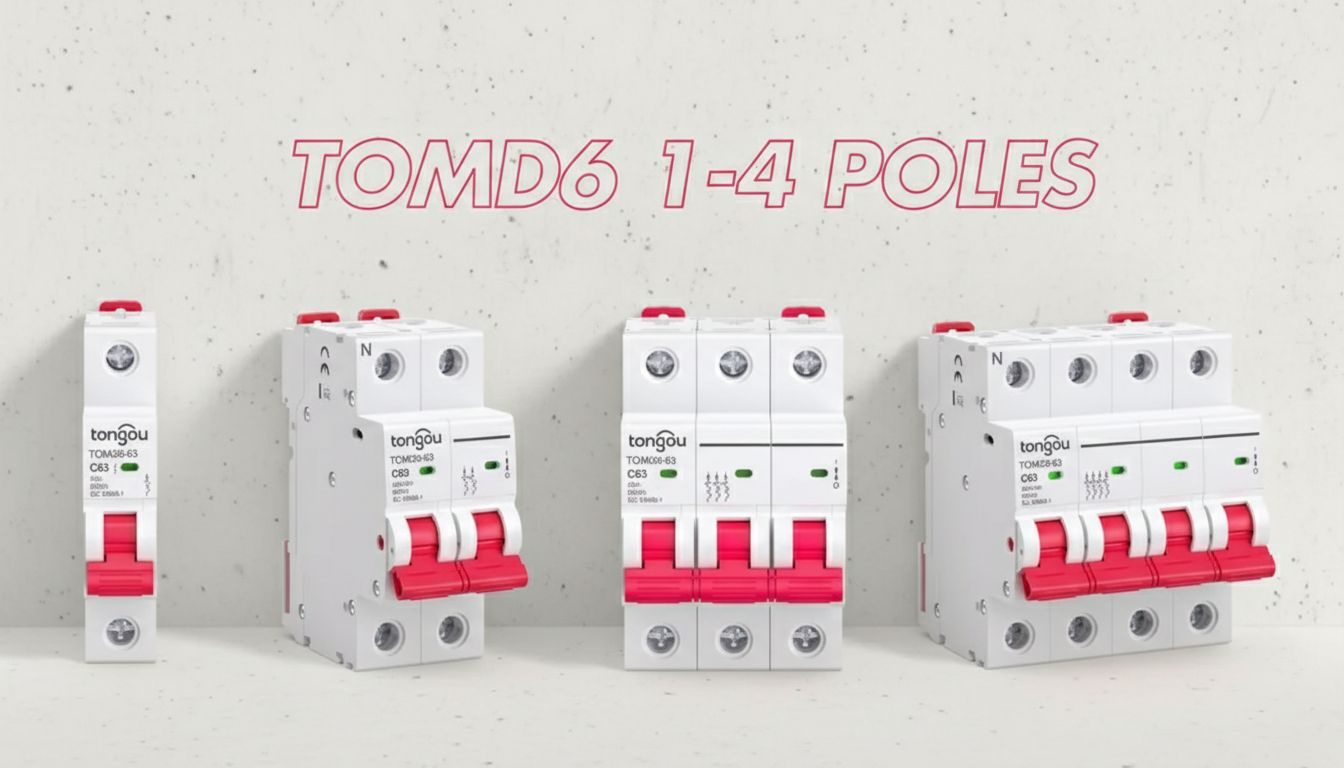
A 3 pole circuit breaker controls three separate conductors simultaneously—it’s the standard overcurrent device for 3 phase circuit breaker applications in commercial buildings, industrial equipment, and some residential service entrances. If you’re wiring three-phase equipment, upgrading a service panel, or troubleshooting a tripped breaker on a commercial system, understanding how these devices work is essential.
This guide explains what distinguishes a 3 phase circuit breaker from single-pole and double-pole breakers, covers sizing considerations including 3 amp circuit breaker applications, and describes how American circuit breaker brands handle three-phase systems.
What is a 3 pole circuit breaker
A 3 pole circuit breaker is a single device with three current-carrying poles that trip together when any one pole detects an overload or short circuit. In a 3-phase system, this simultaneous trip is essential—if only one or two poles opened, the remaining energized conductors could damage equipment or create a hazard.
In 240V single-phase residential panels, a double-pole breaker handles two hot legs. In three-phase panels, a 3-pole breaker handles all three hot legs. The mechanical linkage between the poles means all three open together. This is different from installing three separate single-pole breakers—they don’t have the common trip mechanism required for three-phase protection.
Three-phase power systems
Three-phase power delivers electricity through three conductors carrying alternating current at 120-degree phase offsets. This arrangement produces smoother power delivery than single-phase systems and is far more efficient for high-load applications—motors, compressors, HVAC systems, and large electrical equipment.
In the United States, three-phase service is delivered in two common configurations:
- Wye (Y) configuration: 208V line-to-line, 120V line-to-neutral. Common in commercial buildings where both 208V three-phase loads and 120V single-phase loads are needed.
- Delta configuration: 240V or 480V line-to-line, no neutral. Common in industrial facilities powering motors and other three-phase-only equipment.
Sizing 3-phase breakers
Sizing a 3 phase circuit breaker follows the same principle as single-phase sizing: the breaker must protect the wire, not the load. Calculate the load current in amps, then select a wire gauge capable of carrying that load, then choose a breaker that matches the wire’s ampacity.
For a 3 amp circuit breaker application—rare in three-phase contexts but used for control circuits and instrumentation—the same rule applies. These small-amperage breakers often appear in control panels, not power distribution panels.
For motor circuits, the NEC (National Electrical Code) allows oversize breakers to handle motor starting inrush current. A motor’s nameplate full-load amps (FLA) is the starting point; the breaker can typically be sized up to 250% of FLA for inverse time breakers on single-phase motors, with similar provisions for three-phase motors under NEC 430.
American circuit breaker brands
Several major American circuit breaker manufacturers produce three-pole breakers for residential, commercial, and industrial applications:
- Square D (Schneider Electric): QO and Homeline series for residential panels; I-Line and PowerPact for commercial. Square D is among the most specified brands in American construction.
- Eaton (Cutler-Hammer): BR and CH series for residential; Type G and HMCP for commercial and motor protection.
- Siemens: QP and QT series for residential; 3VA and 3VL molded-case breakers for commercial.
- Leviton: Primarily residential panel boards; less common in commercial three-phase applications.
Breakers are not interchangeable across brands even if the physical dimensions are similar. Never install an off-brand breaker in a panel unless it’s listed as a compatible substitute by the panel manufacturer—doing so voids the panel’s listing and may fail inspection.
Installation and safety
Installing a 3 pole circuit breaker in a three-phase panel requires de-energizing the panel at the utility disconnect—not just the main breaker. Service entrance conductors remain energized even with the main breaker off in most configurations. If you’re not a licensed electrician, this type of work belongs with a professional.
When replacing a tripped three-phase breaker, investigate the cause before resetting. A breaker that trips repeatedly is protecting the circuit from a real fault—overloaded conductors, a failing motor, or a short circuit. Bypassing or oversizing is never an appropriate fix.
Next steps: Verify the voltage configuration of your three-phase system (wye or delta) before purchasing a replacement breaker. Check the panel’s brand and series to ensure compatibility. If you’re sizing a new three-phase circuit, use the NEC’s wire ampacity tables (Table 310.16) as your starting point, then select a breaker to match the wire—not the load.