Rubber Roofing Material: Types, Uses & Supplies for Flat Roof Projects
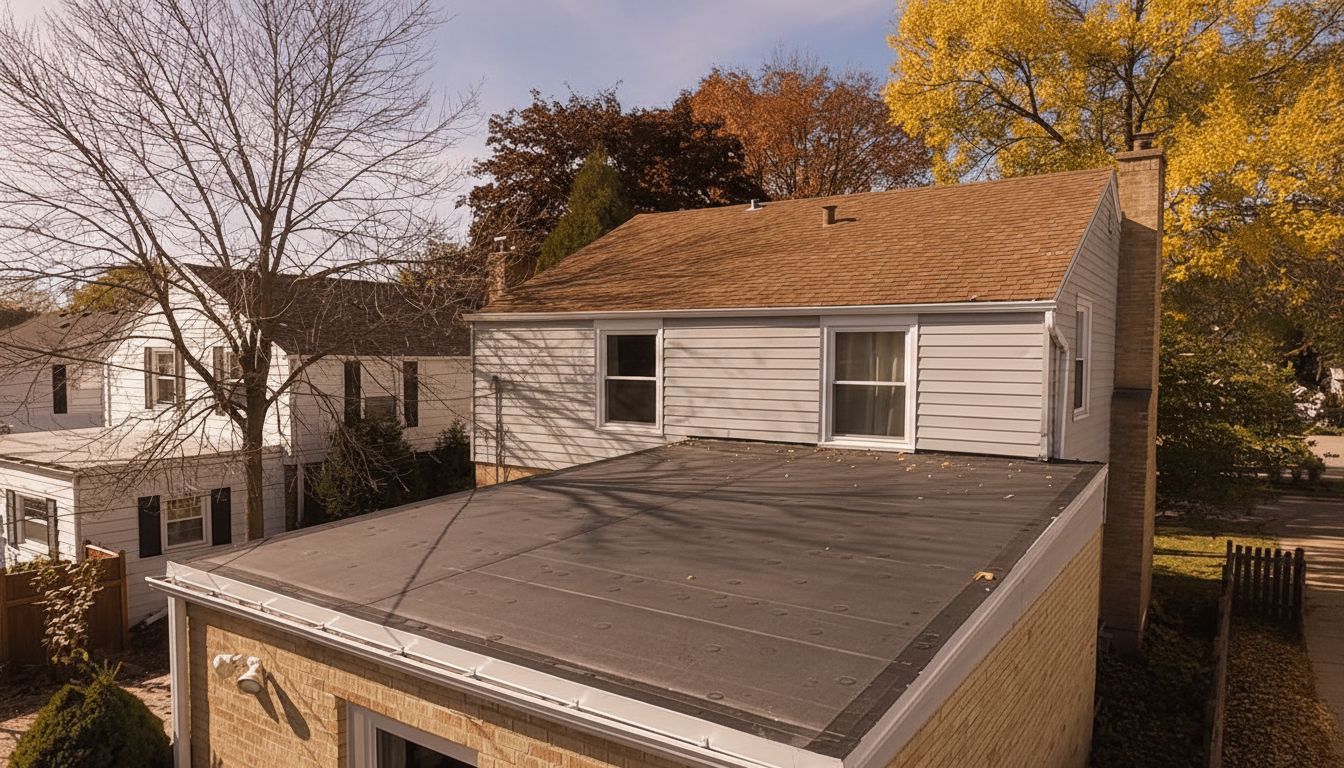
Rubber roofing material is the practical choice for flat roofs, low-slope additions, and commercial applications where traditional asphalt shingles won’t work. Roofing rubber comes in several distinct types—each with different installation methods, performance characteristics, and price points—and the right choice depends on your roof slope, climate, and budget.
This guide covers the main rubber roofing materials available, explains how rubberized roofing differs from true rubber membranes, and helps you identify the rubber roofing supplies you’ll need for a complete installation or repair.
EPDM rubber roofing material
EPDM (Ethylene Propylene Diene Monomer) is the most widely used rubber roofing material in North America. It’s a synthetic rubber sheet that resists UV, ozone, and extreme temperature variation, making it the benchmark against which other flat-roof membranes are measured.
EPDM is available in 45-mil and 60-mil thickness (residential) and 75 and 90-mil (commercial and high-performance). Black is the standard color; white EPDM is available for heat-sensitive applications but costs more. Sheet widths run from 10 feet to over 50 feet—wider sheets mean fewer seams, which means fewer potential leak points.
EPDM installation methods
Three methods exist: fully adhered (contact cement over the entire surface), mechanically fastened (plates and screws at the membrane perimeter), and ballasted (loose-laid with river rock). Fully adhered provides the best wind uplift resistance and the most uniform appearance. Ballasted systems install faster but add weight that not every roof deck can handle.
TPO: the white alternative
TPO (Thermoplastic Polyolefin) is the fastest-growing rubber roofing material category. It’s white by default, which provides solar reflectance that EPDM’s black surface doesn’t. Seams are heat-welded rather than taped or glued, creating a monolithic bond that many installers find more reliable than adhesive seams.
TPO comes in 45, 60, and 80-mil thicknesses. It’s lighter than EPDM and easier to install in cold weather. The main concern with TPO is a shorter performance history—EPDM has 40+ year track records; TPO is still accumulating long-term data. Premium-grade TPO from established manufacturers has proven durable, but generic TPO quality varies considerably.
Rubberized vs. true rubber roofing
The term rubberized roofing often appears in product marketing but refers to different things depending on the context. Modified bitumen roofing—asphalt-based cap sheets modified with SBS (styrene-butadiene-styrene) or APP (atactic polypropylene) rubber—is commonly called rubberized. It’s technically asphalt with rubber modifiers, not a true rubber membrane.
Modified bitumen performs well, offers good impact resistance, and can be torched down (torch-applied) for a strong bond. It’s a good choice for roofs with heavy foot traffic or where the installer doesn’t have experience with EPDM or TPO. Lifespan is typically 15–20 years—shorter than well-installed EPDM but competitive with standard built-up roofing.
Rubber roofing supplies
A complete roofing rubber installation requires more than just the membrane. Essential rubber roofing supplies include:
- Seam tape or lap sealant: Pressure-sensitive butyl tape for EPDM seams; hot-air welded joints for TPO.
- Primer: Required before applying seam tape or adhesive to EPDM; ensures chemical bond between the membrane and adhesive.
- Contact cement: For fully adhered EPDM—applied to both the deck insulation and the membrane underside.
- Flashing: Pre-formed EPDM or TPO boots for pipe penetrations; cured rubber strips for curbs and walls.
- Termination bars: Metal bars that mechanically anchor membrane edges at walls, curbs, and drains.
- Seam roller: A 2-inch hard roller to compress seam tape and eliminate air bubbles.
Choosing the right material
For most residential flat-roof projects—porches, low-slope additions, garage roofs—EPDM is the default recommendation. It’s widely available, easy to source locally, and has a proven track record that makes it easy to find experienced installers. For commercial or institutional projects where solar reflectance is required by code or for energy savings, TPO is typically the better fit.
Modified bitumen is a strong choice when you need a familiar material that existing contractors know how to install, or when foot traffic durability matters more than long-term flexibility and seam performance.
Key takeaways: EPDM is the most proven rubber roofing material for residential flat roofs. TPO is the better choice when solar reflectance matters. Rubberized modified bitumen is a viable middle-ground with asphalt-based chemistry and rubber performance modifiers. Whichever material you choose, invest in quality seam tape and flashing—that’s where flat roofs fail.