What Grit Sandpaper for Drywall: The Right Grit for Every Stage
Knowing what grit sandpaper for drywall to use at each stage of finishing makes the difference between a smooth, paint-ready surface and one that shows sanding scratches or transition lines under the final coat. The answer isn’t a single number—what grit to sand drywall depends on whether you’re knocking down joint compound ridges after the first coat, blending after the second, or doing a final skim before painting.
This guide breaks down drywall sandpaper grit selection by application stage, covers what grit sandpaper for drywall mud works best at each phase, and explains when to switch from wet sanding to dry sanding.
Grit overview for drywall work
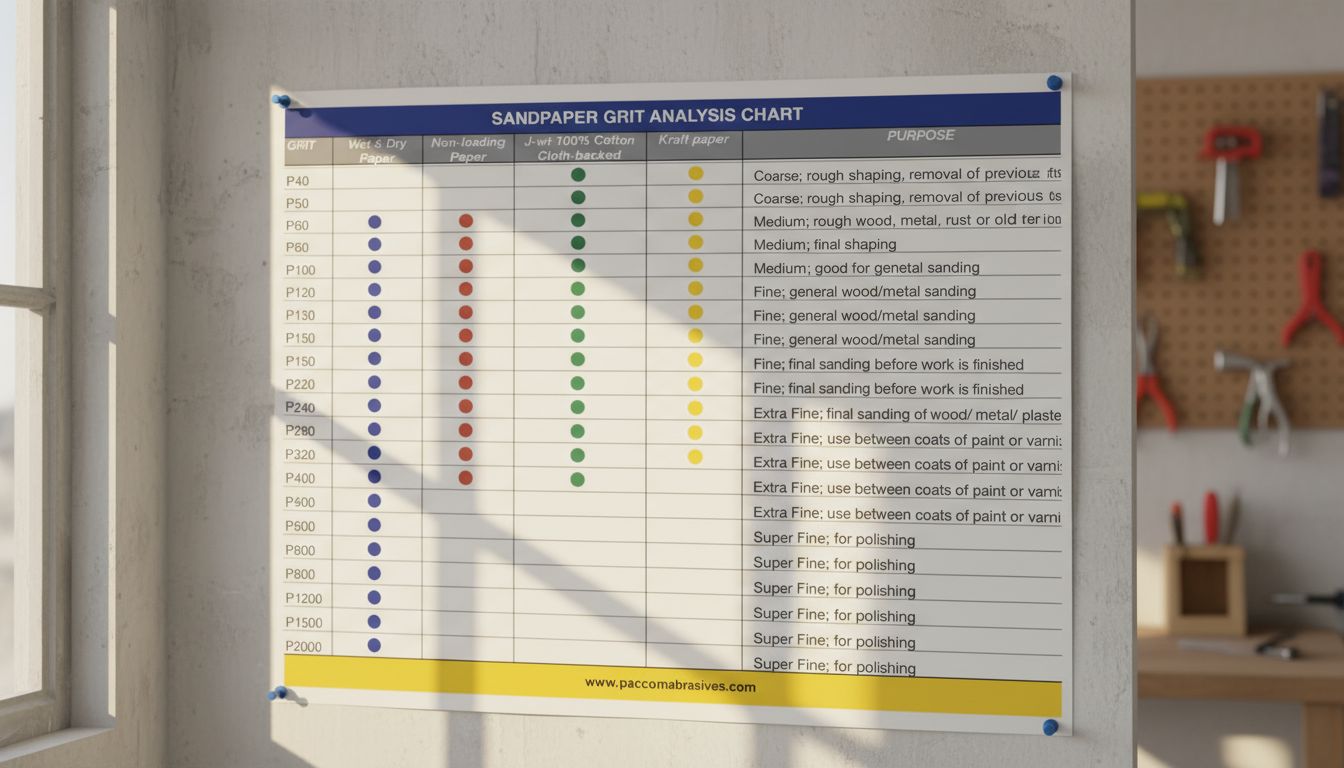
Drywall finishing uses a progression from coarser to finer grits:
- 60–80 grit: Too aggressive for most drywall sanding; risks gouging the paper face. Only used for very rough surfaces or removing large ridges of hardened compound.
- 100–120 grit: Standard for knocking down ridges and high spots after the first or second coat of joint compound. Removes material efficiently without cutting into the paper face.
- 150–180 grit: Blending and transitioning between coats. Smooths the surface without leaving deep scratch patterns.
- 220 grit: Final sanding before primer. Removes 150-grit scratches and leaves a surface that paint can adhere to without visible texture variation.
First coat: knocking down ridges
After the first coat of joint compound dries—typically 24 hours for all-purpose compound, less for quick-setting—the surface usually has ridges, tool marks, and high spots at tape edges. What grit sandpaper for drywall mud at this stage is 100 to 120 grit. Use a pole sander with a flexible pad or a hand sanding block for smaller areas.
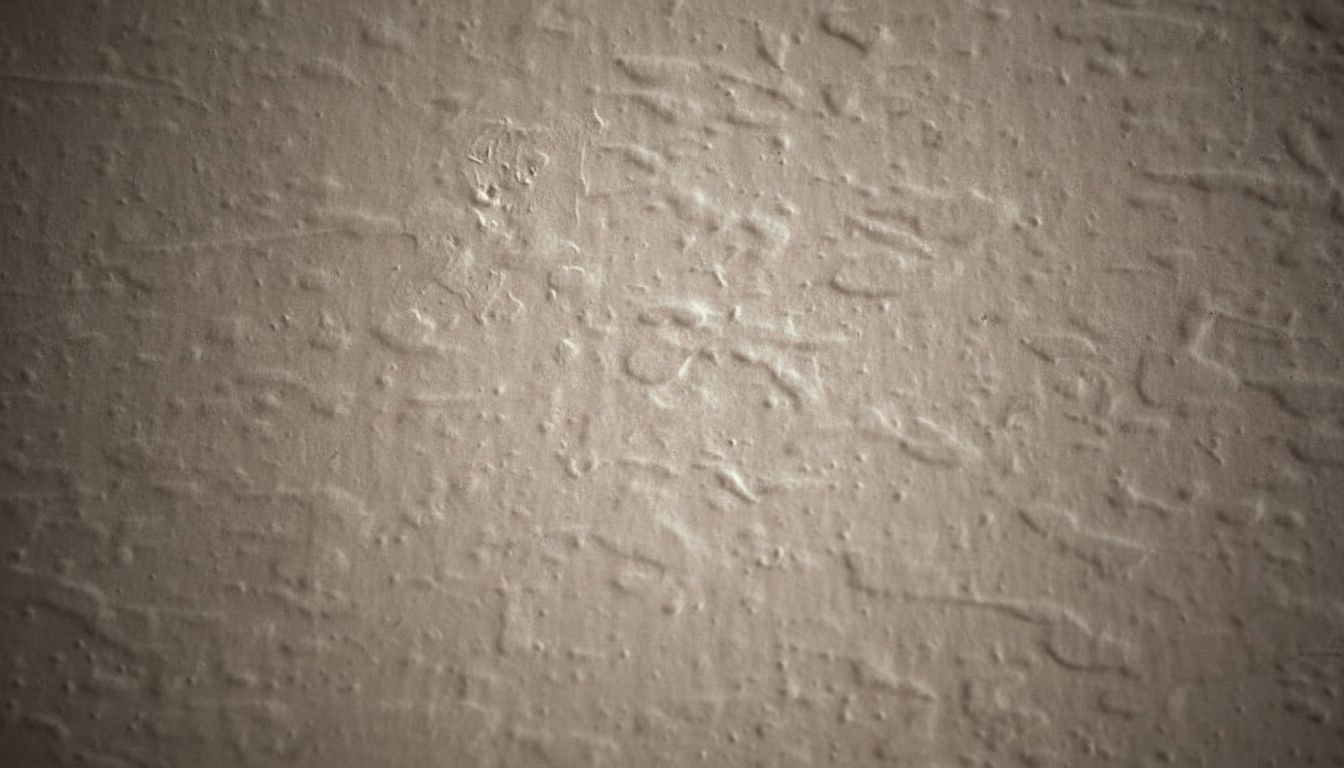
The goal at this stage isn’t smoothness—it’s flatness. You’re removing high spots so the second coat can be applied thinly and evenly. Don’t try to sand the surface completely smooth after coat one; you’ll create low spots and overwork the surface.
Setting compound vs. all-purpose
Setting-type compound (Durabond) cures very hard and is difficult to sand. If you used setting compound for your first coat over mesh patches, switching to 80-grit for the initial knock-down may be necessary before moving to 120 grit for blending. All-purpose compound sands much more easily—120 grit is sufficient throughout.
Second coat: blending
The second coat is applied wider than the first, feathering out to blend the patch or seam into the surrounding wall surface. After drying, sand with 120 grit to level, then finish with 150 grit to smooth the transition zone. The goal is to eliminate any ridges or step-downs at the feathered edges of the compound.
Run a straightedge across the surface as you work—your eye will miss low spots that a straightedge reveals. Sand until the straightedge contacts the surface consistently without rocking.
Final coat: skim sanding
The final coat of joint compound should be applied as thin as possible—a skim coat rather than a fill coat. After drying, what grit for drywall at this stage is 180 to 220 grit. You’re removing only the fine tool marks and sanding scratches from previous grits, not taking down any material depth.
Use a fine-grit sanding screen rather than sandpaper for this stage if you’re using a pole sander. Sanding screens cut more evenly without loading up as fast. For hand sanding, a 220-grit paper or sanding sponge on a block works well in corners and against trim.
Tools and technique
A pole sander with interchangeable pads is the most efficient tool for large wall areas. For ceilings, a drywall sanding sponge block reduces the risk of damaging the paper face from oversanding in one spot. Wet sanding with a dampened sponge works well for small repairs—it creates virtually no dust and produces a smooth finish on final coats, though it’s slower than dry sanding for large areas.
Always wipe sanding dust from the surface with a dry cloth before applying the next coat or primer. Dust left on the surface creates a weak bond between the compound and the next layer.
Bottom line: Use 100–120 grit for knocking down ridges after the first coat, 120–150 for blending after the second, and 180–220 for the final skim sanding before primer. Keep a straightedge handy to check flatness, and switch to finer grits progressively—removing the scratch pattern from the previous grit is the purpose of each successive pass.